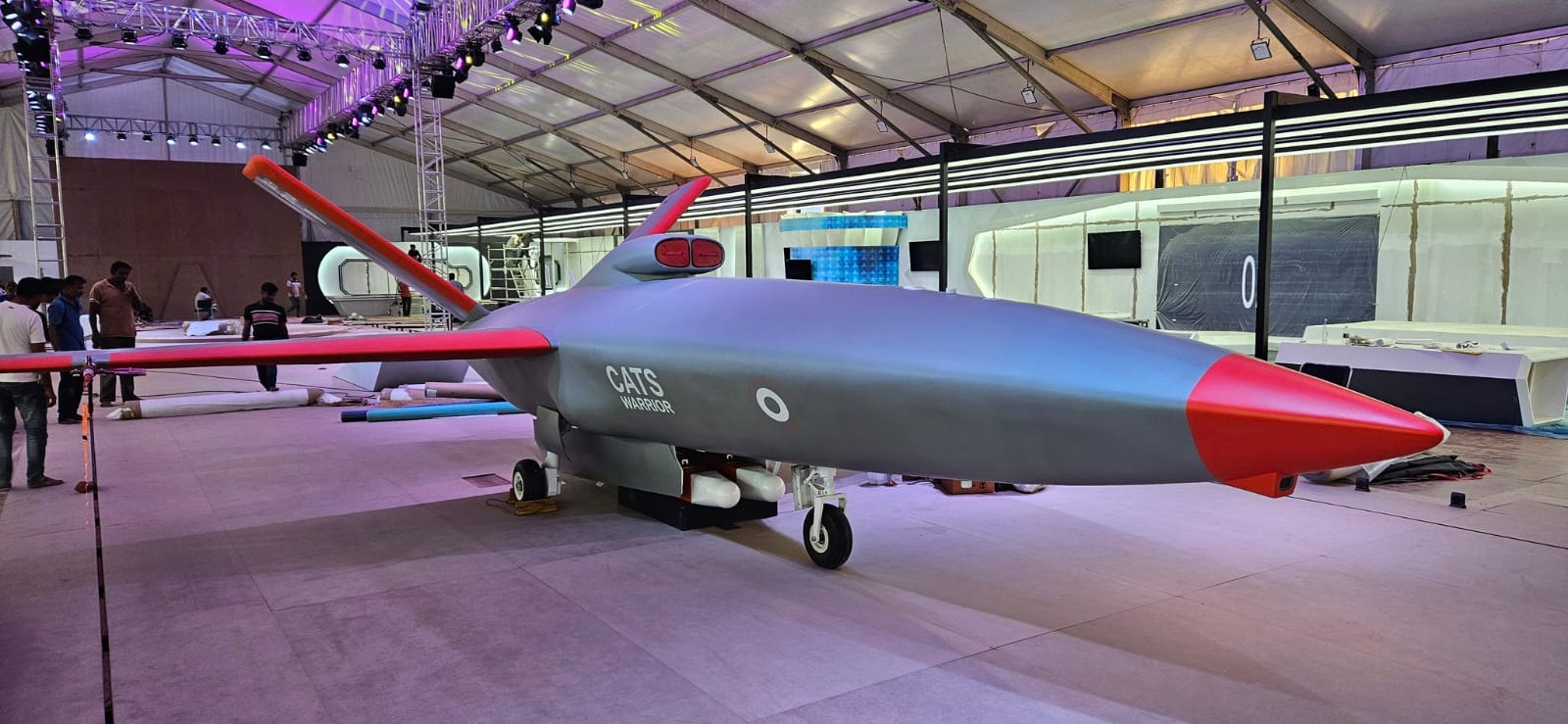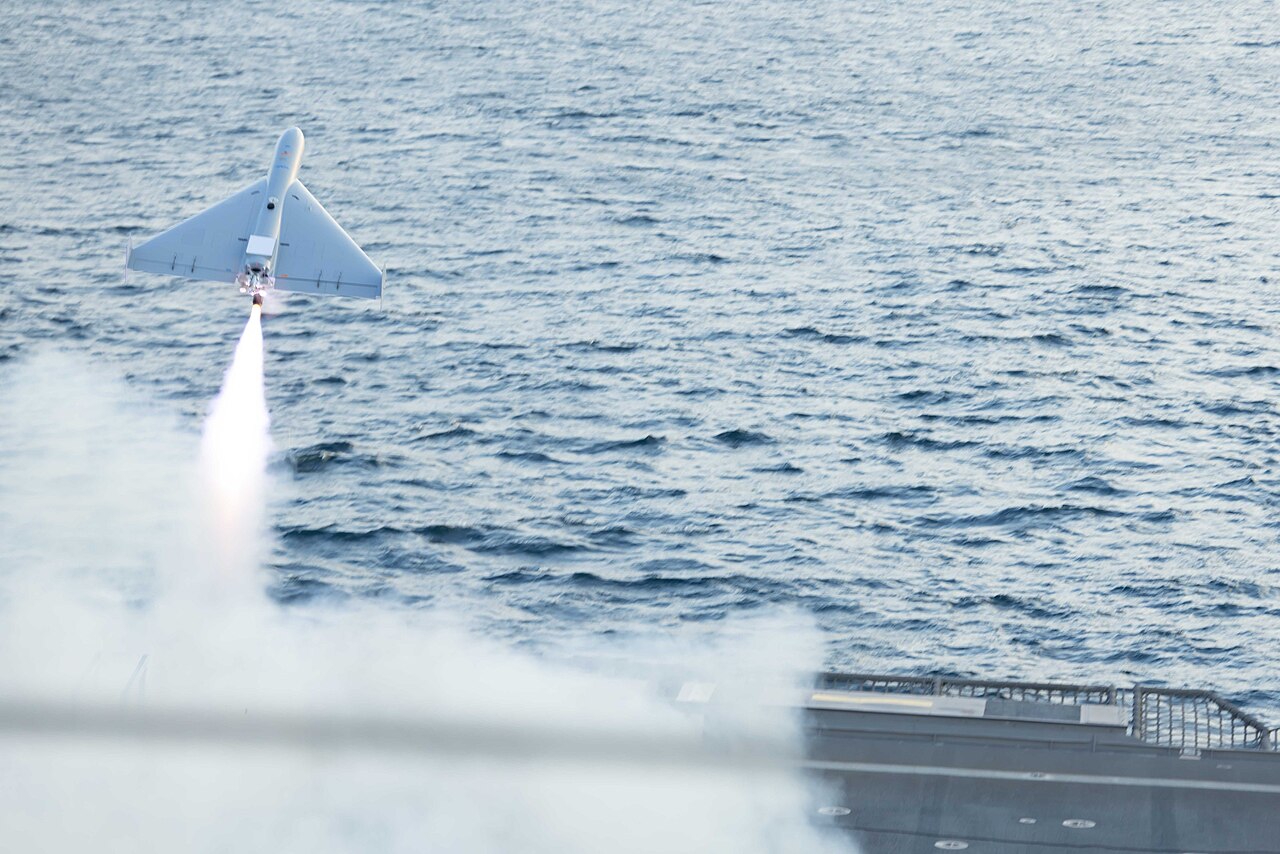
WASHINGTON — The Air Force has selected General Atomics and Anduril to build the US military’s first Collaborative Combat Aircraft (CCA), the service announced today.
In addition, Anduril, Shield AI and RTX subsidiary Collins Aerospace have been tapped to continue a competition that will determine who will provide the autonomy software for the loyal wingman drones.
In a call with reporters ahead of the announcement, Col. Timothy Helfrich, portfolio acquisition executive for Fighters & Advanced Aircraft, called the award a major step forward for the service’s future capabilities.
The service is keeping the cost of the program obscured, as well as declining to say the number of vehicles each of the two hardware providers will be contracted for through the first of three production lots.
There are some hints, however, with Helfrich saying a longstanding target of being roughly one-third the cost of an F-35 is being met — and as the cost of a Lot 17 F-35A was around $82.5 million, that would put the cost per unit for the CCA effort at under $30 million. And the Air Force is requesting roughly $1.4 billion to develop CCA drones in fiscal 2027, alongside nearly $1 billion for procurement.
“We have production money starting in FY27, so as soon as we have funding appropriated, we [should] be able to execute first production lot,” Helfrich said.
Capabilities are also largely staying under wraps, though Helfrich pointed to statements of a 700 nautical mile combat radius, as well as confirming this increment’s mission is air superiority.
The Air Force is developing CCA in a successive series of “increments,” with today’s news marking the first in the series. A second increment is underway with nine vendors who were issued early development contracts, Breaking Defense ly reported. Helfrich declined to get into timelines or details of Increment 2, which is being treated as a separate competition by the service, one still in the early stages.
Want to know more? Watch Breaking Defense’s video series on CCA drones.
The Hardware
Anduril and General Atomics clinched prototyping contracts for the CCA program in 2024, beating out Boeing, Lockheed Martin and Northrop Grumman.
That meant the two firms would receive development funding from the Air Force, though the service said the other three contenders would still be in the running in the final decision. And while the result was the same, Helfrich insisted all five were given a fair shake.
“This is not just a continuation of the contracts we had with Anduril and General Atomics, this was a [completely] new source selection that was done,” he said. “We re-solicited to the original five — Lockheed, Northrop, Boeing, General Atomics, and Anduril — and through a source selection evaluation, decided that Anduril and General Atomics” were the right choice.
“What we looked at for selecting the air vehicle vendor was based on their ability to meet the Air Force’s schedule, the demanding cost criteria and performance required to still deliver operational capability of 150-plus aircraft by the end of the decade,” he said.
The two designs are, “at the core,” the same aircraft designs that were selected for prototyping in 2024, Helfrich said, though he noted the service has been able to “refine” them based on lessons learned.
Asked about the split between the two contractors, Helfrich said the program is structured in such a way as to provide “flexibility” for how the lots are awarded. “How many we order from each vendor will be based on a number of factors, but again, it is all about delivering capability at speed and scale,” he said.
While there will be more lots awarded after the initial three tranches, it is not the service’s “intent” to open increment 1 back up to the three defense firms who lost out today.
The engines will be provided by the contractor, Helfrich said. Additionally, he noted that General Atomics’ YFQ-42A designation, and Anduril’s YFQ-44A designations, will both lose the Y at the front.
Helfrich noted that the crash earlier this year of the YFQ-42A prototype, and subsequent month-long grounding, played “no” role in the source selection.
Software Brought To Life
The Air Force purposefully ran a separate competition for the autonomy software parallel to the hardware process, and while Andril and GA are now locked in on providing their drones, the brains behind the system are a little less sorted.
Officials ly selected RTX to provide the autonomy for General Atomics’ drone, alongside Shield AI for Anduril’s. Today, Helfrich said those two companies, along with Anduril itself, would be moving forward with developing software, beating out GA, Lockheed and Northrop on the autonomy side.
However, those three companies moving forward will be on a six-month performance period, at which point “one or two” of the contractors will be selected to move into a second sixth-month performance test, before a final downselect to one vendor in summer 2027.
The service is still planning to keep all six software vendors in a pool as a backup option, or as Helfrich said, “So if we need to make a change or order licenses from a different vendor, we do have the ability to do that.”
Industry Reaction
General Atomics Aeronautical Systems boss David Alexander hailed the news as “an exciting day for our company and the nation” in a company statement.
“Moving to production on FQ-42A is the result of an extraordinary partnership and many years of investments between General Atomics and the U.S. Air Force,” he said. “We’ve been preparing for this order, and manufacturing is already well underway.”
According to an Anduril statement, the firm will “Anduril will “deliver an initial set of production FQ-44 semi-autonomous fighter aircraft to support continued testing, validation, and, ultimately, operational fielding” before expanding production.
“We have been refining, testing, and iterating on our production system, in parallel with aircraft development, for the past two years. We have already implemented our full rate production processes and tooling on prototype aircraft, identifying and addressing issues during prototyping to streamline the transition into production,” said Mark Shushnar, Anduril’s vice president for autonomous airpower.
On the autonomy side, the firm said “Our journey to this contract milestone was not linear. In the process, we identified and worked through basic problems in our initial approach and executed a complete rebuild. We have won contracts and lost them. But now we’re back, and we believe that the lessons that we’ve learned in the process have set us up for success in the long term.”
Shield AI, who is offering its Hivemind system for the autonomy effort, said in a statement the company will “focus on implementing collaborative combat autonomy behaviors involving multiple autonomous aircraft operating together under human supervision, reducing operator workload and enabling coordinated operations at scale.”
“Mission autonomy is a foundational capability for future airpower,” said Christian Gutierrez, senior vice president of Hivemind at Shield AI. “The Air Force’s approach enables faster innovation, rapid capability deployment, and greater operational advantage for the warfighter.
We’re excited to continue our partnership with the Air Force to field collaborative autonomy and deliver these capabilities at scale.”
This is a breaking story and may be updated.