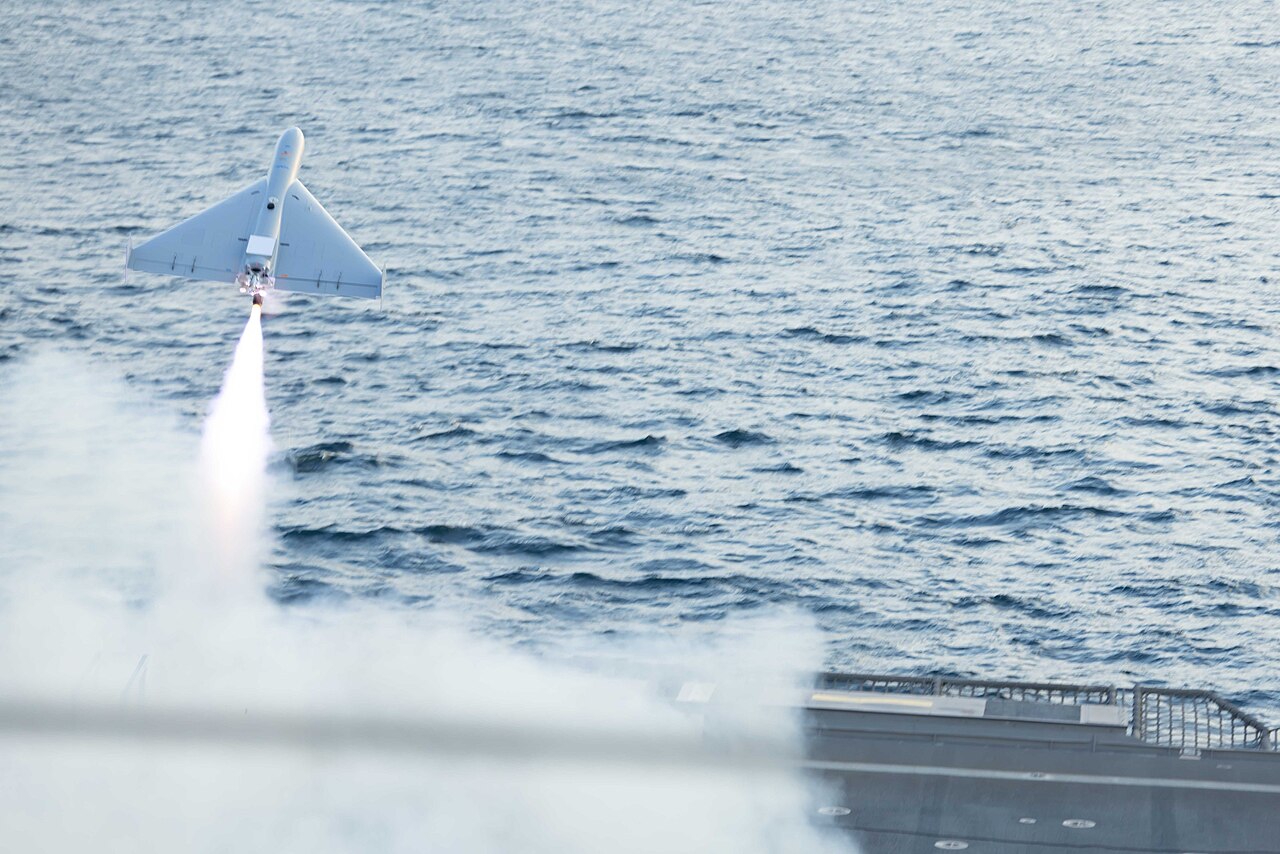
U.S. Naval Forces Central Command's Task Force 59 and the Army's 82nd Airborne Division led the rescue, with Air Force assets assisting, as well.

Drones & Autonomous
Original Briefing
Drone-led Rescue After Apache Crash Near Oman Coast
A recent incident involving a U.S. Army Apache helicopter experiencing a mishap near the Omani coastline saw personnel successfully recovered, with an unmanned aerial system (UAS) playing a pivotal role in the rescue. This event underscores the immediate and critical significance of autonomous platforms in contemporary search and rescue (SAR) operations, demonstrating their operational utility alongside conventional U.S. Naval Forces Central Command's Task Force 59 and other joint assets.
This development resonates within a broader trend of militaries globally integrating advanced autonomous technologies into complex operational frameworks. It highlights the evolving strategic environment where unmanned systems offer distinct advantages in speed, reach, and risk reduction, especially in geopolitically sensitive regions like the Middle East.
Key Intelligence Points
- A U.S. Army Apache helicopter experienced a mishap offshore near Oman, prompting an urgent recovery effort.
- The rescue operation notably featured an unmanned aerial system (UAS) successfully locating and aiding downed personnel.
- Multiple U.S. military components, including naval, army, and air force assets, converged for the coordinated response.
- U.S. Naval Forces Central Command's Task Force 59 spearheaded the critical search and rescue (SAR) mission.
- The rapid deployment and integration of autonomous capabilities proved decisive in personnel recovery during this incident.
Advertisement
Intelligence Briefing
Why this matters: This incident vividly demonstrates the expanding and indispensable role of autonomous systems in critical combat search and rescue (CSAR) missions. For policymakers and defense strategists, it validates investment in UAS technology for personnel recovery, significantly enhancing response capabilities, mitigating risk to human rescuers, and extending operational reach in challenging environments. This paradigm shift directly impacts future force structure and contingency planning.
Editorial Analysis
The successful drone-led recovery following the Apache helicopter incident near Oman carries significant strategic and technical implications for defense and cybersecurity. This event validates the operational efficacy of integrating UAS into high-stakes personnel recovery protocols, showcasing how autonomous platforms can provide rapid situational awareness, initial contact, and potentially critical resupply in scenarios where manned assets face greater risks or time constraints. For military planners, this incident underscores the imperative of developing robust, multi-domain command and control systems capable of seamlessly orchestrating disparate assets, from manned helicopters to sophisticated unmanned aerial vehicles, in real-time crisis response.
This event is not an isolated incident but rather a concrete manifestation of a global military pivot towards autonomous capabilities across the spectrum of conflict. Historically, personnel recovery has been a highly complex and dangerous endeavor; this incident suggests a future where the initial phases of SAR can be significantly de-risked and accelerated through technological augmentation. Expert perspectives consistently point towards increasing reliance on such systems to enhance survivability and operational flexibility, compelling national security researchers and IT security professionals to focus on the resilience, security, and interoperability of these vital networks against advanced cyber threats.
📰