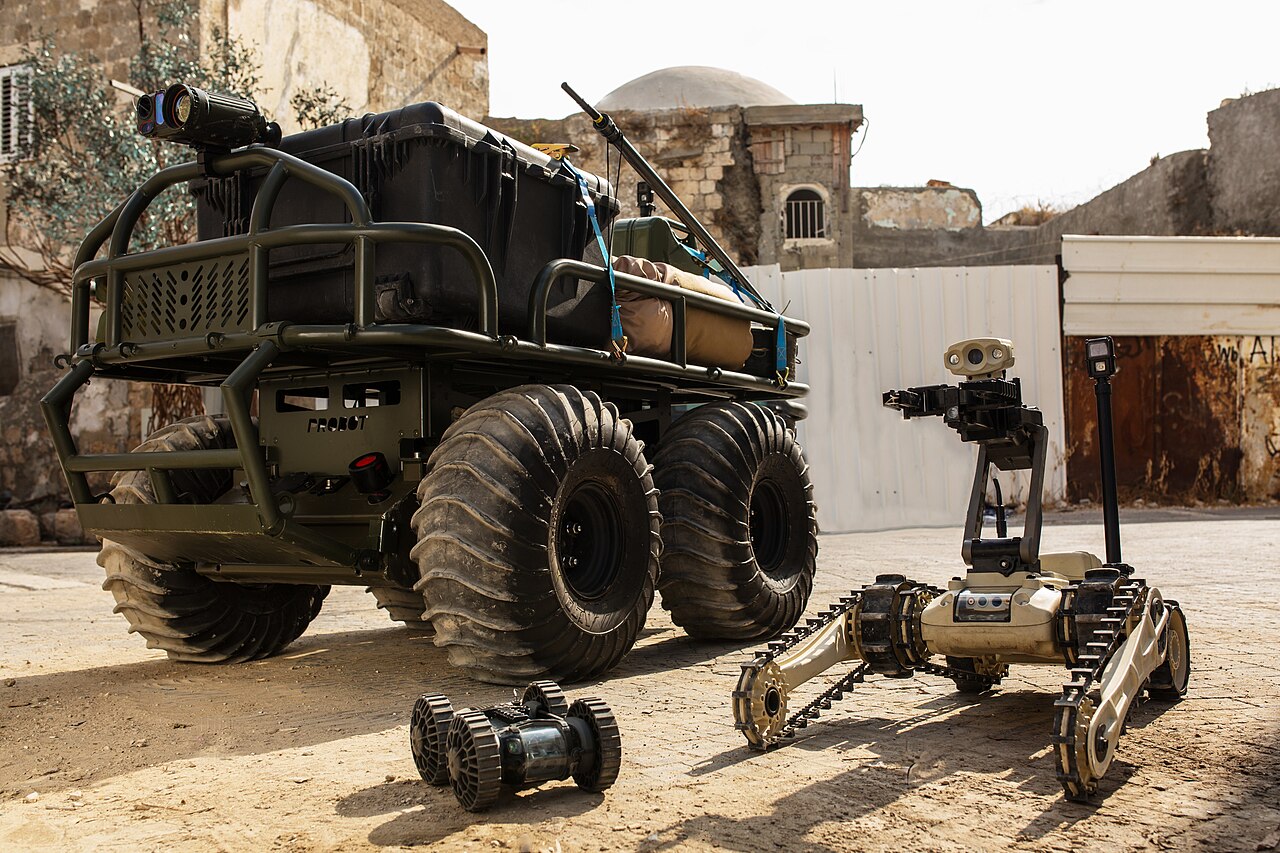
The Ukrainian military aims to contract 25,000 unmanned ground platforms in the first half of this year, more than doubling its 2025 total.
Drones & Autonomous
Original Briefing
AM General UGV Debut at Eurosatory Amid Surging Ukraine Demand
Traditional military vehicle manufacturer AM General, renowned for the Humvee, is set to unveil its first unmanned ground vehicle (UGV) at the upcoming Eurosatory trade show. This development signals a significant entry by a legacy defense contractor into the rapidly evolving autonomous systems market, highlighting a clear industry pivot. This move arrives as Ukraine sets an ambitious target for acquiring tens of thousands of unmanned ground platforms within the current half-year, significantly exceeding its previous year's procurement levels.
This convergence of a major manufacturer's market entry and escalating demand underscores the accelerating shift towards robotics in modern warfare. It reflects a strategic re-evaluation of ground combat capabilities, driven by ongoing geopolitical conflicts and the imperative for force protection and operational efficiency.
Key Intelligence Points
- AM General, the established maker of the Humvee, will introduce its inaugural unmanned ground vehicle at the Eurosatory exhibition.
- This marks a notable expansion by a conventional military vehicle company into the burgeoning autonomous defense sector.
- The company's strategic pivot aligns with a global trend of integrating robotic systems into contemporary military operations.
- Ukraine’s anticipated procurement of tens of thousands of UGVs this half-year highlights robust and immediate market requirements.
- This substantial Ukrainian acquisition objective represents a significant surge compared to its total unmanned platform purchases last year.
Advertisement
Intelligence Briefing
Why this matters: AM General's entry into the UGV market could significantly accelerate the development and potential standardization of robotic ground platforms across NATO and allied forces. It signals industrial adaptation to the ascendance of drone warfare, potentially redefining ground combat doctrine, logistics, and force composition. Policymakers and defense planners must now proactively address implications for interoperability, ethical autonomous system deployment, and the secure integration of these new capabilities into existing defense architectures.
Editorial Analysis
AM General's formidable manufacturing scale and established supply chains could profoundly impact the UGV market, offering robust, battle-proven design principles often lacking in nascent autonomous vehicle ventures. Its technical approach – whether prioritizing modularity for diverse mission sets or ruggedized integration for specific combat roles – will be keenly observed, as it will inform procurement strategies for various defense ministries. This move fundamentally alters the competitive landscape, introducing a major, established player capable of rapid scaling into a segment previously dominated by specialized startups, potentially driving down costs and increasing availability for allies. Ground forces, military planners, and existing UGV manufacturers will all be directly affected, facing new challenges and opportunities related to maintenance, training, and multi-platform interoperability.
This development echoes historical precedents where established industrial giants adapted to paradigm-shifting military technologies, from the advent of tanks in the First World War to the integration of precision-guided munitions. The overarching trend points towards more decentralized, network-enabled warfare, where autonomous systems mitigate risk to personnel and enhance reconnaissance, logistics, and strike capabilities. From an expert perspective, this evolution in UGV production and procurement signifies a permanent reorientation in military asset acquisition, demanding revised cybersecurity protocols for autonomous systems and resilient supply chain management to counter emerging threats.
📰