
US Forces Intercept Sanctioned Tanker in Indian Ocean
- U.S. military forces executed a boarding operation on a tanker suspected of sanctions violations in the strategically important Indian Ocean.
- This specific interdiction aligns with a broader pattern of recent U.S. efforts to intercept illicit shipping traffic in the region.
- Multiple commercial and oil tankers have been targeted in recent months, demonstrating sustained enforcement actions against various illicit actors.

Threat actors are increasingly deploying sophisticated, process-driven loan fraud schemes that exploit systemic weaknesses in financial institutions rather than software vulnerabilities. These organized methods leverage stolen identities and social engineering to navigate legitimate onboarding and lending workflows, effectively bypassing traditional security triggers. Small to mid-sized credit unions are identified as prime targets due to perceived gaps in their verification systems and limited fraud prevention resources.

A newly disclosed critical cPanel vulnerability (CVE-2026-41940) is actively being weaponized to target government and military entities in Southeast Asia, alongside global managed service providers (MSPs). Threat actors are exploiting this authentication bypass flaw to gain elevated control, using custom exploit chains and advanced command-and-control frameworks to establish persistent access and exfiltrate sensitive data.

The China-based Silver Fox cybercrime group has launched a sophisticated new campaign leveraging tax-themed phishing to deploy the previously undocumented Python-based ABCDoor backdoor. This operation, primarily targeting organizations in India and Russia, marks a significant escalation in the group's capabilities and reach. Impacted sectors include industrial, consulting, retail, and transportation.

A paradigm shift in cybercrime is underway, as artificial intelligence dramatically lowers the barrier to entry for sophisticated attacks. In 2025, non-technical individuals and small groups leveraged advanced AI agents to execute complex breaches, a capability previously exclusive to expert teams or nation-state actors. This trend is set to accelerate through 2026, fundamentally altering the global cybersecurity threat landscape.

This week, critical vulnerabilities moved from discovery to active exploitation, underscoring a rapidly escalating threat landscape. A severe flaw in cPanel and WebHost Manager is under widespread attack, alongside a critical Linux kernel privilege escalation added to CISA's Known Exploited Vulnerabilities catalog. These incidents highlight a shift towards sophisticated, multi-vector attacks targeting foundational infrastructure and supply chains.

Breaking Defense has officially launched 'Breaking Defense Europe,' a new dedicated platform responding to the unprecedented surge in European defense interests and investments. This new site promises increased news coverage, focus, and insight tailored for the continent's rapidly evolving security landscape.
The Trump administration has controversially approved $8.6 billion in "emergency" arms sales to four Middle East countries, notably sidestepping standard congressional review processes. This expedited move involves significant transfers to Israel, Qatar, Kuwait, and the United Arab Emirates, citing urgent national security interests. The decision comes amidst heightened regional tensions and follows recent US-Israeli actions against Iran.

The Defense Advanced Research Projects Agency (DARPA) is transitioning its Space-BACN project, crucial for the Golden Dome missile defense initiative, to the Defense Innovation Unit (DIU). This shift signals the universal satellite laser link technology's move from early development toward operational readiness, with DIU set to solicit bids for on-orbit demonstrations. This marks a significant step for the Space Force's emerging Space Data Network.

Over 40,000 servers are believed to have been compromised following the rapid, widespread exploitation of a critical cPanel zero-day vulnerability (CVE-2026-41940). This flaw allows unauthenticated attackers to gain administrative access, posing severe risks to host systems, configurations, databases, and websites managed by the popular platform. The ongoing campaign highlights the urgent need for patching amid escalating cyber threats.
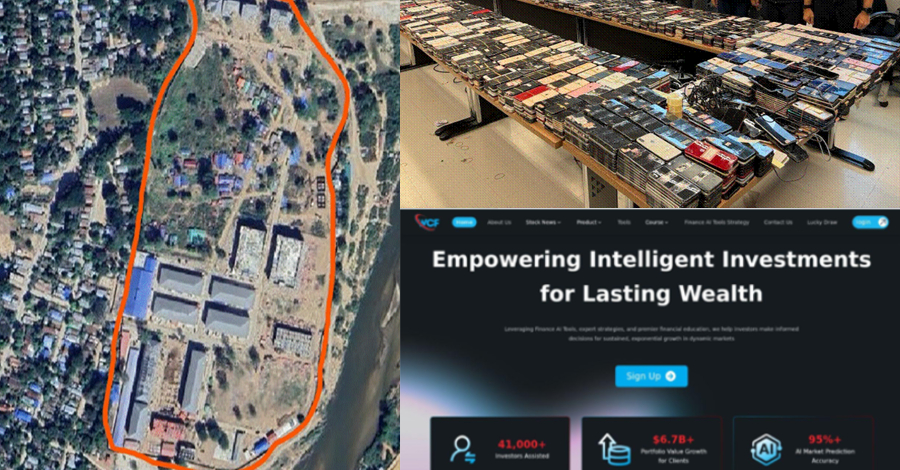
A landmark international operation, spearheaded by U.S., Chinese, and UAE authorities, has disrupted a vast network of cryptocurrency investment fraud, leading to 276 arrests and the seizure of $701 million. This coordinated crackdown targeted "pig butchering" scam centers primarily in Southeast Asia, which lured victims into bogus crypto investments and exploited trafficked labor.

Dutch startup Intelic has launched BASE, a new European military drone marketplace designed to dramatically accelerate procurement by centralizing offerings from nine countries. This platform, inspired by Ukraine's rapid fielding of unmanned systems, aims to overcome fragmentation and ensure interoperability through Intelic's Nexus command-and-control software. It promises plug-and-play systems ready for coalition use, drastically shortening the time from requirement to deployment for defense ministries.

European automakers are tentatively exploring partnerships in the defense sector, driven by increased government spending and a desire to utilize excess production capacity. However, major players like Renault and Volkswagen are expressing extreme caution, emphasizing their intent to remain peripheral suppliers rather than primary weapons manufacturers. This hesitant approach highlights the complexities and reputational risks associated with transitioning into defense production.