
DoD Cyber Strategy Charts AI-Driven Force Future
- The upcoming DoD cyber strategy will explicitly define the integral role artificial intelligence is expected to play in empowering future cyber operations.
- The new policy aims to extend cyber considerations beyond specialized units, integrating them across all departmental personnel and commanders.
- It emphasizes forging a robust operational partnership with the private sector to accelerate the development and deployment of AI solutions.

The U.S. Army is on the cusp of a revolutionary change in aviation with the MV-75 Cheyenne II, a new tiltrotor aircraft poised to redefine speed, range, and lift capabilities far beyond the UH-60 Black Hawk. This significant leap in performance, however, introduces a critical operational challenge: an immediate need for a robust and dedicated aerial refueling infrastructure to fully leverage the Cheyenne II's extended operational reach. The platform's unprecedented speed also demands a reevaluation of established combat doctrines, particularly concerning coordinated operations with slower assets like the AH-64 Apache.

The U.S. Army is poised to significantly upgrade its intelligence, surveillance, and reconnaissance (ISR) capabilities this summer with the commencement of flight tests and initial deliveries of the High Accuracy Detection and Exploitation System (HADES) spy plane. This next-generation platform, built on a modified Bombardier 6500 business jet, is slated to replace the Army's aging turboprop ISR fleet, promising enhanced range, speed, and operational reach. The HADES program adopts an iterative acquisition strategy, beginning with current sensor systems and evolving towards advanced radar and combat-credible payloads.
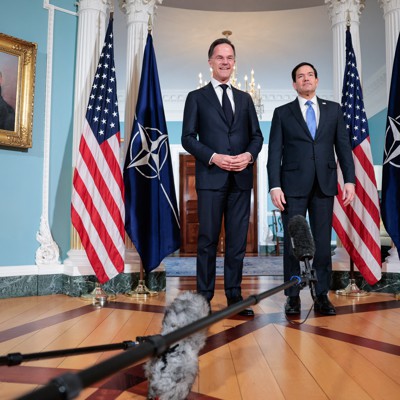
NATO finds itself at a critical juncture, grappling with a structural crisis rooted in trust deficits and unequal burden-sharing among member states, necessitating a profound strategic rebalance. The ongoing conflicts in Ukraine and the Middle East have starkly illuminated the mutual dependencies between Europe and the United States, making this rebalancing not just a strategic choice but an imperative for collective security. Europe, in particular, must address its fragmented defense spending and accelerate the transformation into integrated, formidable capabilities.