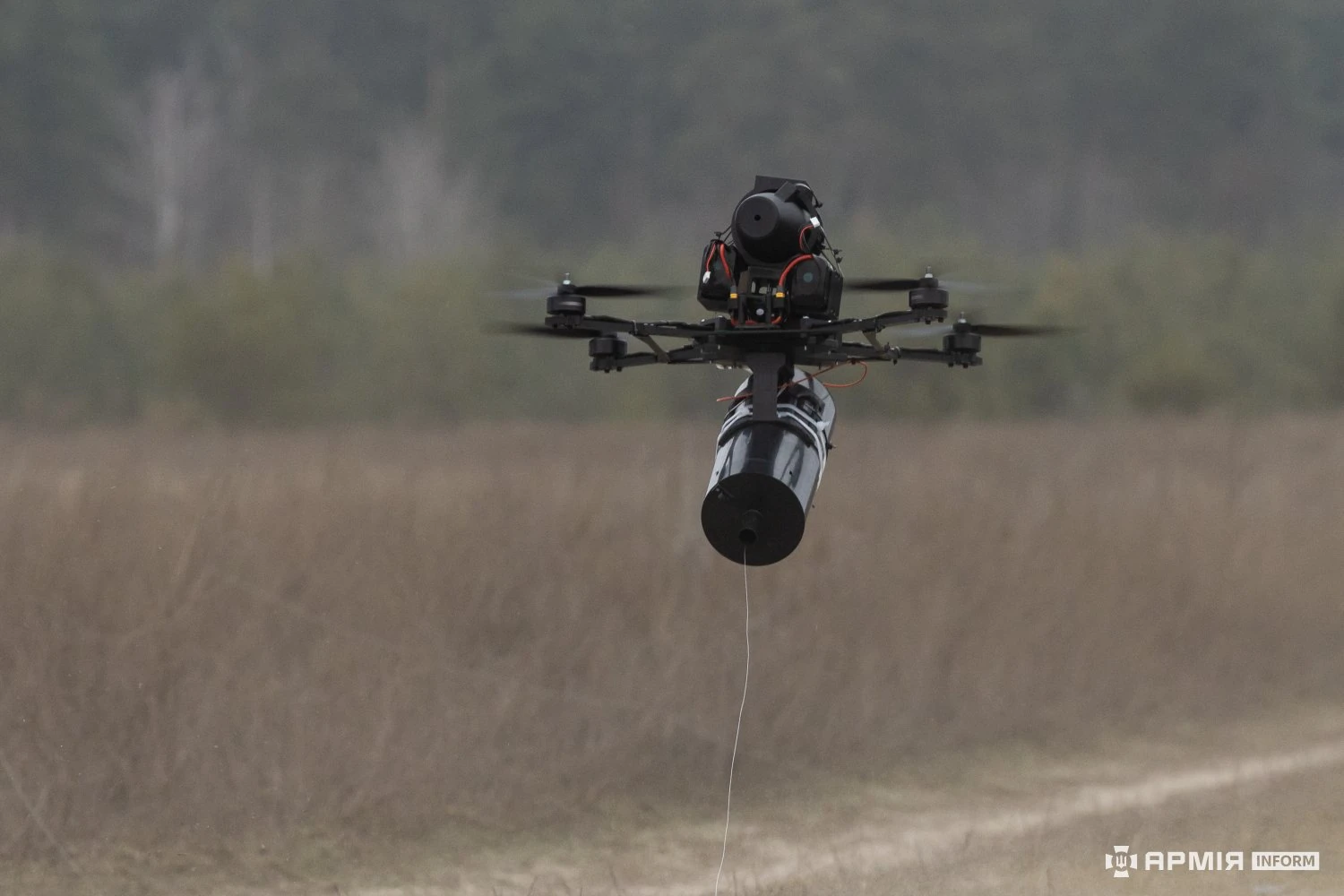
The deal puts Poland in line to become the first country on NATO’s eastern flank to acquire the Shield AI-made drone.

Drones & Autonomous
Original Briefing
Poland Enhances Baltic Naval Operations with V-BAT Drones
Poland has finalized a significant acquisition of Shield AI's V-BAT unmanned aerial systems, marking a notable advancement in its naval surveillance capabilities in the Baltic Sea. This procurement positions Warsaw as the initial NATO eastern flank nation to deploy this specific vertical takeoff and landing (VTOL) drone, directly impacting regional maritime domain awareness and operational security. The V-BAT system is poised to provide critical intelligence, surveillance, and reconnaissance (ISR) support for Polish naval forces, enhancing their capacity to monitor strategic waterways.
This move underscores a broader regional trend towards integrating advanced autonomous systems into national defense architectures, particularly amidst escalating geopolitical tensions with Russia. Such investments reflect a strategic imperative for NATO allies to bolster their persistent monitoring capabilities and maintain tactical superiority in contested environments.
Key Intelligence Points
- Poland's acquisition of Shield AI's V-BAT drones strengthens its naval ISR capabilities in the Baltic Sea theater.
- This procurement establishes Poland as the inaugural NATO eastern flank nation to field the advanced VTOL unmanned system.
- The V-BAT drones are designed to enhance maritime domain awareness for Polish naval operations and coastal defense.
- The deal reflects a strategic investment by a key NATO ally in modern autonomous aerial reconnaissance platforms.
- Shield AI developed the V-BAT system, known for its compact footprint and versatile operational profile in challenging environments.
Advertisement
Intelligence Briefing
Why this matters: This acquisition significantly elevates Poland's maritime intelligence-gathering capacity, providing enhanced real-time situational awareness across the critical Baltic Sea. For defenders, it means a more robust sensor network capable of persistent monitoring, mitigating potential threats from naval and sub-surface actors. Policymakers gain a clearer operational picture to inform rapid decision-making, strengthening NATO's collective defense posture in a strategically vital region.
Editorial Analysis
The integration of V-BAT drones into Poland's naval fleet carries profound strategic and technical significance. Operationally, these VTOL systems offer unmatched flexibility for deployment from smaller naval vessels or confined coastal areas, eliminating the need for traditional runways. This capability directly enhances Poland's persistent ISR presence across the Baltic Sea, a vital maritime corridor bordered by potential adversaries and critical economic interests. The data collected — ranging from vessel identification to potential littoral threats — directly feeds into the operational intelligence cycle, improving targeting, interdiction, and overall maritime security for Poland and its NATO allies.
This procurement is also indicative of a growing trend within modern defense toward decentralized, adaptable, and autonomous intelligence assets. Historically, extensive maritime surveillance relied on larger, more vulnerable manned platforms. The shift to systems like the V-BAT reflects an expert consensus that smaller, networked autonomous platforms offer greater resilience, cost-effectiveness, and continuous presence, critical for maintaining a competitive edge in multi-domain operations and hybrid warfare scenarios against sophisticated threats.
📰