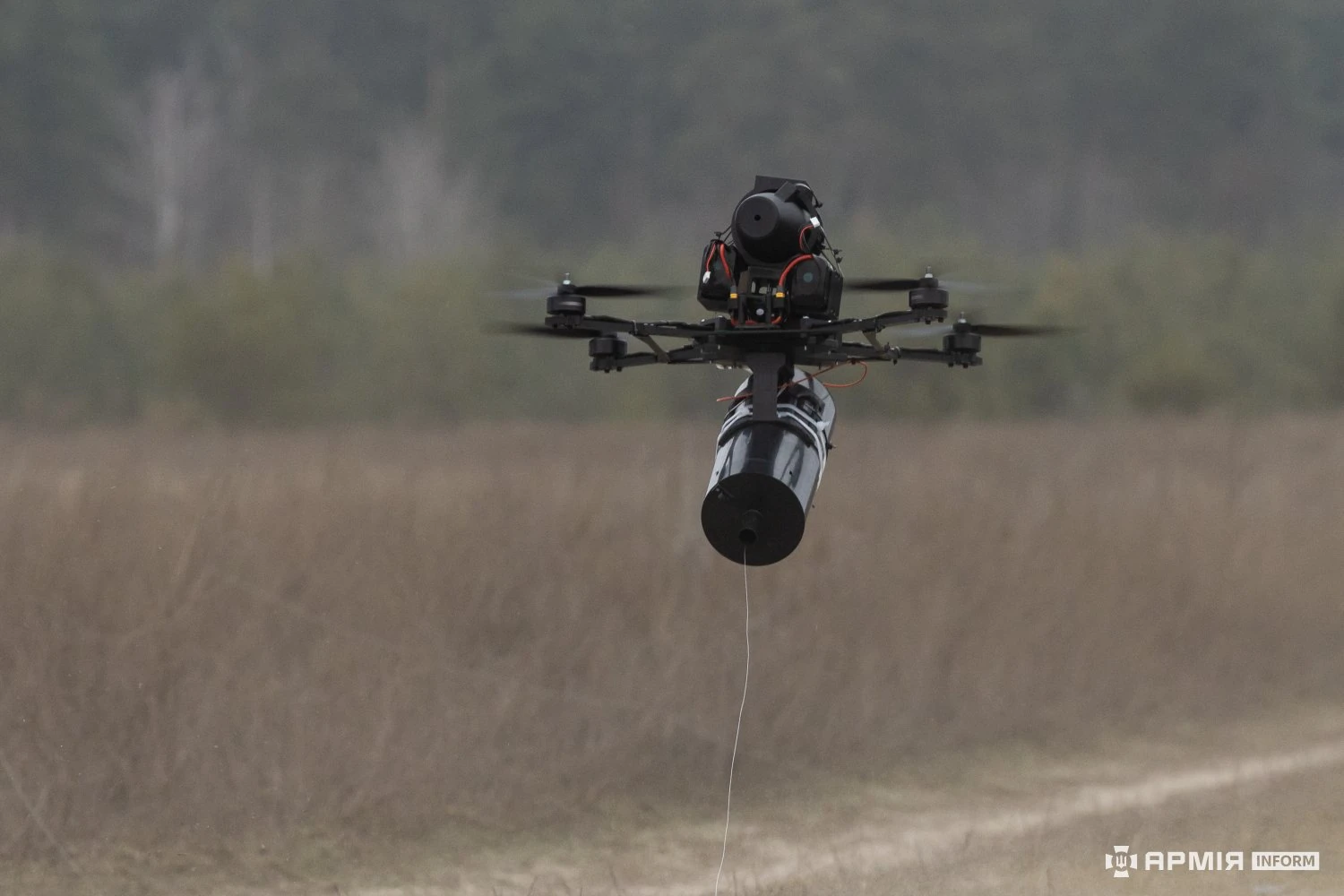
Analysts believe that any military engaged in conflict will, in one form or another, encounter technologies first seen in Ukraine.
Drones & Autonomous
Original Briefing
Fiber-Optic Killer Drones Challenge Israel in Lebanon
The deployment of fiber-optic guided killer drone technology in southern Lebanon marks a significant escalation in regional threat dynamics, posing new challenges for Israeli defense operations. This advanced system offers secure and jam-resistant capabilities, complicating traditional counter-drone measures and directly impacting border security. The introduction of such precision strike munitions alters the tactical calculus for regional actors operating in proximity to Israeli territory.
This development underscores a broader global trend where battlefield innovations, particularly those enhancing drone resilience and lethality, rapidly proliferate from active conflict zones. The observed frustration within Israeli defense circles highlights the immediate strategic implications of these adaptable technologies emerging from intense combat environments like Ukraine, now appearing in new theaters.
Key Intelligence Points
- Advanced fiber-optic killer drone technology has been identified in southern Lebanon, introducing a novel threat vector.
- Its arrival presents a unique operational challenge to Israeli defense forces, indicating potential vulnerabilities in existing counter-drone strategies.
- The guidance system's fiber-optic nature suggests enhanced immunity to electronic warfare and signal jamming, improving reliability.
- This technology's emergence reflects the rapid global dissemination of combat-proven innovations, mirroring trends seen in the Ukraine conflict.
- Such precision munitions could enable more discriminate or resilient strike capabilities for non-state actors operating near the Israeli border.
Advertisement
Intelligence Briefing
Why this matters: The integration of fiber-optic guided drones nullifies conventional electronic warfare and GPS jamming tactics, forcing a re-evaluation of airspace defense. For policymakers and defenders, this demands accelerated investment in kinetic counter-drone systems and multi-layered defenses. It signifies an era where low-observable, jam-proof munitions will increasingly dictate tactical responses and require innovative defensive adaptations.
Editorial Analysis
The strategic significance of fiber-optic guided killer drones in southern Lebanon lies in their capacity to circumvent established electronic warfare protocols, presenting a substantial operational hurdle for Israeli forces. These systems, by relying on a physical tether rather than radio frequency signals, gain immunity to jamming and spoofing, ensuring a high degree of precision and mission success even in contested electromagnetic environments. This shift compels defensive planners to focus less on signal disruption and more on physical interdiction and novel detection methods, profoundly affecting the local security landscape.
This situation reflects a recurring historical pattern of advanced battlefield technologies, once proven in high-intensity conflicts, rapidly migrating to other geopolitical hotspots. The observation that these capabilities mirror those first encountered in Ukraine emphasizes the urgent need for defense and security communities to anticipate and proactively counter such evolving threats. The expert perspective suggests that the proliferation of resilient and cost-effective drone systems will continue, demanding continuous innovation in counter-drone strategies and a departure from reliance on purely electronic countermeasures.
📰