
HASC Bolsters DoD Right to Repair in FY27 NDAA
- The House Armed Services Committee approved the FY27 National Defense Authorization Act following extensive deliberation.
- Key new language grants the Department of Defense default government purpose rights for technical data and software.
- This provision aims to simplify military equipment repairs by mitigating existing contractual intellectual property restrictions.

Former President Donald Trump recently disclosed a candid dialogue with Chinese President Xi Jinping regarding reciprocal state-sponsored cyber intrusions and espionage efforts. This unusual public acknowledgment by a former US leader offers a rare glimpse into the usually covert world of intelligence operations, suggesting a potential shift in how such sensitive issues are discussed at the highest diplomatic levels.

The Pentagon is facing sharp condemnation from Capitol Hill following the abrupt cancellation of a planned U.S. Army brigade deployment to Poland. This unexpected reversal has prompted congressional leaders to warn of severe legislative action if statutory troop minimums in Europe are not strictly adhered to. The decision has ignited concerns about transparency, allied commitment, and strategic messaging to both partners and adversaries amidst ongoing geopolitical tensions.

As unmanned aerial systems rapidly redefine battlefield operations and risk profiles, senior military leaders are intensely focused not just on their current deployment but on identifying the next strategic evolution in warfare. Recent exercises underscore the immediate tactical shift drones bring, yet top brass warn against the dangers of becoming fixated on current trends, urging proactive exploration of future offsets like commercial space capabilities.

The UAE's prominent defense conglomerate, EDGE Group, has finalized an agreement to secure a controlling interest in CMD, an Italian firm specializing in advanced engine design. This strategic acquisition is poised to significantly enhance EDGE's capabilities in propulsion systems for aeronautical, marine, and automotive sectors, furthering its global industrial ambitions.
The aircraft carrier USS Gerald R. Ford is concluding an unprecedented deployment this Saturday, marking an extraordinary period of continuous naval operations. This mission sets a new benchmark for endurance for its class, reflecting significant demands on modern naval assets.

Quantum Space is setting an ambitious target to produce up to one thousand satellites each year from a new expanded facility in Tulsa, Oklahoma, with initial operations slated for early 2027. This move signals a significant push to scale up advanced space capabilities critical for national security and defense operations. The company is currently developing its inaugural satellite, Ranger Prime, which promises unprecedented in-orbit maneuverability and refueling capabilities.

Venture capital continues its strong flow into the defense sector, highlighted by a major funding injection for a prominent defense technology firm. This influx of private capital comes as the Pentagon increasingly emphasizes revitalizing the foundational elements of its industrial supply chain, critical for sustained military readiness.

The U.S. Air Force's MQ-9 Reaper fleet has experienced a notable reduction in its operational numbers, now standing significantly below its historical baseline. These losses, incurred during recent combat operations, are compelling the service to rapidly pursue a new strategy for unmanned aerial systems tailored for contested environments.

The U.S. Coast Guard has finalized a significant multi-billion dollar agreement to bolster its Arctic presence, contracting for the construction of several new security cutters. This strategic investment aims to enhance national sovereignty and operational capabilities in the increasingly critical Arctic region, where geopolitical rivalries are intensifying.

Kyiv is pivoting towards a new era of defense exports, signaling a strategic shift to leverage its combat-honed innovations on the global stage. This move, highlighted by a proposed collaboration with the United States on drone technology, aims to integrate Ukrainian battlefield experience into international military supply chains while fueling its own industrial expansion.
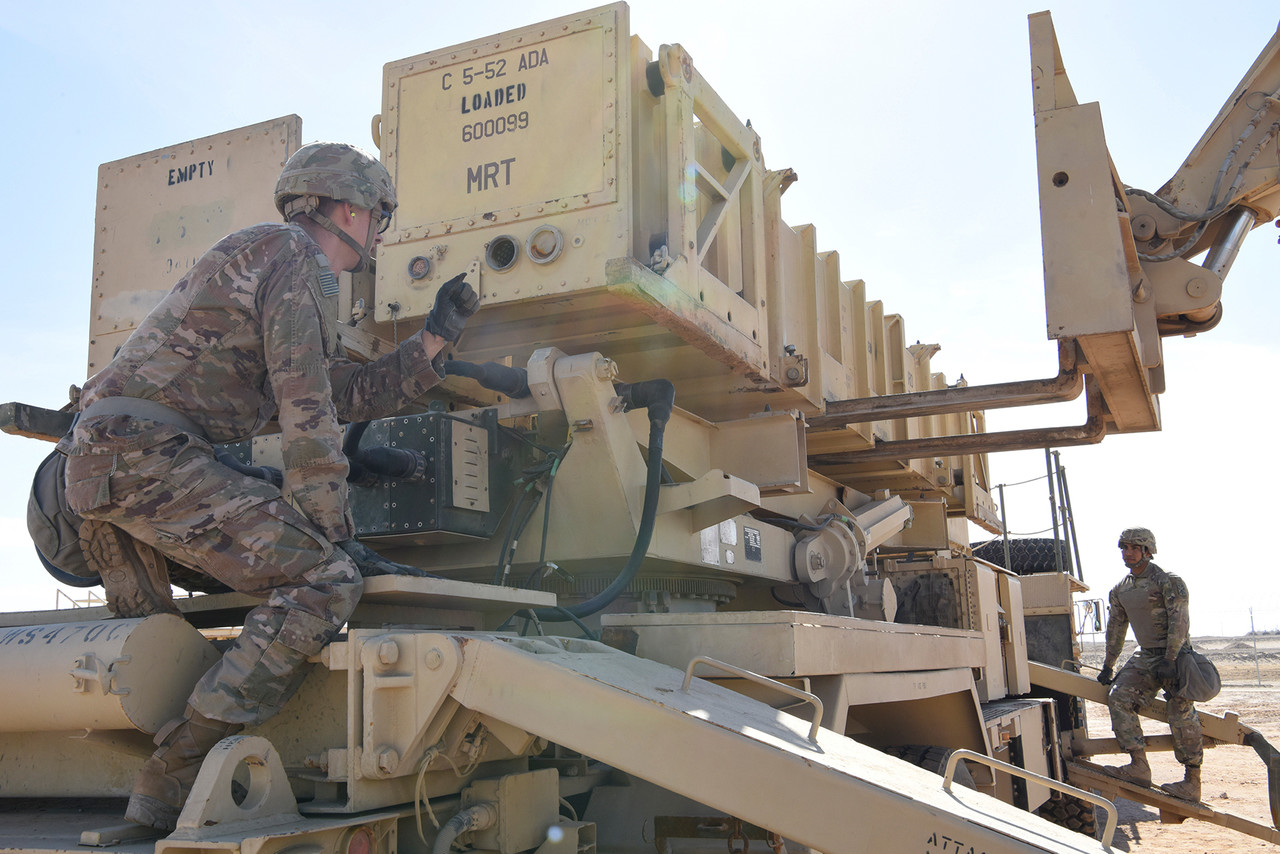
Following an intensive 38-day air campaign, U.S. Central Command asserts that Iran’s conventional military capacity has been substantially reduced. Despite significant degradation of its warfighting capabilities, the Islamic Republic retains a residual ability to pose regional challenges, particularly in strategic waterways. This assessment comes amidst an ongoing standoff in the Strait of Hormuz.

Facing a dramatic surge in global operational demand, US Special Operations Command is advocating for a substantial increase in its funding. Current budgetary allocations have reportedly failed to keep pace with the evolving challenges posed by adversaries engaging in irregular warfare across various domains. This situation threatens to impede modernization efforts and limit critical response capabilities for policymakers.