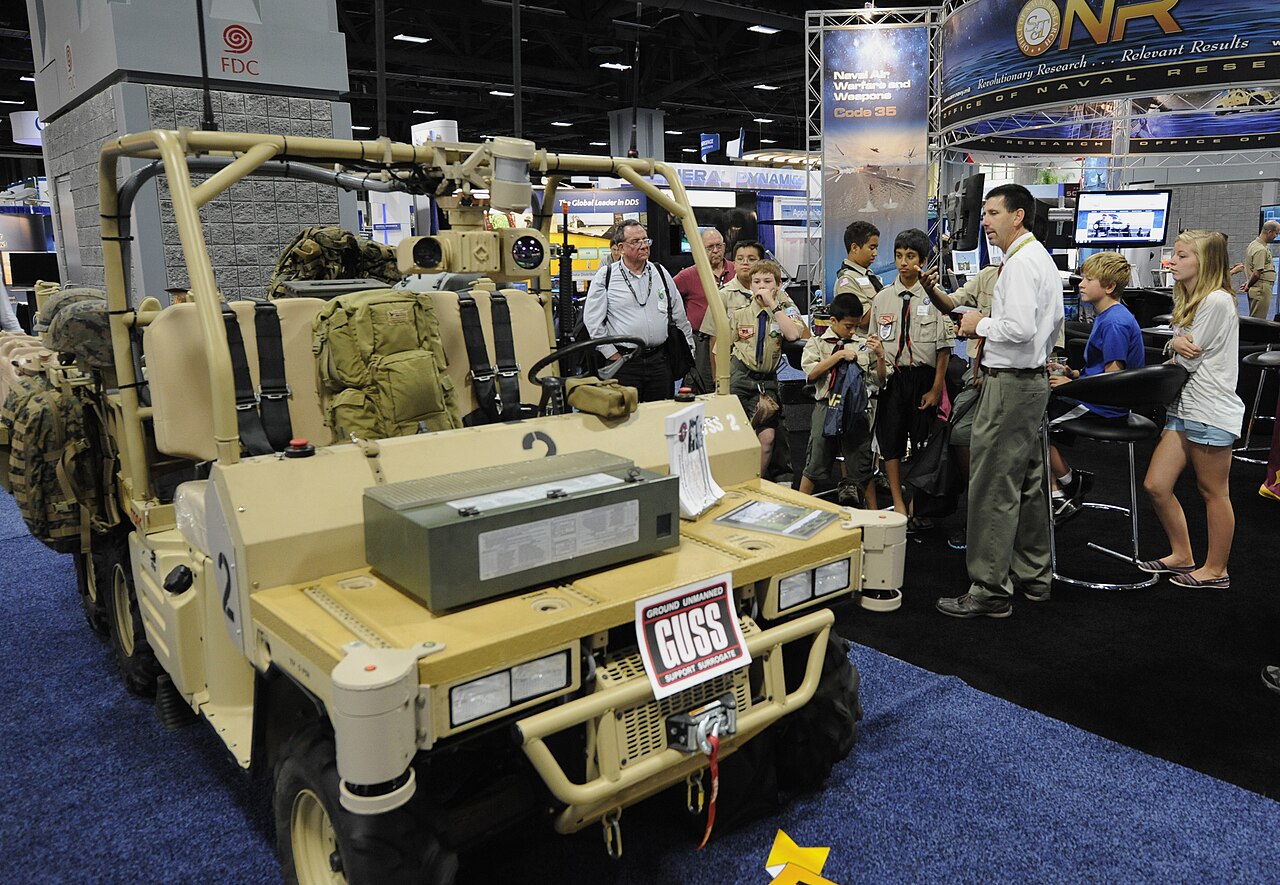
The Marine Corps is pursuing a first-of-its-kind $20 million production contract for fully autonomous ground vehicles.
Drones & Autonomous
Original Briefing
USMC Secures Major Autonomous Ground Vehicle Contract
The U.S. Marine Corps has initiated a groundbreaking multi-million dollar production contract for its first fully autonomous ground vehicles. This significant acquisition, valued at approximately $20 million, marks a critical inflection point in the integration of advanced robotics into expeditionary military forces, directly impacting future logistics, reconnaissance, and combat support operations. It signals a definitive commitment to leveraging unmanned systems for ground domain dominance.
This move by the Marine Corps underscores a broader global trend towards automating military functions, driven by geopolitical competition and the imperative to reduce risk to personnel in contested environments. The strategic imperative is clear: develop and deploy capabilities that enhance battlefield effectiveness while adapting to evolving threat landscapes and technological innovation.
Key Intelligence Points
- The U.S. Marine Corps is pursuing a substantial production contract for its inaugural fully autonomous ground vehicle systems.
- This investment, approximately $20 million, signifies a major step in integrating robotics into forward-deployed military capabilities.
- The acquisition is poised to redefine the logistical and operational framework for future Marine ground operations.
- The program aims to significantly enhance mission readiness and reduce human exposure to high-risk combat scenarios.
- This initiative represents a pivotal moment in the broader defense industry's push toward advanced military automation.
Advertisement
Intelligence Briefing
Why this matters: The deployment of autonomous ground vehicles fundamentally alters tactical risk calculus, shifting vulnerabilities from personnel to cyber-physical systems. This necessitates robust defensive architecture against sophisticated state and non-state actors targeting command-and-control links, sensor integrity, and navigation data. Policymakers and security professionals must also confront the ethical dilemmas and doctrinal re-evaluation required for effective human-machine teaming in future conflict.
Editorial Analysis
The USMC's move to procure fully autonomous ground vehicles represents a strategic leap in modernization, projecting power and sustaining operations without the continuous human presence traditionally required in high-risk zones. Technically, this capability demands incredibly secure, resilient artificial intelligence, advanced navigation systems, and robust, encrypted communication links capable of operating in contested electromagnetic spectrum environments. The expansion of this cyber-physical attack surface affects not only operational units and logisticians but also places immense pressure on cybersecurity teams to develop proactive and reactive defenses against sophisticated nation-state targeting of these critical assets.
This development aligns with a broader, accelerating trend across global militaries to integrate unmanned systems across all domains – air, sea, and ground – foreshadowing an era of increasingly AI-driven warfare. Historically, military technology has consistently sought to extend human reach and reduce direct exposure to danger, from early remote-controlled drones to today's highly intelligent autonomous platforms. The long-term implications for the security community involve navigating complex ethical frameworks, potential arms control challenges, and the imperative to ensure that these systems operate under robust human oversight, regardless of their autonomy level. Future military readiness and national security will increasingly hinge on mastering and securing autonomous capabilities.
📰