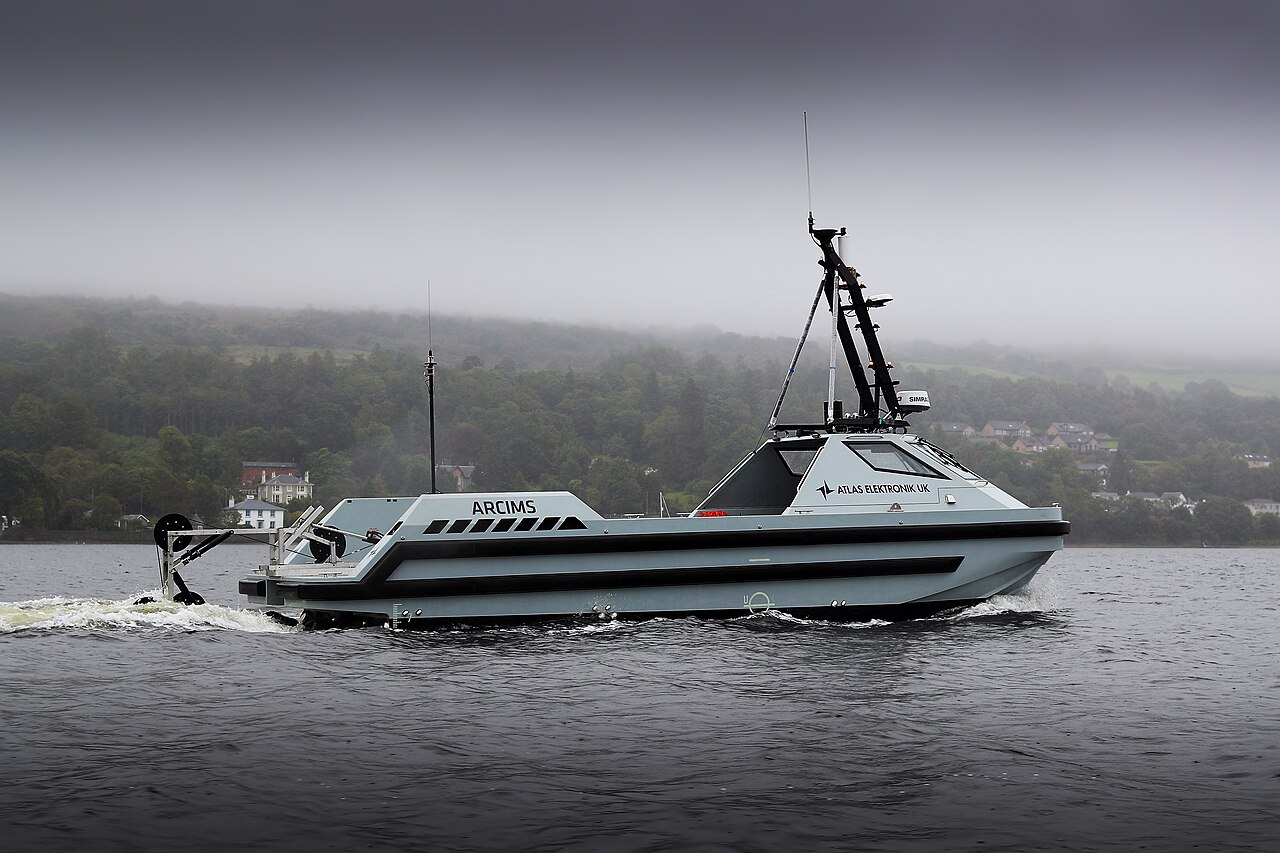
As the Army contends with a shortage of boats in the Pacific, it's looking at autonomous watercraft to fill the gaps.
Drones & Autonomous
Original Briefing
US Army Eyes Drone Boats for Pacific Maritime Gap
The U.S. Army is actively pursuing autonomous surface vessels to address a significant shortage of traditional watercraft within the Pacific theater. This initiative could see the deployment of up to a hundred uncrewed surface vessels (USVs), fundamentally altering the Army's operational footprint and logistical capabilities in a region of heightened strategic importance. These systems represent a critical pivot towards leveraging unmanned technology to project power and maintain presence against sophisticated near-peer adversaries.
This strategic move underscores a broader geopolitical trend: the increasing militarization of autonomous platforms amidst rising tensions in the Indo-Pacific. It highlights the imperative for defense planners to integrate advanced robotics and AI into force structures, adapting to the evolving demands of distributed maritime operations and sustained logistical support in contested environments.
Key Intelligence Points
- The U.S. Army is seeking a substantial fleet of autonomous watercraft to augment its capabilities in the Pacific region.
- Plans involve acquiring potentially a hundred drone boats to overcome existing deficits in manned maritime transport and support.
- This drive directly addresses a current shortfall in deployable watercraft, impacting logistics and operational reach.
- The adoption of uncrewed vessels is poised to enhance the Army's strategic presence across the vast Indo-Pacific.
- The initiative underscores a commitment to integrating autonomous solutions for critical defense and sustainment missions.
Advertisement
Intelligence Briefing
This pursuit of autonomous watercraft significantly impacts operational flexibility and force projection. By reducing reliance on crewed vessels, the Army can conduct more persistent surveillance, logistical resupply, and reconnaissance missions with lower risk to personnel. For policymakers, it signals a strategic shift towards cost-effective, adaptable assets that can complicate adversary targeting while expanding the military's operational aperture in complex maritime domains.
Editorial Analysis
The Army's push for a substantial fleet of autonomous watercraft represents a pivotal adjustment in strategic thinking, directly confronting the challenges of operating across the vast and contested Pacific. These USVs are not merely replacements but force multipliers, capable of persistent intelligence, surveillance, and reconnaissance (ISR), delivering supplies to dispersed units, and potentially forming part of a sophisticated, multi-domain defense network. This capability profoundly affects adversaries by presenting a more complex and resilient operational picture, compelling them to account for a distributed, uncrewed presence that can operate independently or in concert with traditional assets.
This development aligns with a global military trend toward integrating autonomous systems across land, air, and sea domains to enhance operational reach and reduce human risk. Historically, naval innovation has often focused on larger, more complex vessels; however, this shift toward smaller, numerous, and unmanned platforms echoes a paradigm change seen in air warfare with the proliferation of drones. For the security community, it underscores a growing imperative to secure these autonomous networks against sophisticated cyber threats, ensuring their integrity and control in potentially contested electromagnetic spectrum environments, as these platforms become central to future doctrines.
📰