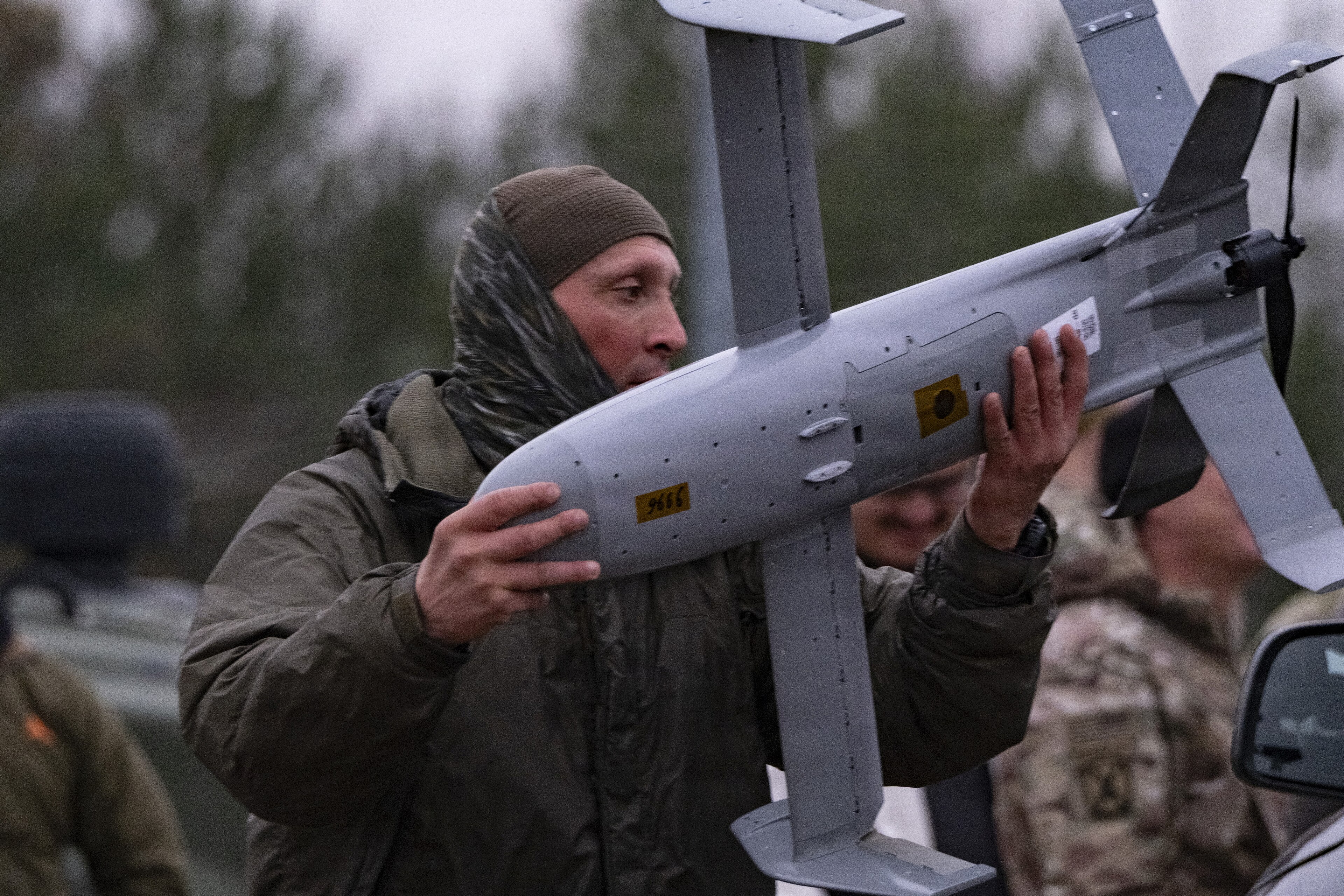
U.S. troops presently stationed in the country are now leaving as expected, but the next scheduled group is not arriving, the defense minister said.

Military & Defense
Original Briefing
US Troop Review in Lithuania Signals NATO Shift
The United States has paused the deployment of its next rotational troop contingent to Lithuania, with existing forces completing their expected withdrawal. This strategic adjustment, confirmed by Lithuania's defense minister, places the future scale and nature of American military presence in the Baltic nation under immediate review. It signals a critical recalibration in Washington's force posture on NATO's vulnerable eastern flank.
This development unfolds against a backdrop of heightened geopolitical tension in Eastern Europe, driven by sustained Russian aggression and the ongoing conflict in Ukraine. Such decisions carry significant weight for collective defense planning, alliance cohesion, and the broader strategic environment, impacting both conventional and advanced multi-domain security considerations.
Key Intelligence Points
- Current United States military forces are concluding their deployment in Lithuania as planned.
- However, the subsequent contingent, previously slated for arrival, will not be deploying as anticipated.
- Lithuania’s defense minister confirmed this adjustment regarding the planned troop rotation.
- The long-term presence of US forces in the Baltic nation is now subject to official re-evaluation.
- This decision signals a potential recalibration of Washington's rotational deployments on NATO's eastern flank.
Advertisement
Intelligence Briefing
Why this matters: This development could be perceived as a subtle shift in Washington's force posture calculus, potentially influencing regional deterrence dynamics. Allies on the Eastern Flank may now re-evaluate their defense planning and readiness requirements, emphasizing interoperability and rapid reinforcement capabilities. It also prompts deeper scrutiny into NATO's commitment signaling amidst evolving geopolitical pressures.
Editorial Analysis
Strategically, this pause in rotational deployments introduces a degree of ambiguity regarding the enduring commitment of significant US ground forces to the Baltic region. While not a complete withdrawal, it compels Vilnius and NATO to re-assess collective defense mechanisms, potentially accelerating efforts toward host nation capacity building and distributed logistics. Adversaries might interpret this as an opportunity to test alliance resolve or probe vulnerabilities in the regional security architecture, particularly in critical cyber and electronic warfare domains that underpin conventional force projection. This necessitates enhanced intelligence sharing and coordinated defensive postures among allies.
This situation reflects a broader trend within NATO to balance rotational presence with sustainable, adaptable force structures, especially following Russia's full-scale invasion of Ukraine. Expert perspectives often highlight the imperative for agility and robust multi-domain capabilities over static deployments, focusing on rapid response and strategic deterrence. Longer-term, it may encourage greater European defense integration and self-reliance, potentially reshaping the transatlantic burden-sharing debate within the alliance and forcing a re-evaluation of regional security architectures.
📰