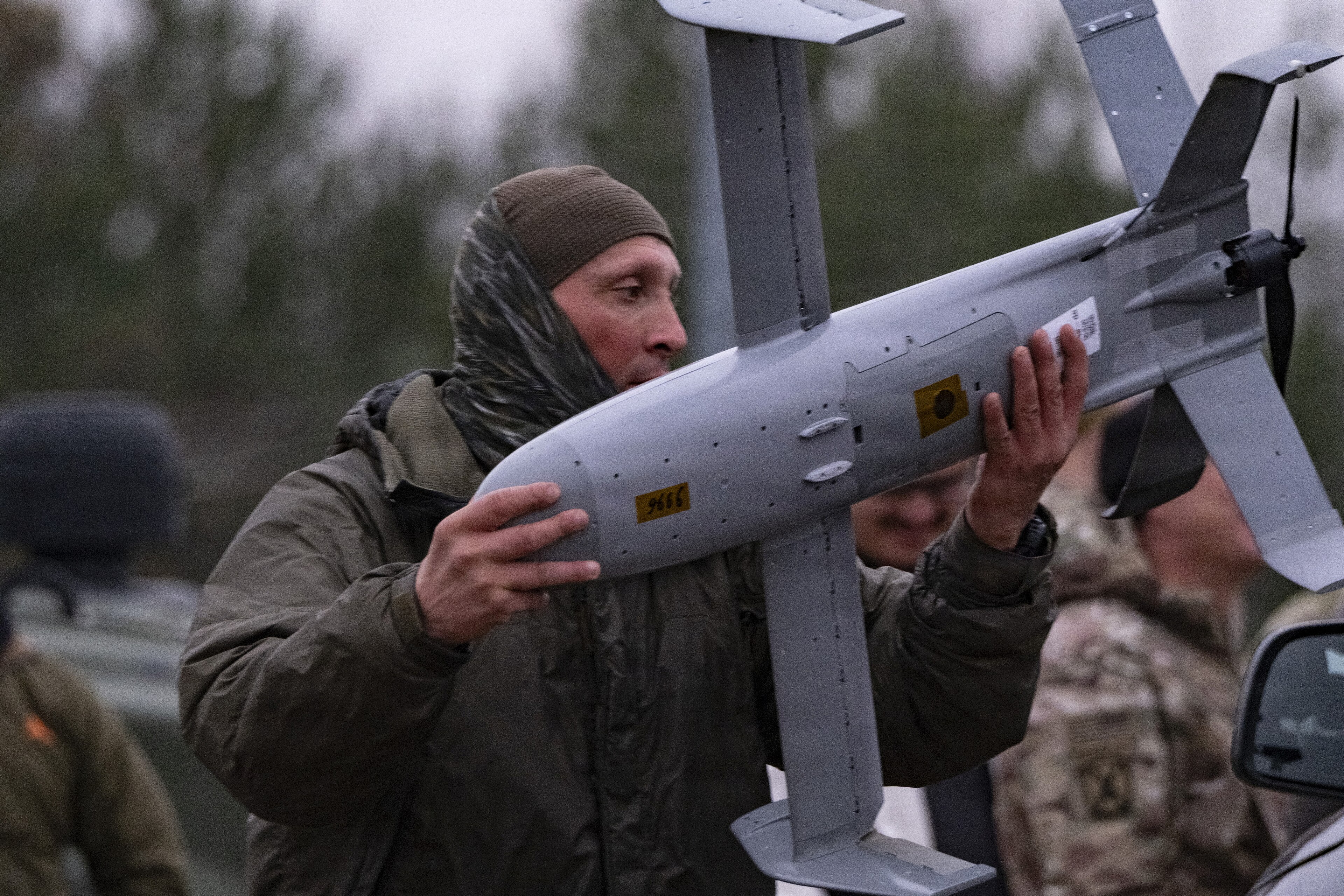
CENTCOM said it had carried out a new round of defensive strikes in southern Iran, while an Iranian drone attack on the Kuwait airport killed one person.

Military & Defense
Original Briefing
Gulf Escalation: Iran Drone Strike, US Retaliation Near Hormuz
Recent aggressive maneuvers in the Persian Gulf region signal a significant escalation of hostilities, underscored by a fatal Iranian drone assault on Kuwait's international airport. This attack, which resulted in a single fatality, immediately precedes reported defensive strikes by U.S. Central Command within southern Iranian territory. The confluence of these events highlights profound vulnerabilities in critical civilian infrastructure and portends a volatile shift in regional security dynamics.
This rapid exchange of force further destabilizes a strategically vital waterway, amplifying existing tensions that have simmered across the Gulf for years. It compels a re-evaluation of current deterrence postures and the potential for broader regional conflict impacting global energy markets and maritime trade.
Key Intelligence Points
- Iranian forces conducted an unmanned aerial system strike targeting Kuwait City's international airport, marking a direct assault on sovereign territory.
- The drone incident resulted in one confirmed civilian casualty, underscoring the indiscriminate risk posed by such advanced weaponry in contested zones.
- U.S. Central Command executed retaliatory defensive operations in southern Iran, likely in response to the regional aggressions.
- The U.S. military action focused on southern Iranian locations, an area critical to maritime control and regional power projection.
- These concurrent actions significantly heighten the already fragile security environment across the Persian Gulf, raising alarms for regional stability.
Advertisement
Intelligence Briefing
Why this matters: The targeting of civilian infrastructure like an airport represents a dangerous shift in engagement rules, demanding immediate reconsideration of airspace defense protocols and threat response strategies for all regional partners. For policymakers, this rapid escalation underscores the precarious balance in the Strait of Hormuz, compelling urgent diplomatic and military recalibration to prevent broader conflict and safeguard global commerce through this critical chokepoint.
Editorial Analysis
The deliberate targeting of Kuwaiti civilian aviation infrastructure by an Iranian drone illustrates an expanding reach and willingness to escalate beyond traditional military-on-military engagements. This tactic introduces a critical layer of complexity for defenders, who must now anticipate and counter threats to non-combatant targets within crowded urban areas. The effectiveness of such an attack, coupled with the U.S. retaliatory strikes, fundamentally alters the calculus of deterrence and response in the Gulf, signaling a lower threshold for kinetic action and raising the stakes for regional actors. It forces a renewed focus on integrated air defense systems capable of detecting and neutralizing low-observable, slow-moving aerial threats in complex urban environments.
This incident aligns with a growing global trend of non-state or state-backed actors leveraging increasingly sophisticated drone technology for strategic effect, blurring the lines of conventional warfare. Historically, attacks on civilian infrastructure often precede broader conflicts or are used to exert significant political pressure and demonstrate capability without full-scale war declaration. The international security community must now grapple with the implications of such actions, particularly concerning the safety of global air travel and the imperative to develop robust, multi-layered defenses against asymmetrical airborne threats in an increasingly contested geopolitical landscape.
📰