The US State Department has recently cleared significant Foreign Military Sales (FMS) agreements for New Zealand and South Korea, signaling a strategic uplift in allied defense capabilities. These approvals pave the way for New Zealand to acquire advanced anti-submarine warfare (ASW) helicopters and torpedoes, while South Korea will receive precision guidance kits for its air-dropped munitions. This move directly addresses modernization needs and enhances the operational capacity of key partners in critical strategic regions.
This development unfolds against a backdrop of intensifying geopolitical competition and evolving security challenges in the Indo-Pacific, where both nations play vital roles in regional stability. The arms transfers reinforce US alliance commitments and contribute to a more robust, interoperable defense architecture across the Pacific theater.
MELBOURNE — The US State Department approved multiple Foreign Military Sales for equipment for New Zealand as well as for South Korea, according to recent announcements.
The potential sales, announced Friday, are valued at $1.57 billion for New Zealand and $106 million for South Korea.
In a first sale, valued at $1.5 billion, New Zealand could receive five Lockheed Martin MH-60R Seahawk helicopters as well as airborne low-frequency sonars and Link 16 Multifunctional Information Distribution Systems Joint Tactical Radio Systems (MIDS-JTRS)
The potential sale also includes 225 missiles and guidance sections for the Advanced Precision Kill Weapon System (APKWS) guided rocket and 65 AGM-114R Hellfire missiles.
A separate sale for 20 MK 54 lightweight torpedoes and related equipment for $69 million was also approved that same day. The torpedoes can be carried by the MH-60Rs as well as the P-8A Poseidon anti-submarine multi-mission aircraft already operated by New Zealand.
The country had announced in August that it had selected the MH-60R to replace eight Kaman SH-2G Super Seasprite helicopters that were acquired from neighboring Australia in 2013.
As for South Korea, the US State Department approved on Friday $106 million for 708 KMU-557 JDAM tail kits along with 58 KMU-572 JDAM guidance sets.
The KMU-557 converts the BLU-109 2,000-lb air-dropped penetrator bomb into a satellite-guided precision weapon, while the KMU-572 is the conversion kit for the 500-lb MK 82 bomb.
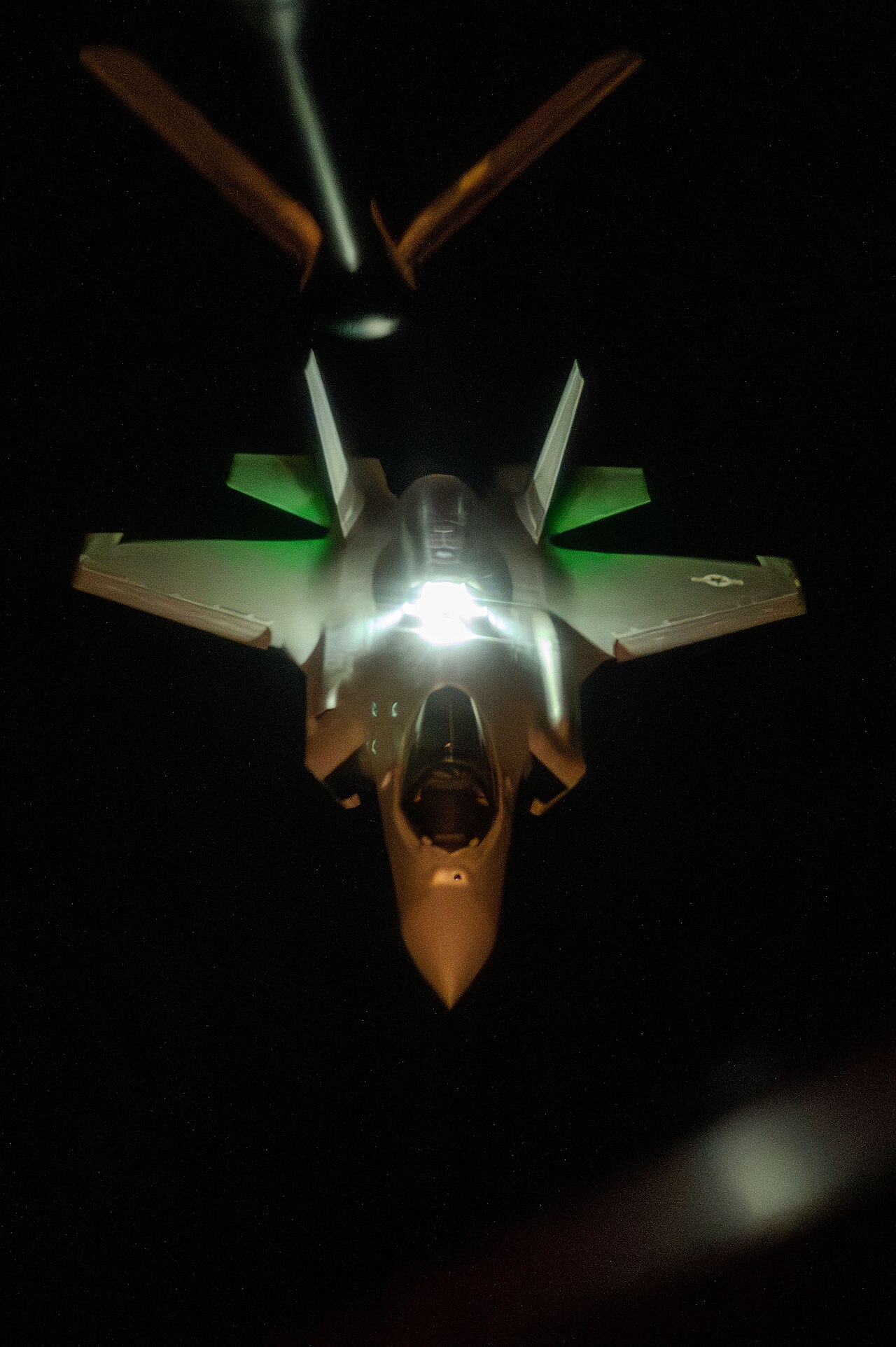
South Korea operates several aircraft types that can employ both types of JDAMs, including the F-35A Lightning II stealth fighter, F-15K Slam Eagle and F-16C/D multirole fighters.
FMS announcements do not represent final sales; quantities and dollar totals often shift during negotiations, and the announcement tees up an opportunity for lawmakers to block the deal within a 30-day period, though such a step is rare.
Editorial Analysis
The strategic implications of these sales are multifaceted, directly affecting the operational landscape for both recipient nations and the broader Indo-Pacific security framework. New Zealand's acquisition of MH-60R Seahawk helicopters, equipped with airborne low-frequency sonars and advanced communications systems, represents a transformative leap in its maritime surveillance and anti-submarine warfare capabilities. This upgrade will significantly enhance Wellington's capacity to detect and track subsurface threats, integrate more effectively into coalition operations, and safeguard critical sea lanes. The additional MK 54 lightweight torpedoes further arm these platforms, solidifying New Zealand's ability to contribute meaningfully to regional naval security.
Concurrently, South Korea's receipt of precision guidance kits for JDAMs underscores a continuous effort to refine its tactical airpower with enhanced accuracy and standoff capability. These kits convert conventional bombs into satellite-guided weapons, providing a substantial boost to the precision strike capacity of aircraft like the F-35A, F-15K, and F-16C/D. Such precision munitions are vital for minimizing collateral damage and increasing the effectiveness of air operations in complex environments. These FMS agreements collectively exemplify the US strategy of fostering burden-sharing and promoting interoperability among allies, addressing evolving threats from potential adversaries and bolstering collective security in a strategically vital region.