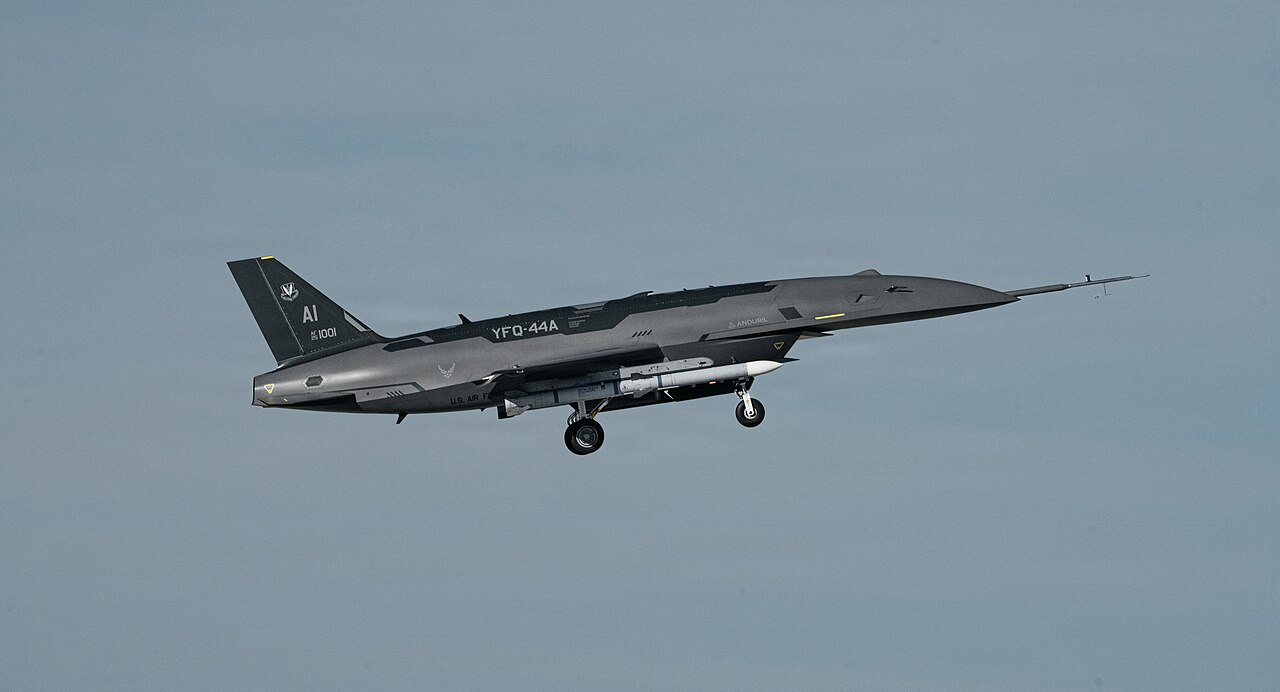
European and U.S. defense forces are rapidly developing their own AI-powered drones to complement their fighter jets and carry extra battlefield tech.
Drones & Autonomous
Original Briefing
Europe & US Accelerate AI Drone Wingman Development
Defense establishments across Europe and the United States are aggressively pursuing the development of sophisticated autonomous aerial vehicles, leveraging artificial intelligence to act as force multipliers. These AI-driven drones, colloquially termed "wingmen," are poised to dramatically enhance the operational capabilities of existing manned fighter jets. Their integration promises to deploy diverse technological assets and expand battlefield functionalities far beyond current aerial platforms.
This rapid advancement signifies a critical shift in global military strategy, particularly against the backdrop of Europe's ongoing rearmament initiatives. The push towards integrated human-machine teaming represents a profound technological trend, reshaping strategic environments and the very doctrine of aerial combat.
Key Intelligence Points
- Defense forces in Europe and the U.S. are intensely focused on developing advanced artificial intelligence-driven unmanned aircraft.
- These aerial vehicles are engineered to operate as loyal "wingmen," augmenting the capabilities of manned fighter jets in combat.
- Their primary role includes integrating a diverse array of advanced battlefield technologies, thereby expanding mission profiles and tactical options.
- This rapid development signals a significant evolution in transatlantic military strategy and air power modernization efforts.
- This initiative underscores a significant strategic shift towards integrated human-machine teaming paradigms in future aerial warfare scenarios.
Advertisement
Intelligence Briefing
Why this matters: These wingmen introduce a potent force multiplier, shifting air combat from purely pilot-centric operations to complex human-machine teams. This complicates adversary targeting, diversifies mission profiles, and necessitates robust new cybersecurity protocols for autonomous systems. Policymakers must now focus on fresh defense strategies and substantial infrastructure hardening to mitigate evolving threats to these integrated platforms, ensuring data link integrity and AI decision-making trust.
Editorial Analysis
The strategic significance of AI-powered wingmen is profound, fundamentally altering the calculus of air superiority and strike missions. Manned fighter aircraft, traditionally at the apex of air power, will see their survivability and mission effectiveness drastically increased by these loyal autonomous companions. The capability extends beyond mere payload delivery; AI algorithms enable dynamic tactical adaptation, real-time threat assessment, and coordinated maneuvers with human pilots, offering a substantial advantage to operators across the NATO alliance and other partner nations. This shift will demand new training regimens, refined command and control structures, and novel approaches to electronic warfare and cyber defense for these interconnected systems.
This acceleration of autonomous wingman development fits into a broader historical trend of integrating technology to amplify human combat power, much like the introduction of guided munitions or advanced sensor suites. However, the AI-driven autonomy presents a unique challenge, pushing the boundaries of ethical engagement, regulatory frameworks, and the resilience of digital infrastructure. Cybersecurity, in particular, becomes paramount, as the integrity of the AI's decision-making process and the security of data links against sophisticated adversarial attacks will directly dictate operational success and trust in autonomous systems.
📰