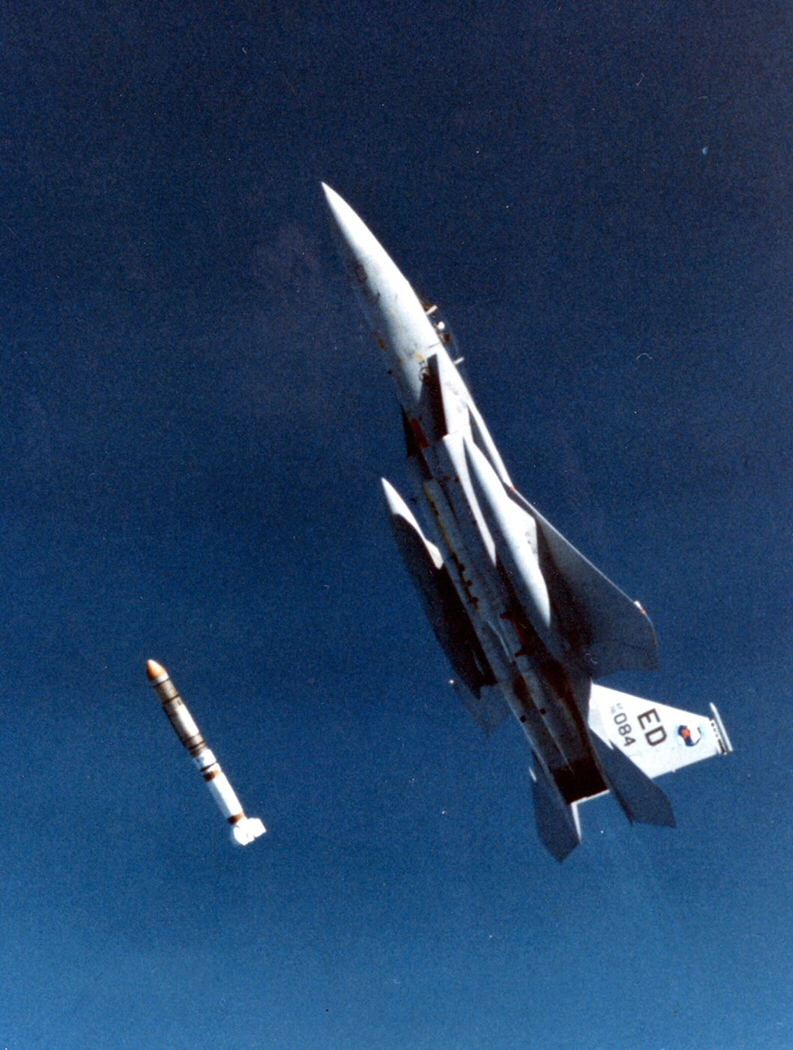
The Defense Advanced Research Projects Agency (DARPA) is actively soliciting innovative industry proposals to establish rapid reconstitution capabilities for space assets. This critical initiative aims to counter vulnerabilities posed by adversarial anti-satellite (ASAT) attacks or on-orbit incidents, which could disrupt essential national security services. The goal is to develop agile mechanisms to quickly restore critical space functions, potentially within tactical timelines ranging from mere hours to a few weeks.
This push underscores a strategic imperative to evolve space operations from a largely static, high-value architecture to a dynamic, resilient ecosystem. It reflects a growing recognition that space is a contested domain, demanding proactive measures to maintain operational continuity and strategic advantage in a rapidly changing geopolitical landscape.
WASHINGTON ― The Defense Advanced Research Projects Agency (DARPA) is turning to industry for help in identifying technologies and operational concepts to allow the reconstitution of space assets damaged or destroyed by adversaries, or on-orbit accidents.
“The end goal is to develop and deploy effective response mechanisms to rapidly restore critical services to minimum levels or higher, on tactical timelines of hours to weeks, in response to demand surge needs, lost assets resulting from potential adversaries’ ASAT [anti-satellite weapons] engagements, or orbital debris collisions,” the Pentagon’s far-future agency said in a June 12 request for information (RFI).
DARPA’s RFI notes that the Space Force has been working on developing “the ability to rapidly deploy and operate space-based assets in response to immediate, urgent, and often unforeseen tactical needs” ― including through the Tactically Responsive Space program and the Victus series of demonstrations aimed at minimizing the time between a launch order and actual launch.
Nonetheless, the agency asserts, “rapid space capability reconstitution is a complex task requiring a multi-faceted approach and presents numerous technical, logistical, contractual, and regulatory challenges, many of which are still ripe for novel solutions and methodologies.”
The RFI explains that DARPA is looking for industry ideas in four general areas: space vehicles, including both satellite busses and payloads; launch vehicles; the integration of space and launch vehicles; and novel concepts of operations.
The RFI also lists 20 topics of specific agency interest, including;
Rapid satellite manufacturing and assembly, both ground-based and on-orbit
Reconfigurable / software-defined satellites / virtualization
Multifunctional/multirole satellites
Technologies for operation in very low Earth orbit
Spacecraft survivability and resiliency
Interested vendors have until July 8 to respond.
Editorial Analysis
This initiative fundamentally redefines space resilience, moving beyond merely protecting existing assets to actively building the capacity for rapid replacement and adaptation. By seeking solutions across the entire space lifecycle—from accelerated manufacturing and flexible launch to on-orbit reconfiguration—DARPA aims to make the space architecture more agile and far harder to decisively cripple. This transforms the strategic calculus for military strategists and national security planners, presenting a robust deterrent against attempts to neutralize critical space-based capabilities.
The endeavor aligns with broader trends in military logistics, mirroring historical shifts from bespoke, long-lead systems to more modular, mass-producible solutions designed for supply chain resilience under duress. This approach complements the emerging paradigm of proliferated low Earth orbit (LEO) constellations, where disaggregation already mitigates the impact of individual satellite loss. The added layer of rapid reconstitution ensures an even greater degree of robustness, fostering a dynamic space ecosystem that can quickly adapt to evolving threats and maintain persistent coverage, thereby raising the stakes for any adversary contemplating an ASAT attack.