
Dutch Combat Robot Plant Boosts Ukraine's Frontline Tech
- A new production plant for combat-zone robots has commenced operations in the Netherlands, directly supporting European defense efforts.
- The facility specializes in manufacturing THeMIS unmanned ground vehicles, a critical asset for various combat scenarios.
- This new industrial capacity is designed to establish a fresh and reliable supply stream of advanced robotic systems for Ukraine.
Cybersecurity researchers have uncovered a new threat landscape where the popular AI workflow automation platform, n8n, is being actively weaponized by malicious actors. Threat actors are exploiting trusted n8n infrastructure and unique custom domains to bypass traditional security filters, enabling sophisticated phishing campaigns and the delivery of stealthy malware, including remote monitoring and management (RMM) tools. This innovative abuse transforms a productivity tool into a vehicle for persistent remote access and device fingerprinting.

The Computer Emergency Response Team of Ukraine (CERT-UA) has issued a critical alert regarding UAC-0247, a new and sophisticated threat cluster actively targeting Ukrainian government and healthcare institutions with advanced data-theft malware. This campaign, observed between March and April 2026, leverages spear-phishing tactics and custom malware like AGINGFLY and RAVENSHELL to exfiltrate sensitive information from Chromium browsers and WhatsApp, with troubling implications for national security given evidence of targeting Defense Forces.

The Navy League's premier Sea Air Space conference has officially opened its doors in Washington D.C., launching three days of critical discussions and groundbreaking reveals in naval innovation. Our team is on the ground, bringing you an exclusive first look at the cutting-edge defense technologies and strategic insights emerging directly from the show floor on Day 1. While the full scope of the conference unfolds at National Harbor, Breaking Defense offers a snapshot of the most compelling exhibits and industry trends.
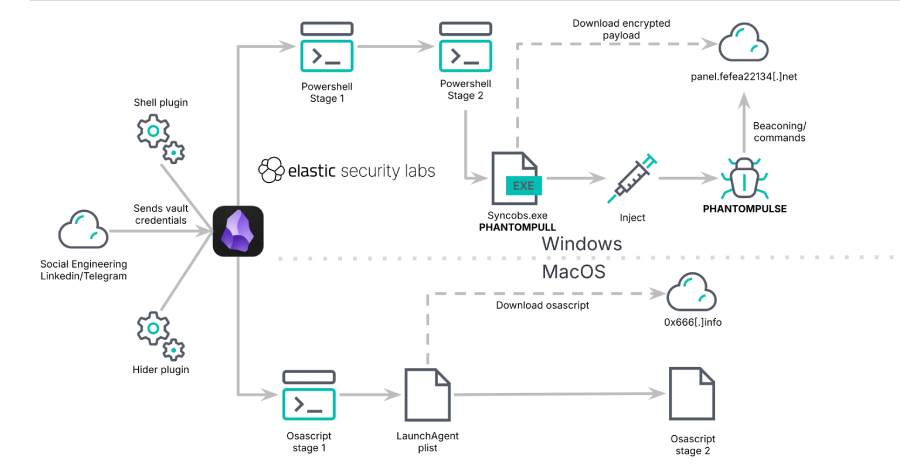
A novel social engineering campaign is exploiting Obsidian plugins to deploy a new AI-generated remote access trojan, PHANTOMPULSE, against individuals in the finance and cryptocurrency sectors. This sophisticated threat, dubbed REF6598 by Elastic Security Labs, uses elaborate social engineering on LinkedIn and Telegram, luring victims into syncing malicious plugins that compromise both Windows and macOS systems. The attacks mark a concerning evolution in how threat actors are leveraging legitimate, cross-platform applications and advanced social engineering tactics to achieve initial access.

Cisco has released urgent patches addressing four critical vulnerabilities, some scoring as high as 9.9 on the CVSS scale, impacting its widely used Identity Services Engine (ISE) and Webex Services. These severe flaws could enable unauthenticated remote code execution, extensive user impersonation, and privilege escalation through crafted requests, potentially granting attackers root access or unauthorized network entry. Organizations utilizing these foundational Cisco products are strongly advised to apply updates immediately to mitigate significant breach risks.

This week in cybersecurity has been particularly turbulent, highlighted by the discovery of a critical Microsoft Defender 0-Day vulnerability that demands immediate attention from organizations. Compounding the threat landscape, SonicWall firewalls are currently targeted by active brute-force campaigns, while a 17-year-old Excel Remote Code Execution flaw has alarmingly resurfaced, posing renewed risks across enterprises. This trifecta of high-impact vulnerabilities underscores the persistent and evolving challenges facing defenders globally.

Cybersecurity researchers have issued a urgent warning about a newly discovered botnet named PowMix, actively targeting the Czech Republic's workforce since December 2025. This sophisticated threat employs advanced command-and-control (C2) evasion techniques, making it particularly difficult to detect through conventional network defenses. Delivered primarily via phishing campaigns, PowMix represents a significant new challenge for organizations in the region.

A high-severity remote code execution vulnerability in Apache ActiveMQ Classic (CVE-2026-34197) is now under active exploitation, prompting a critical alert from the U.S. Cybersecurity and Infrastructure Security Agency (CISA). This flaw, which has reportedly been "hiding in plain sight" for 13 years, allows arbitrary code execution via the Jolokia API, and can be unauthenticated in specific versions. CISA has added this RCE to its Known Exploited Vulnerabilities catalog, mandating federal agencies to patch by April 30, 2026.
An unprecedented international law enforcement crackdown, dubbed Operation PowerOFF, has successfully dismantled 53 DDoS-for-hire domains and led to four arrests, severely disrupting a major vector for cybercrime. This collaborative effort, involving 21 nations, has not only seized critical infrastructure but also exposed a staggering 3 million criminal user accounts, marking a significant blow to the global illicit market for denial-of-service attacks.

The National Institute of Standards and Technology (NIST) has announced a significant overhaul of its National Vulnerability Database (NVD) enrichment process, a direct response to a staggering 263% increase in CVE submissions since 2020. Effective April 15, 2026, the NVD will now only prioritize the comprehensive enrichment of vulnerabilities meeting specific criteria, leaving a vast number of other CVEs with reduced metadata. This strategic shift aims to manage the overwhelming volume while focusing resources on the most critical threats facing federal systems and vital infrastructure.

Google is fortifying Android's privacy landscape with the upcoming Android 17, introducing granular controls for contact and location data while simultaneously revealing it blocked an astonishing 8.3 billion policy-violating ads and suspended nearly 25 million accounts in 2025. These comprehensive updates leverage advanced AI to enhance user data protection and combat digital fraud, marking a significant step in Google's ongoing commitment to a more secure ecosystem. Users will now experience a more transparent and controlled environment for sharing their personal information with third-party applications.

Cybersecurity firm Huntress is sounding the alarm on active exploitation of three Microsoft Defender zero-day vulnerabilities, including two critical flaws that remain unpatched. These vulnerabilities, codenamed BlueHammer, RedSun, and UnDefend, were publicly disclosed by a researcher following disputes over Microsoft's handling of the disclosure process, leading to immediate in-the-wild attacks. Threat actors are leveraging these flaws to achieve local privilege escalation and disrupt critical security updates on compromised systems.