
Dutch Combat Robot Plant Boosts Ukraine's Frontline Tech
- A new production plant for combat-zone robots has commenced operations in the Netherlands, directly supporting European defense efforts.
- The facility specializes in manufacturing THeMIS unmanned ground vehicles, a critical asset for various combat scenarios.
- This new industrial capacity is designed to establish a fresh and reliable supply stream of advanced robotic systems for Ukraine.

Newly disclosed documents confirm that the Russian state-sponsored actor behind the 2019-2020 SolarWinds supply chain compromise achieved significant penetration into the U.S. Treasury Department's email systems. This sophisticated intrusion granted the adversary deep access to a critical subset of accounts, specifically targeting high-value communications within the broader departmental network. The incident underscores the persistent strategic objectives of nation-state threat actors in penetrating sensitive government infrastructure. This revelation, alongside CISA's proactive expansion of its Known Exploited Vulnerabilities catalog in response to recent supply chain attacks, highlights an evolving threat landscape. Both state-sponsored espionage and widespread financially motivated cybercrime continue to challenge global digital defenses, demanding adaptive security postures from both public and private sectors.

Exploitation code has been publicly released for a critically severe remote code execution (RCE) vulnerability impacting Flowise, a widely adopted open-source platform for building large language model (LLM) workflows. Cybersecurity researchers at Obsidian Security published technical details and proof-of-concept (PoC) code, demonstrating a high-impact method for server compromise. This development immediately escalates the operational risk for organizations leveraging self-hosted Flowise instances. This incident underscores the inherent security challenges within the rapidly expanding AI ecosystem, particularly concerning the foundational protocols and development frameworks that facilitate AI agent creation. As organizations increasingly integrate sophisticated AI capabilities, vulnerabilities within these underlying tools introduce systemic risks that can propagate across entire digital infrastructures.

Russian intelligence agencies are significantly escalating their efforts to acquire advanced Western technology and defense secrets, driven by the acute pressures of international sanctions and the ongoing conflict in Ukraine. These state-sponsored operations leverage a sophisticated array of tactics, from establishing elaborate front companies and recruiting intermediaries to deploying advanced cyber espionage and direct hacking campaigns against critical infrastructure. This aggressive pivot underscores Moscow's urgent need to mitigate its industrial and military technological gaps. This trend reflects a broader geopolitical realignment where technological self-sufficiency and strategic advantage are paramount, compelling nations like Russia to prioritize illicit acquisition as a primary tool for maintaining operational capabilities and global competitive parity in an era of heightened great power rivalry.

A significant security incident at Charter Communications, a major U.S. telecom provider, has resulted in the exposure of an estimated 4.9 million customer records. The ShinyHunters extortion collective claims responsibility, leveraging a sophisticated voice phishing (vishing) attack to compromise an employee's Microsoft Entra account and subsequently infiltrate the company's Salesforce instance. This breach underscores the persistent vulnerability of critical infrastructure to human element exploitation and the subsequent downstream risks to extensive customer data. The incident highlights a growing trend where sophisticated social engineering tactics bypass technical controls, revealing systemic weaknesses in enterprise identity management and third-party SaaS security postures. Such compromises within telecommunications networks raise broader national security concerns, given the sector's foundational role in critical services and communications.
California Attorney General Rob Bonta has initiated legal action against 23andMe (now Chrome Holding Co.) for alleged failures in safeguarding sensitive genetic and personal information, which led to a substantial data breach in 2023. The lawsuit highlights systemic security deficiencies that permitted a sophisticated credential-stuffing attack to compromise nearly 7 million customer records. This incident exposed deeply personal health predispositions and familial connections, raising urgent questions about corporate accountability for highly sensitive data. This legal challenge underscores the escalating regulatory pressure on organizations handling vast datasets of personal information, especially within the genetic and health sectors. It reflects a growing global trend towards holding companies accountable for both inadequate security postures and misleading public communications following significant cyber incidents.

Threat actors are exploiting ChatGPT’s content-sharing feature to host deceptive OpenAI outage notices, directing unsuspecting users to download malware masquerading as a desktop application. This sophisticated "LLMShare" campaign leverages Google advertisements to funnel users searching for legitimate AI tools directly to these malicious pages, uniquely hosted on OpenAI's own chatgpt.com domain. The tactic significantly elevates the realism of the social engineering attempt, circumventing traditional phishing detection methods. This incident underscores a critical evolving threat vector: the weaponization of legitimate, trusted AI platforms for cyber-espionage or financial gain. As AI tools become increasingly ubiquitous, their inherent features, designed for collaboration and accessibility, are being perverted by adversaries, challenging established cybersecurity paradigms and user trust models.

Palo Alto Networks has issued an urgent warning concerning active exploitation of a critical authentication bypass flaw within its PAN-OS GlobalProtect VPN software, identified as CVE-2026-0257. This vulnerability permits unauthorized VPN connections, directly threatening the integrity of corporate network perimeters. Initial observations by threat intelligence firm Rapid7 confirm that malicious actors are already leveraging this flaw to breach affected systems, underscoring an immediate and severe risk. This development highlights the persistent targeting of edge devices and VPN infrastructure, which remain prime access vectors for adversaries seeking deep network penetration. Such authentication bypasses represent a significant challenge for defenders, as they undermine foundational security controls and can rapidly escalate into broader compromises within complex enterprise environments.

The AUKUS security pact has officially unveiled its first collaborative venture under Pillar Two, focusing on the joint development of Uncrewed Underwater Vehicle (UUV) technologies. This landmark agreement cements a trilateral commitment to pooling advanced capabilities, specifically targeting sensor and weapon payloads for deployment across all three nations' UUV fleets. Initial deliveries of these crucial components are anticipated to commence by 2027, signaling a tangible acceleration of sophisticated underwater warfare capabilities. This strategic alignment, announced during the Shangri-La Dialogue in Singapore, underscores a collective urgency to enhance maritime domain awareness and deterrence in an increasingly complex Indo-Pacific security environment. It reflects a proactive response to evolving naval threats and the critical need to safeguard vital undersea infrastructure against hybrid warfare tactics.

A significant local privilege escalation vulnerability, dubbed 'CIFSwitch,' has been uncovered within the Linux kernel, potentially allowing unprivileged attackers to gain root access across numerous distributions. This critical flaw exploits the kernel's Common Internet File System (CIFS) subsystem by manipulating authentication key requests, demonstrating a sophisticated bypass of core security mechanisms. The immediate concern lies in its broad applicability to a range of enterprise and personal Linux systems. This disclosure underscores the persistent challenge of deep-seated vulnerabilities in foundational software components, a common vector for initial access and lateral movement in targeted cyber operations. Such flaws present a substantial risk to national security and critical infrastructure, as they can be leveraged by state-sponsored actors or sophisticated criminal groups to compromise sensitive data and disrupt essential services.

A previously undescribed Russian-linked threat actor, GREYVIBE, has been identified conducting persistent cyber campaigns against Ukrainian entities since at least late 2025, significantly leveraging generative artificial intelligence (GenAI) and large language models (LLMs) to enhance its operations. This group’s activities align directly with Kremlin intelligence gathering interests amidst the ongoing conflict, targeting a wide spectrum of organizations from military and government to civilian and business sectors. The integration of AI tools by GREYVIBE signals an evolving operational paradigm in state-sponsored cyber warfare, challenging traditional defensive and attribution methodologies. This development highlights a critical intersection of geopolitical conflict and emerging technology, demonstrating how advanced AI capabilities are becoming accessible tools for adversarial nation-state actors. The observed tactics underscore a concerning trend where AI can lower the barrier to entry for sophisticated cyber operations, accelerating attack development and complicating the defensive posture for targeted nations and organizations.
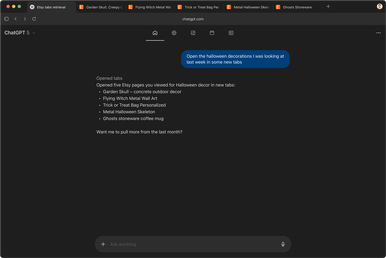
Cybersecurity researchers have uncovered a critical vulnerability, dubbed ChatGPhish, that transforms OpenAI’s ChatGPT web summarization feature into a potent phishing surface. This technique exploits the AI assistant’s inherent trust in Markdown-formatted links and images from summarized external pages, enabling threat actors to embed malicious payloads directly within the seemingly secure ChatGPT interface. Discovered by Permiso Security, this flaw presents a new and subtle mechanism for data exfiltration and social engineering. This development highlights a rapidly expanding attack surface as artificial intelligence tools integrate deeply into enterprise workflows, shifting the focus of adversaries from traditional vectors to the very platforms designed to enhance productivity. It underscores a growing trend where the operational logic and interface design of AI systems are being weaponized against unsuspecting users.

A senior U.S. Marine Corps General, leading forces across Latin America, recently held an exceptionally rare meeting with high-ranking Cuban military officials at the periphery of U.S. Naval Station Guantanamo Bay. This direct engagement marks a notable diplomatic channel amid escalating regional tensions and Havana's apprehensions regarding potential U.S. military actions against the island nation. Discussions focused on crucial operational security and force protection issues impacting the U.S. base. The dialogue unfolds against a backdrop of intensified U.S. pressure campaigns across Latin America, reflecting a robust posture towards challenging established regimes and securing hemispheric interests. This strategic environment places unique emphasis on even limited military-to-military communications as critical de-escalation mechanisms.