In a significant development for the Army’s modernization efforts, Anduril Industries has joined forces with Elbit America to offer the Sigma mobile tactical cannon for the highly contested self-propelled howitzer program. This partnership underscores a growing trend of integrating cutting-edge C5ISR and artificial intelligence capabilities directly into frontline combat systems, promising enhanced networked battlefield performance. The collaboration aims to deliver a domestically manufactured, combat-proven solution designed to meet the Army's immediate and future artillery requirements.
This strategic alignment reflects a broader industry pivot towards software-defined defense platforms, where advanced data processing and autonomous functionalities are critical discriminators. The competition for the Army's next-generation artillery system highlights the urgent need for robust, resilient, and interconnected firepower in an increasingly complex and contested operational environment.
WASHINGTON — Anduril has joined the Elbit America team to provide the Sigma mobile tactical cannon for the Army’s self-propelled howitzer modernization program, the companies announced in a joint statement.
“We’re proud to team with Anduril to reduce network integration risk and accelerate fielding,” Luke Savoie, president and CEO of Elbit America, said in the Tuesday release. “Built in the U.S. with a fully domestic supply chain, SIGMA is a combat-proven system that provides the modernization and reliability the Army needs now.”
Anduril joins the US subsidiary of Israeli company Elbit along with OshKosh Defense for the team’s offering for the highly anticipated competition. According to the release, Anduril will provide its command, control, computers, communications, cyber, intelligence, surveillance and reconnaissance (C5ISR) capabilities for Sigma and will integrate its artificial intelligence-driven Lattice software platform into the system.
“On Team SIGMA, we’re providing expertise in software, edge compute and autonomy to deliver a connected, software-defined mobile artillery solution that will integrate seamlessly into existing Army Command and Control and fire control architectures,” Michael Roder, managing director at Anduril, said in the release.
While Anduril provides the C5ISR backbone for the vehicle, Elbit will provide the 155-mm, 52-caliber fully automated cannon and OshKosh will provide the 10×10 vehicle. Further, an Elbit spokesperson told Breaking Defense at the annual AUSA Global Force summit in March that the Sigma is fully manufactured in Charleston, South Carolina.
In addition to the Elbit America team, the US subsidiary of Korean company Hanwha Defense will be submitting its K9 mobile howitzer for the competition; the US subsidiary of Italy’s Leonardo DRS and European land defense specialist KNDS will be offering their Caesar howitzer variant; and the US subsidiary of German company Rheinmetall is offering their howitzer as well.
British BAE Systems through its American subsidiary, which currently produces the Army’s M109A7 Paladin Integrated Management (PIM) program, is also competing, a company spokesperson confirmed to Breaking Defense today.
Editorial Analysis
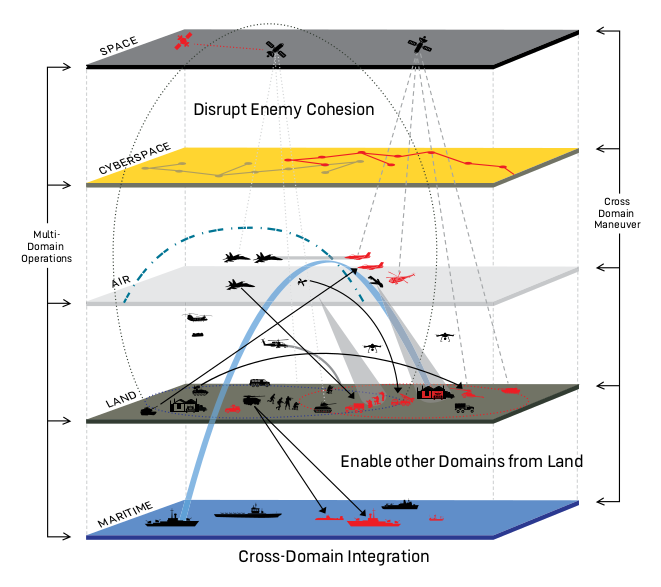
This teaming agreement represents a crucial technical and strategic gambit within the Army’s self-propelled howitzer modernization program. By incorporating Anduril's Lattice software platform and robust C5ISR capabilities, the Sigma offering aims to transcend traditional artillery systems, evolving into a highly intelligent, networked fire support asset. This integration promises enhanced situational awareness, automated targeting processes, and seamless connectivity with existing Army command and control architectures, drastically improving the speed and accuracy of fire missions. For military analysts, this signifies a direct response to the demands of multi-domain operations, where data superiority and rapid decision-making are paramount.
The partnership also illustrates a significant industry trend: the convergence of established defense primes with agile, software-centric technology companies to address complex military requirements. This model allows for the rapid infusion of cutting-edge AI and autonomy into legacy or new hardware, pushing the boundaries of what's possible in ground combat. Looking ahead, this approach will likely become a benchmark for future defense procurements, challenging traditional acquisition models and emphasizing modular, upgradeable systems that can adapt to evolving threats and technological advancements.