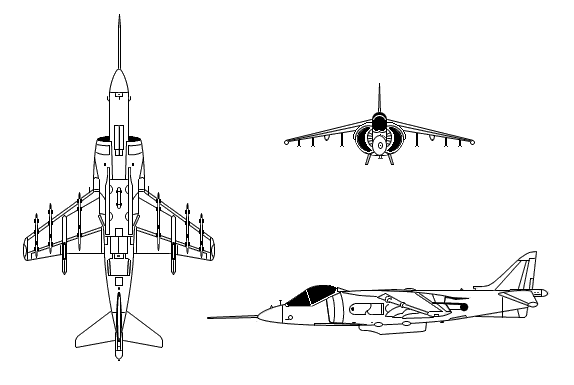
The United States Marine Corps has formally retired its venerable AV-8B Harrier II, concluding over four decades of service for the iconic ground attack jet with a final flight at Marine Corps Air Station Cherry Point. This sundown ceremony marks a pivotal moment in the service’s tactical aviation modernization, signaling a full commitment to integrating fifth-generation platforms across its operational fleet. The aircraft’s distinctive short takeoff and vertical landing (STOVL) capability shaped expeditionary air power for generations, recently contributing to naval operations in the U.S. Southern Command theater.
This transition reflects broader strategic shifts within the Department of Defense, emphasizing advanced, networked capabilities for complex operational environments. The move underscores an ongoing commitment to maintaining a technological edge while adapting to evolving global threats and demands for agile, potent air power projection.
WASHINGTON — The Marine Corps’ AV-8B Harrier II completed its final flight today at Marine Corps Air Station Cherry Point in North Carolina as part of a sundown ceremony for the ground attack jet — concluding more than 40 years in service for the aircraft.
The Harrier’s retirement marks a significant milestone as the Marine Corps moves through its Tactical Aircraft Transition Plan, and fully adopts fifth-generation aircraft across the entire fleet.
Today’s ceremony included a flyover featuring five Harriers. Theground attack jet has short takeoff and vertical landing capability. Despite the scheduled retirement, the aircraft have remained active even in their final weeks.
The Marine Corps’ last Harriers are part of Marine Attack Squadron 223 and were last deployed with the 22nd Marine Expeditionary Unit (MEU), which just concluded a 10-month deployment on Monday.
During the deployment, the 22nd MEU supported operations in US Southern Command amid the Trump administration’s naval buildup there, leading up to Venezuelan leader Nicolas Maduro’s ouster in January. Marine Attack Squadron 223 returned to Cherry Point on May 20, and Marine and sailors assigned to the 22nd MEU started returning home on Monday, according to the service.
The Marine Corps revealed in its 2026 Aviation Plan released in February that the service would conduct a final flight for the aircraft in June, and said that efforts are underway to preserve the aircraft’s legacy in museums across the US.
“As the Harrier era concludes, its highly experienced aircrew and maintenance personnel are transitioning their skills to other platforms, primarily the F-35B, ensuring their expertise continues to benefit Marine Corps Aviation,” the Marine Corps’ aviation plan said.
The AV-8A Harrier first entered the Marine Corps in 1971, while the upgraded AV-8B Harrier II joined the service in 1985. The aircraft were capable of deploying and operating from carriers, as well as other “seagoing platforms,” expeditionary airfields, and remote tactical landing sites, according to Naval Air Systems Command.
Editorial Analysis
The formal sunset of the AV-8B Harrier II carries significant strategic and technical implications for the Marine Corps and wider defense community. Adversaries now face a USMC aviation component almost entirely equipped with stealth-capable, network-centric F-35B Lightning IIs, fundamentally altering the calculus for air-ground integration and close air support. This transition directly impacts expeditionary force projection, replacing a platform known for its ability to operate from diverse, austere sites with one that demands more sophisticated logistical and command-and-control infrastructure, albeit with vastly superior combat capabilities and survivability against modern air defenses. The shift consolidates training, maintenance, and supply chains, streamlining operational readiness across the force.
Historically, military aviation transitions, while necessary for modernization, always present a unique set of challenges and opportunities. The Harrier, much like its predecessors, provided a critical niche capability—its STOVL design enabling operations from small amphibious ships or unimproved forward operating bases. The complete embrace of fifth-generation assets reflects a broader trend within leading militaries to prioritize multi-domain integration, data fusion, and low-observability. For the long term, this signifies an increased commitment to high-end warfare, but also underscores the necessity for innovative solutions to maintain flexible, distributed air power options in future conflicts, especially in contested or anti-access/area denial environments where the F-35's advanced requirements could present operational friction.