WASHINGTON — The Air Force anticipates buying thousands of new, low-cost cruise missiles annually, and is planning to spend over $12 billion to stockpile the nascent munitions, according to new budget documents.
Nearly 27,000 copies of the Family of Affordable Mass Missile (FAMM) could be purchased in the coming years, the first program of record publicly revealed for the emerging weapon, fiscal 2027 budget documents reveal. The FAMM platform, which comes in different variants, stands out even among a Pentagon-wide push to ramp up missile production.
After kicking off procurement in FY26, in FY27 the Air Force is requesting $300 million of reconciliation money to buy 1,000 copies of the weapon. That number is set to jump substantially in the coming years, rising to 5,300 in FY28 and ever-higher afterward until production hits 7,990 in FY31, the final year of projections in the Pentagon’s five-year spending forecast.
In contrast, the Air Force’s more exquisite Joint Air-to-Surface Standoff Missile (JASSM) will be bought at an annual rate of 860 units in out-years, FY27 budget documents say. The same is true of the in-demand Advanced Medium Range Air-to-Air Missile (AMRAAM), which budget documents show would settle at a procurement rate of 720 copies per year beginning in FY28. (The Air Force further plans to spend billions of dollars to buy the new Joint Advanced Tactical Missile, a longer-range air-to-air weapon, but quantities are classified.)
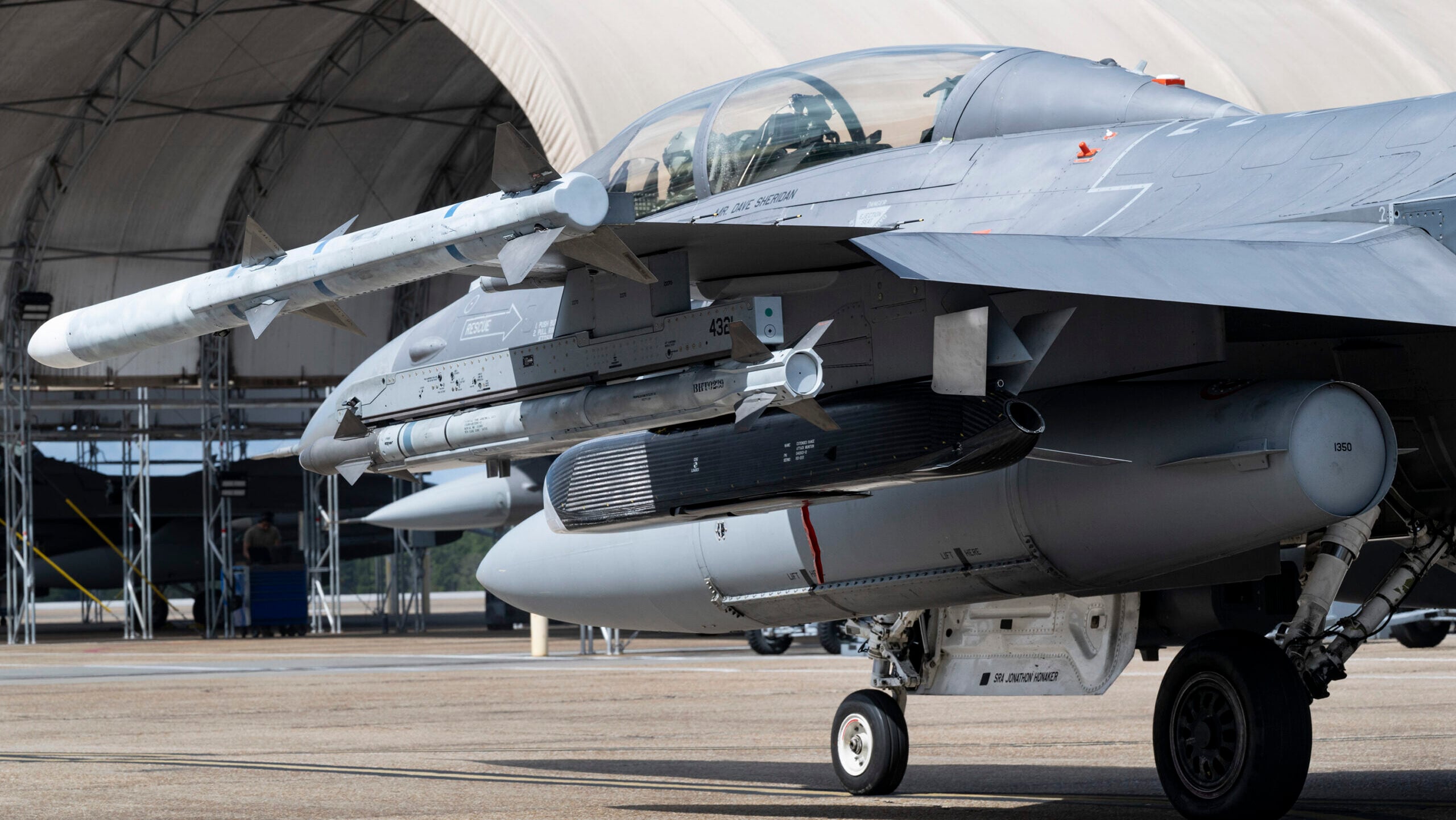
Like other munitions, the Air Force is seeking multi-year procurement authority to buy FAMM en masse, according to budget documents. Air Force budget documents list three vendors — Anduril, CoAspire and Zone 5 — as active vendors on the FAMM program, particularly for a “lugged” configuration of the weapon that can be carried by fighters and bombers. The documents do not specify vendor production quantities or dollar awards.
RELATED: The Pentagon wants a 188 percent bump for missile procurement. Can industry deliver?
Air Force officials have largely withheld details about the overarching FAMM program, but some aspects of the weapon’s development are public. The FAMM effort, one Anduril official ly told reporters, was established as a program of record by building off an earlier program called the Enterprise Test Vehicle, where platforms made by Anduril and Zone 5 advanced.
Originally envisioned as a palletized munition, the FAMM vehicle is additionally expected to be adapted for the lugged configuration. The Air Force disclosed a test for the lugged FAMM on April 13, without naming the specific weapon or vendor.
A parallel effort called the Extended Range Attack Munition (ERAM) was also formed to craft a platform for foreign military sales, primarily to aid Ukraine. Zone 5 and CoAspire have been tapped for the program, according to a notice from the Defense Security Cooperation Agency.
Alongside the $300 million in reconciliation dollars that will fund the FAMM’s procurement, a separate $55 million set aside in the Air Force’s base budget is intended to fund “the Extended Range” variant of the weapon, though details are not disclosed. It appears the extended range version would be dubbed the FAMM-BAR, or “Beyond Adversary’s Reach,” according to a request for information published Monday.
The RFI lists a required range of over 1,000 nautical miles and describes a target set as “slow moving maritime.” A “primary deployment method” for the weapon would be palletized, the RFI says, though a lugged design would be a potential “secondary” vector.
Beyond Anduril, CoAspire and Zone 5, other firms have announced cheaper cruise missile concepts as well. Lockheed Martin, for example, ly unveiled its CMMT cruise missile. The US Navy recently tested a Boeing-made Joint Direct Attack Munition equipped with a turbojet engine, hitting a target at what the company said was five times the range of the -longest JDAM variant. And Leidos, for its part, recently tested its Small Cruise Missile with the Air Force, which designated the weapon as the AGM-190A.
FAMM Engines
A series of awards to engine manufacturers are also expected to furnish an industrial base for FAMM powerplants, and potentially other low-cost munitions.
A recent $3 million award to PBS Aerospace, the American subsidiary of a Czech parent company, will “technically mature PBS turbine designs” and “prepare their production facilities for the high volume of Family of Affordable Mass Missiles,” an Air Force spokesperson said in a statement to Breaking Defense.
RELATED: Air Force taps four companies to expand engine options for loyal wingman drones
Two other contractors — Beehive Industries and Kratos subsidiary Technical Directions Inc. — were also awarded similar contracts for small turbine engine development, the spokesperson said. “We are in discussions with multiple vendors to deliver this capability and expect to award contracts before the end of 2026,” they added.
Testifying before lawmakers in March, Air Force Brig. Gen. Robert Lyons said FAMM and the related ERAM represent a “new speed of acquisition” and will be critical for expanding Pentagon stockpiles. Lyons was recently named the service’s portfolio acquisition executive for weapons.
“Through these programs, we will be able to expand production, build up munitions inventories, and more rapidly replenish munition stockpiles. And we will be able to, most importantly, provide more munition options to combatant commanders,” Lyons said.