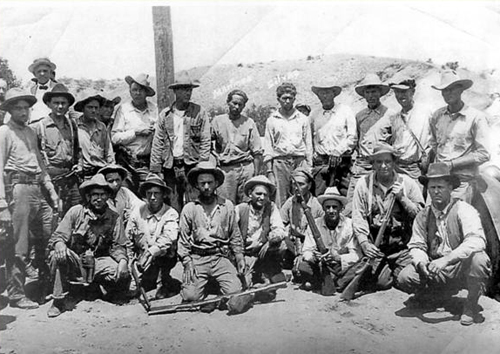
House GOP Sustains JAG Civilian Deployments
- A House Armed Services Committee amendment to limit military lawyers to defense-related duties was defeated by a margin of five votes.
- The rejected provision sought to end the practice of deploying Judge Advocates General in civilian legal roles, such as immigration courts.
- Supporters of the current policy argue it protects national security priorities and offers valuable training for uniformed officers.

AI-driven exploitation, spearheaded by systems like 'Mythos,' is rapidly collapsing exploit windows, making traditional manual patching obsolete in the face of lightning-speed automated attacks. This unprecedented crisis means the time available to fix vulnerabilities before they are exploited is shrinking to near zero, forcing a fundamental reevaluation of current cybersecurity defenses. To understand and combat this new threat, organizations must adopt a new AppSec blueprint that leverages virtual patching.
North Korean state-backed threat actors, identified as TraderTraitor, have executed a sophisticated $290 million cryptocurrency heist against KelpDAO, exploiting vulnerabilities within LayerZero's inter-blockchain communication infrastructure. This incident highlights a critical attack vector targeting the foundational RPC nodes vital for transaction verification, exposing inherent risks within the DeFi ecosystem's reliance on distributed but susceptible infrastructure. The audacious theft, coupled with broader cybersecurity threats like supply chain malware and active RCE exploits, underscores a rapidly evolving threat landscape.

The popular password manager Bitwarden's CLI has been ensnared in a sophisticated supply chain attack, with its version 2026.4.0 compromised through a malicious GitHub Action. This incident, linked to the 'Shai-Hulud: The Third Coming' campaign, saw attackers exfiltrate critical developer secrets including GitHub/npm tokens, SSH keys, and cloud credentials, though Bitwarden reassures users that no end-user vault data was accessed. The attack vector highlights a critical vulnerability in CI/CD pipelines, echoing a pattern seen across other affected repositories in this ongoing campaign.

China's ambitious national AI systems are reportedly undergoing accelerated degradation due to the very censorship apparatus designed to control its information flow. The Great Firewall, a cornerstone of the Party's political control, is now actively corrupting the AI models its leadership depends on, leading to a phenomenon known as 'model collapse.' This self-inflicted flaw hobbles China's AI utility and offers a stark contrast to the West's more open approach.

The Department of Defense is quietly advancing a pivotal aspect of its Acquisition Transformation Strategy, shifting focus to modularity and multi-sourcing as announced by Secretary Pete Hegseth last November. While new munitions deals and PAE restructuring have grabbed headlines, this under-the-radar initiative seeks to fundamentally reshape the defense industrial base. The strategy emphasizes Modular Open Systems Approaches (MOSA) and producibility, aiming to fortify supply chains and inject new competition.

Lockheed Martin has unexpectedly withdrawn from the U.S. Navy's critical Undergraduate Jet Training System (UJTS) competition, leaving just three primary contenders for the lucrative contract. The world's largest defense contractor, which had planned to bid its TF-50N in partnership with Korea Aerospace Industries, cited U.S. content requirements and program suitability issues as reasons for its decision, coming shortly after the Navy issued its final request for proposals. This significant shift reshapes the landscape for the Navy's next-generation trainer jet.

Apple has released urgent iOS and iPadOS updates to patch a critical logging flaw, CVE-2026-28950, which inadvertently retained deleted notifications, making them forensically recoverable. This vulnerability notably allowed law enforcement, including the FBI, to reportedly extract previously deleted Signal communications from an Antifa suspect's iPhone.

A previously undocumented and highly destructive data-wiping malware, dubbed 'Lotus,' was deployed late last year against Venezuelan energy and utility firms, completely obliterating critical infrastructure. Researchers at Kaspersky analyzed the sophisticated multi-stage wiper, which systematically disables defenses, deletes recovery points, overwrites physical drives, and clears forensic traces to ensure systems are irrecoverable. The targeted attacks emerged in mid-December from a machine in Venezuela, aligning with heightened geopolitical tensions in the region.

A significant data breach has been confirmed at France Titres (ANTS), a key French government agency responsible for citizen identification documents, with a threat actor claiming to have exfiltrated 19 million citizen records. The stolen data, including login IDs, full names, and sensitive personal information, is now reportedly for sale, raising alarm over potential phishing and social engineering campaigns targeting French citizens.
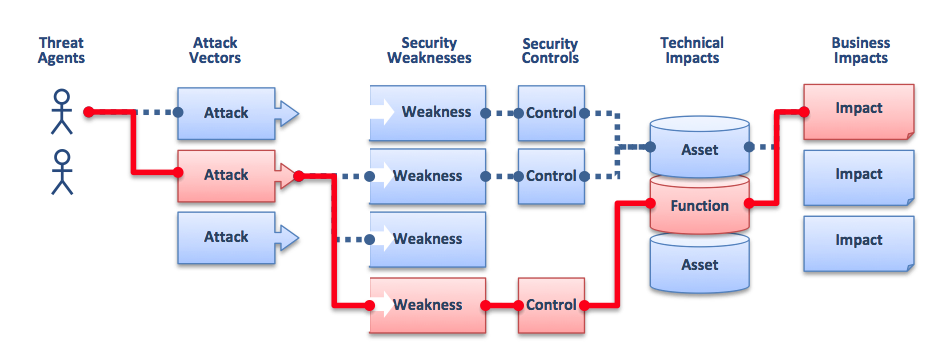
More than 1,300 Microsoft SharePoint servers globally remain unpatched against an actively exploited zero-day spoofing vulnerability, CVE-2026-32201, despite Microsoft releasing security updates last week. This critical flaw allows unprivileged attackers to compromise data confidentiality and integrity through network spoofing without requiring any user interaction, posing a significant risk to organizations using vulnerable on-premises SharePoint versions. The urgency of this threat is underscored by CISA adding CVE-2026-32201 to its Known Exploited Vulnerabilities Catalog, mandating federal agencies to apply patches by April 28.

Microsoft has issued an emergency out-of-band security update for a critical ASP.NET Core flaw (CVE-2026-40372) that allows unauthenticated attackers to achieve SYSTEM privileges. This privilege escalation vulnerability, residing within the ASP.NET Core Data Protection cryptographic APIs, can be exploited by forging authentication cookies, posing a severe threat to affected applications.

The Harvester APT group has significantly expanded its evasion tactics by deploying a new Linux variant of its GoGra backdoor, ingeniously leveraging the legitimate Microsoft Graph API for command and control. This sophisticated approach allows the state-backed espionage group to use a dedicated Outlook inbox for stealthy communications, operating under the guise of ordinary network traffic and making detection exceedingly difficult.