
US House Approves Ukraine Aid & New Russia Sanctions
- House approval secured a substantial financial package for Ukraine's defense efforts.
- The legislation includes an $8 billion authorization in military finance loans to Kyiv.
- The Ukraine Security Assistance Initiative (USAI) receives an extension through 2027.

Constantinople's legendary fortifications were not just imposing walls but an intricately engineered system, featuring a formidable four-layered defense that made the Byzantine capital virtually impregnable for over a millennium. This masterful medieval design integrated a wide, often flooded ditch, a low breastwork, and two massive walls with numerous strategically offset towers. The article delves into how these elements combined to create one of history's most effective defensive structures.

A groundbreaking new study reveals that humans adopt more Nash-equilibrium strategies, including increased 'zero' choices, when playing strategic games against Large Language Models (LLMs) compared to other humans. This significant behavioral shift is driven by a surprising belief in LLM rationality and unexpected cooperation, challenging previous assumptions about human-AI interaction in competitive scenarios. The change is predominantly led by individuals possessing high strategic reasoning ability.

Leading cybersecurity vendors CrowdStrike and Tenable have recently patched significant vulnerabilities in their core products, LogScale and Nessus, respectively, necessitating immediate action for affected users. CrowdStrike addressed a critical unauthenticated path traversal flaw (CVE-2026-40050) in LogScale that could allow remote file reads, while Tenable fixed a high-severity issue (CVE-2026-33694) in Nessus on Windows enabling arbitrary file deletion and code execution. While no in-the-wild exploitation has been observed for the CrowdStrike vulnerability, LogScale self-hosted users must update promptly.
A critical Server-Side Request Forgery (SSRF) flaw in the LMDeploy LLM toolkit, tracked as CVE-2026-33626, was actively exploited by attackers less than 13 hours after its public disclosure. This high-severity vulnerability allowed adversaries to rapidly gain access to internal networks, conduct port scans, steal cloud credentials, and facilitate lateral movement within targeted environments. The rapid weaponization highlights a severe risk for organizations relying on open-source LLM deployment tools.
Anthropic recently unveiled Claude Mythos Preview, an AI model so potent at discovering and exploiting software vulnerabilities that it has been deemed too dangerous for public release. Instead, access to this powerful tool is limited to approximately 50 major tech and critical infrastructure organizations under Project Glasswing, raising immediate questions about its broader implications for cybersecurity. The model has demonstrated an unprecedented ability to uncover and weaponize thousands of vulnerabilities across critical systems, including long-standing flaws in major operating systems and browsers.

A recent New York Times article has ignited a fresh wave of speculation surrounding Bitcoin's enigmatic creator, Satoshi Nakamoto, by presenting compelling circumstantial evidence pointing to well-known cypherpunk Adam Back. This extensive piece meticulously details a myriad of connections, reigniting a decades-old mystery that has captivated the tech world. The article's persuasive narrative aims to finally unmask the figure behind the revolutionary cryptocurrency.

A critical privilege escalation zero-day in Microsoft Defender, tracked as CVE-2026-33825, is now under active exploitation in the wild, mere days after a public Proof-of-Concept (PoC) was released. Threat actors, including one linked to Russian IPs, are leveraging techniques dubbed 'BlueHammer,' 'RedSun,' and 'UnDefend' to achieve System privileges, posing an immediate threat to organizations relying on Defender for endpoint protection.

Palo Alto Networks' 'Zealot' AI has successfully autonomously hacked a Google Cloud environment, demonstrating 'emergent intelligence' by devising novel attack strategies to exfiltrate sensitive data. This proof-of-concept showcases an AI system chaining together complex reconnaissance, exploitation, and data exfiltration tasks at unprecedented machine speed, raising critical questions about future cybersecurity landscapes. Researchers aimed to empirically test AI capabilities against live cloud environments, revealing a sophisticated and adaptable adversary.

Luxury cosmetics giant Rituals has confirmed a data breach affecting millions of its My Rituals loyalty program members, exposing sensitive personal information such as names, addresses, and dates of birth. The company quickly contained the incident after discovering unauthorized access earlier this month, assuring customers that no passwords or payment details were compromised.
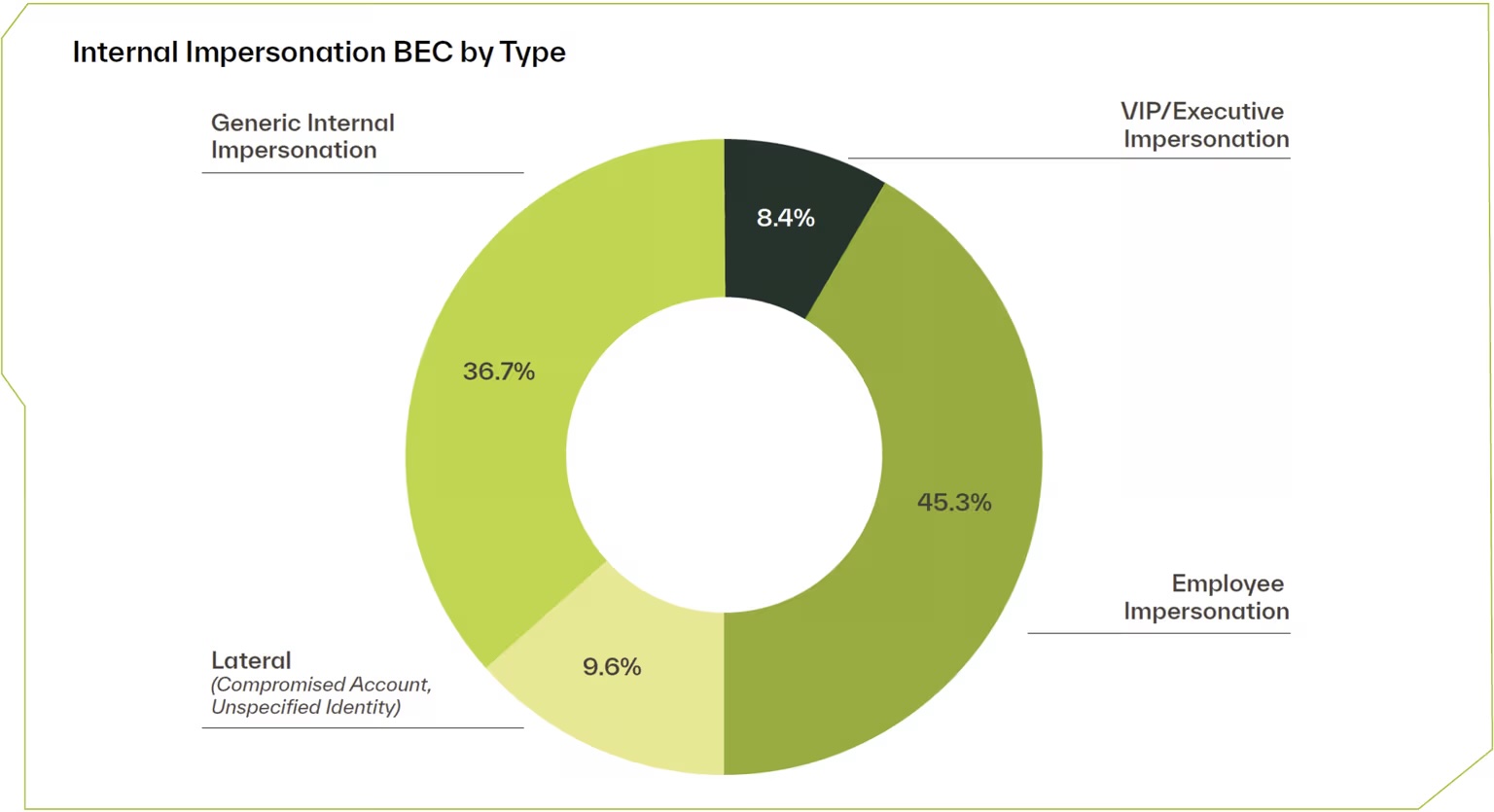
Cybersecurity threats are evolving beyond mere technical exploits, with new data revealing a significant surge in behavioral attacks that prey on human trust and organizational workflows. Attackers are moving past easily detectable red flags like typos, instead crafting sophisticated email campaigns that leverage established relationships to bypass defenses. This represents a critical shift from exploiting system vulnerabilities to manipulating human and process weaknesses, demanding a re-evaluation of traditional security paradigms.

Cybersecurity startup Rilian has secured $17.5 million in combined seed and seed extension funding to advance its AI-native security orchestration platform. The McLean, VA-based company, founded in 2024, aims to bolster cyber defense for government, critical infrastructure, and law enforcement organizations through its Caspian platform. This investment, led by 8VC, First In, and Tamarack Global, will enable Rilian to further develop its autonomous capabilities across diverse and complex operational environments.

A prominent Chinese cybersecurity firm, 360 Digital Security, has publicly claimed its AI autonomously discovered nearly 1,000 vulnerabilities, including high-severity flaws, at the recent Tianfu Cup, positioning its capabilities to rival those of Anthropic's unreleased Claude Mythos. This assertion, highlighted by ETH Zurich researcher Eugenio Benincasa, underscores a potential leap in AI-driven vulnerability discovery that carries profound implications for global cybersecurity dynamics. The firm's claims surface amidst growing concerns that AI models could rapidly accelerate the discovery of exploitable weaknesses, intensifying the arms race between attackers and defenders.