Military & Defense
451 articles · Coverage updated continuously

The U.S. Space Force has released its 'Objective Force 2040' and 'Future Operating Environment 2040' documents, laying out a strategic vision driven by rapidly escalating geopolitical competition in space. This comprehensive roadmap projects a significantly more contested domain by 2040, particularly from advanced Chinese and Russian counter-space capabilities, including the alarming prospect of nuclear anti-satellite weapons. To counter these threats, the vision advocates for a substantially expanded and better-resourced Space Force, bolstered by enhanced international alliances, to ensure continued U.S. dominance in the orbital realm.
The U.S. Air Force is dramatically accelerating its pursuit of space-based Airborne Moving Target Indicator (AMTI) radar, earmarking a substantial $7 billion in its 2027 budget request. This rapid pivot comes directly on the heels of recent devastating losses and damage sustained by its venerable E-3 Sentry (AWACS) fleet during a critical incident involving an Iranian missile attack. Air Force Secretary Troy Meink has underscored the urgent need for space radar, citing its superior survivability and potential for rapid deployment.
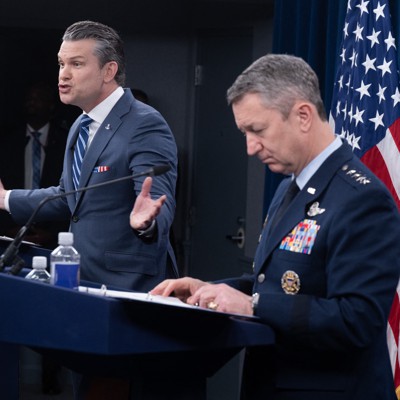
Thirteen vessels have been turned back attempting to breach a US naval blockade off the coast of Iran since Tuesday, led by the Abraham Lincoln carrier strike group with robust air support. This escalation comes as Defense Secretary Hegseth directly contested Iran's claims of control over the Strait of Hormuz, while also publicly criticizing media reporting on the unfolding situation. The US operation signals a significant tightening of maritime control in the critical waterway.

Defense Secretary Hegseth has directed the sweeping termination of most collective-bargaining agreements across the Department of Defense, a move poised to significantly reshape labor relations within the nation's largest employer. This directive aligns with a recent presidential executive order that cites national security grounds for excluding certain federal agencies and functions from collective bargaining provisions. While most agreements are affected, some unions and specific federal employees are exempted due to prior injunctions or the critical nature of their roles.

The ambitious 'Golden Dome' missile defense program, a $185 billion initiative aiming for near 100% intercept rates, is facing significant scrutiny, with Space Force Gen. Michael Guetlein publicly questioning the affordability and scalability of its proposed space-based boost-phase interceptors. This skepticism from a top military official casts a shadow over a key component of the high-profile program championed by former President Trump, pushing the Space Force to evaluate alternative, potentially more cost-effective solutions. The financial and logistical hurdles of deploying such a vast orbital defense system are now at the forefront of the national security debate.

The U.S. Army is on the cusp of a revolutionary change in aviation with the MV-75 Cheyenne II, a new tiltrotor aircraft poised to redefine speed, range, and lift capabilities far beyond the UH-60 Black Hawk. This significant leap in performance, however, introduces a critical operational challenge: an immediate need for a robust and dedicated aerial refueling infrastructure to fully leverage the Cheyenne II's extended operational reach. The platform's unprecedented speed also demands a reevaluation of established combat doctrines, particularly concerning coordinated operations with slower assets like the AH-64 Apache.
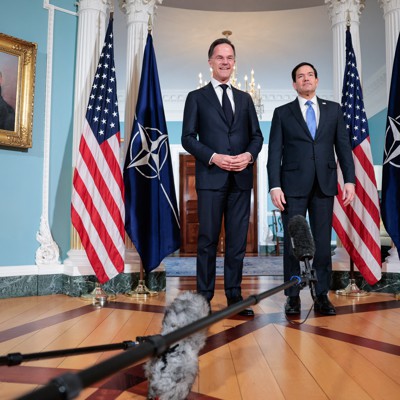
NATO finds itself at a critical juncture, grappling with a structural crisis rooted in trust deficits and unequal burden-sharing among member states, necessitating a profound strategic rebalance. The ongoing conflicts in Ukraine and the Middle East have starkly illuminated the mutual dependencies between Europe and the United States, making this rebalancing not just a strategic choice but an imperative for collective security. Europe, in particular, must address its fragmented defense spending and accelerate the transformation into integrated, formidable capabilities.