WASHINGTON — The Marines plan to officially start fielding their new launched effects capabilities, dubbed Organic Precision Fires- Light (OPF-L), to operational units in the “June timeframe,” one senior official said today.
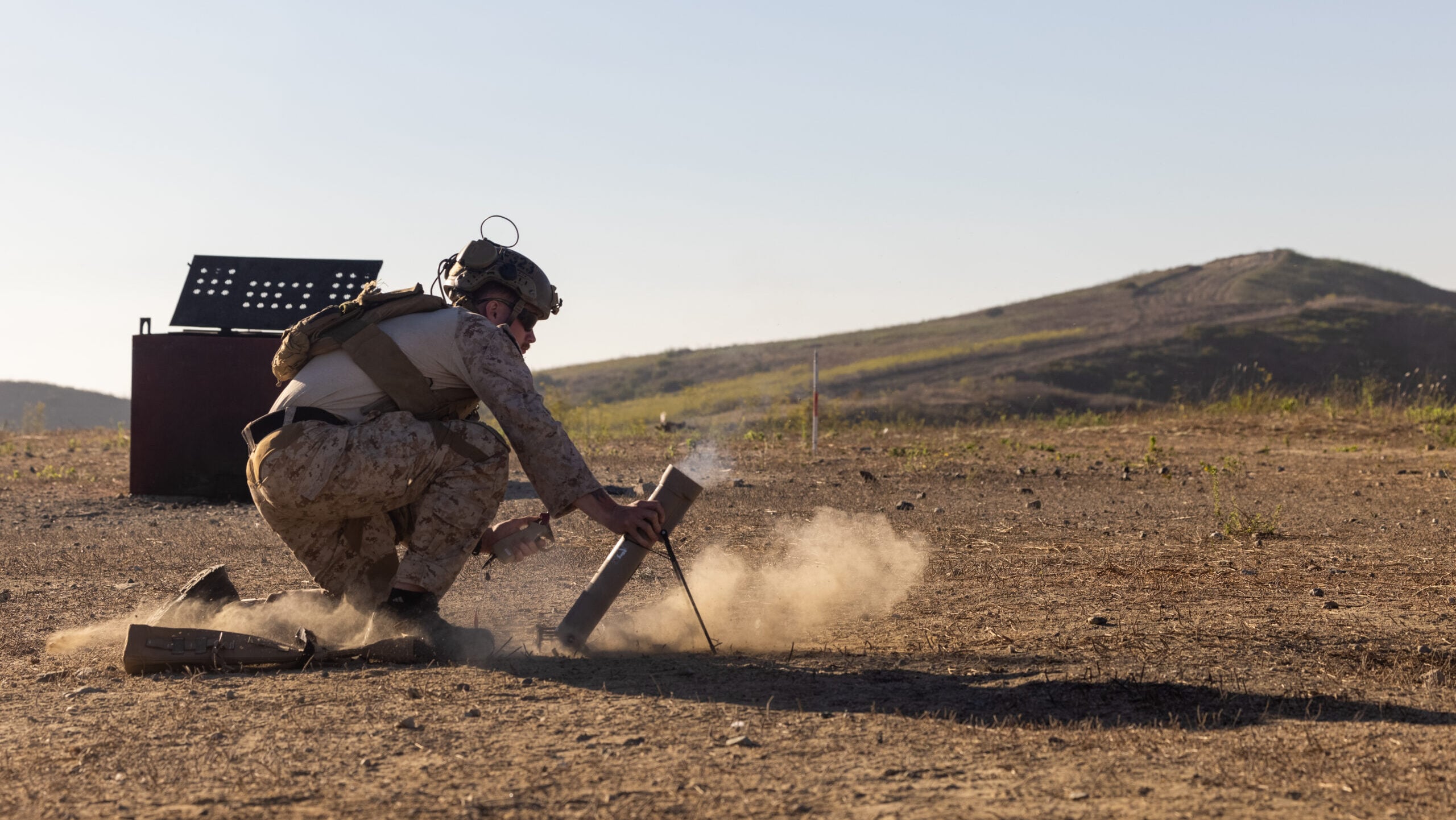
Currently, systems from three manufacturers are being tested by units at Dugway Proving Grounds outside of Salt Lake City. But beginning in June, operational units will begin to receive them, Col. Bradley Sams, program manager of Ground Weapons Systems for the Marine Corps said today.
“The ones that we have given to those units have been inerts [referring to systems without live warheads] to get after training and TTPs [tactics, techniques and procedures] so they can figure out how they again, how we incorporate into the scheme, their schemes,” Sams said. “The fielding decision is planned for the June timeframe, and that will be the first time we’ll get actual inerts and live warheads to the units that are on the fielding plan.”
Sams declined to divulge what units would be receiving the systems.
In 2024, the Marines awarded Anduril, Aerovironment (since rebranded as AV) and Teledyne contracts to deliver the light launched effects, which are designed to equip dismounted Marine infantry squads with easily portable precision strike capabilities that can engage with the enemy beyond their line of sight. Anduril is providing its Bolt-M systems, AV is providing its Switchblade 300 Block 20 product and Teledyne is providing its Rogue 1 systems.
Both Anduril and Teledyne have received follow on contracts for over 600 systems each since their initial award in spring of 2024. AV declined to comment when asked if they had received a follow on contract, and nothing has been posted related to the award on the company’s website since the initial 2024 contract.
Though he didn’t provide details, Sams added that the Marines have been applying lessons learned from the Army’s Low Altitude Stalking and Strike Ordnance (LASSO) launched effects program — aimed at delivering portable, lightweight anti-armor systems to Brigade Combat Teams — to help inform the Corps on what its OPF-L program should look like in the end.
“We are working with our Army brethren to find out what they’re doing in the LASSO program, and we’ve worked with them for the two years, ever since we started OPF-L. So we are taking all the lessons learned from them and garnering as much as we can as we make decisions for the Marine Corps,” Sams said.
Sams’ comments today come after the Marines posted a request for white papers for a medium variant, or OPF-M, last week, which said the service is hoping to award production contracts by fiscal 2028. Further, today Sams said just like with the OPF-L variant, the service is keeping its options open.
“So we are open to anything right now, whether it is a fixed wing, a VTOL [vertical take off and launching], launched or man-packable,” Sams said. “Whatever it is that is available to us. We’re open to hear what is out in the industry right now as you try and get something out very quickly to meet the threat.”