The callsign “Sandy,” used by U.S. Air Force aircraft and pilots conducting combat search-and-rescue operations, traces to late 1965.
Capt. J.W. “Doc” George, a U.S. Air Force A-1 Skyraider pilot, arrived at Udorn Royal Thai Air Force Base, Thailand, as part of a CSAR replacement rotation from Bien Hoa, South Vietnam. When asked what callsign his flight would use, he suggested the one he used at Bien Hoa: “Sandy.”
The name stuck, was passed to his replacement and soon became the standard callsign for all A-1 Skyraiders flying CSAR missions protecting downed aircrews.
The Sandy role was later transferred to the faster LTV A-7D Corsair II in 1972 as the last Skyraiders were withdrawn from Southeast Asia. However, the A-7 struggled in the role due to its higher maneuvering speeds, which made it less effective for low-and-slow visual searches and close helicopter escort than the A-1.
In the late 1970s, the Corsair passed the CSAR baton to the A-10 Thunderbolt II Warthog, which offered excellent loiter time, survivability and firepower suited to the mission. The A-10 airframe and its pilots still carry the “Sandy” callsign today.
As the Air Force accelerates plans to retire the A-10 Thunderbolt II by fiscal year 2029, the service faces a growing set of unanswered questions about what replaces it in combat search and rescue, one of the military’s most specialized mission sets.
More than an analysis of replacement aircraft and their capabilities, the transition raises concerns about the pilots in the cockpit, who for nearly five decades have received specialized training in the combat search-and -rescue mission and built trust within the CSAR community. With congressional oversight and legislation underscoring concerns about CSAR operational readiness, and on the heels of a CSAR mission over Iran that brought two F-15E airmen home, the stakes of those unanswered questions have taken on a new sense of urgency.
Highly skilled Sandy pilots
In the past several decades, A-10s have assumed the Sandy role in CSAR operations in the Gulf War, Iraq, Afghanistan, Kosovo and most recently in the April 3, 2026, operation that recovered two American F-15E Strike Eagle airmen from Iranian territory. One supporting A-10 sustained heavy battle damage during the mission; its pilot continued flying long enough to eject safely over Kuwait.
During an April 6, 2026, press conference detailing that mission, Gen. Dan Caine, chairman of the Joint Chiefs of Staff, described the role of a Sandy: “A Sandy has one mission: to get to the survivor, bring the rescue force forward, and put themselves between that survivor on the ground and the enemy,” Caine said. “They are committed to this. This is what they live for. And this is what they’ve trained for, for many, many years.”
Only the most experienced A-10 pilots are selected for Sandy qualification, which requires specialized training in CSAR tactics and procedures as part of a full CSAR task force, including HC-130 tankers and HH-60 helicopters.
This advanced training takes place primarily at Davis-Monthan Air Force Base, Arizona, home of the 357th Fighter Squadron, the Air Force’s formal A-10 training unit. Here, Sandy pilots participate in integrated exercises, local ranges and large-scale events like Angel Thunder, the Air Force’s largest and most comprehensive CSAR exercise. Additional operational integration takes place at Moody Air Force Base, Georgia.
In a typical four-ship A-10 Sandy CSAR formation, each aircraft has a specific role, according to USAF documents. Sandy 1 is the lead pilot, serving as the rescue mission commander and on-scene commander, responsible for overall command, survivor authentication and threat suppression. Sandy 2 provides cover and backup leadership. Sandy 3 and Sandy 4 focus on the escort mission, protecting the HH-60 rescue helicopters throughout.
For nearly five decades, the A-10 has proven ideally suited for the Sandy role.
Still, the Air Force is moving forward with plans to retire the A-10 by fiscal 2029. What replaces it in the Sandy role, and whether any other platform can replicate what the Warthog and A-10 Sandy-qualified pilots bring to the CSAR mission, are questions the service has not yet answered.
CSAR in a world without Warthogs
The Air Force has confirmed there is currently no formal or informal transition underway for the Sandy 1 rescue mission commander role — the on-scene command function of every CSAR operation — to any other specific airframe.
“Discussions are still ongoing regarding the use of multi-role platforms serving in the A-10’s Sandy 01 RMC role,” an Air Combat Command spokesperson said. The same applies to the Sandy 2, 3 and 4 escort roles, the spokesperson said.
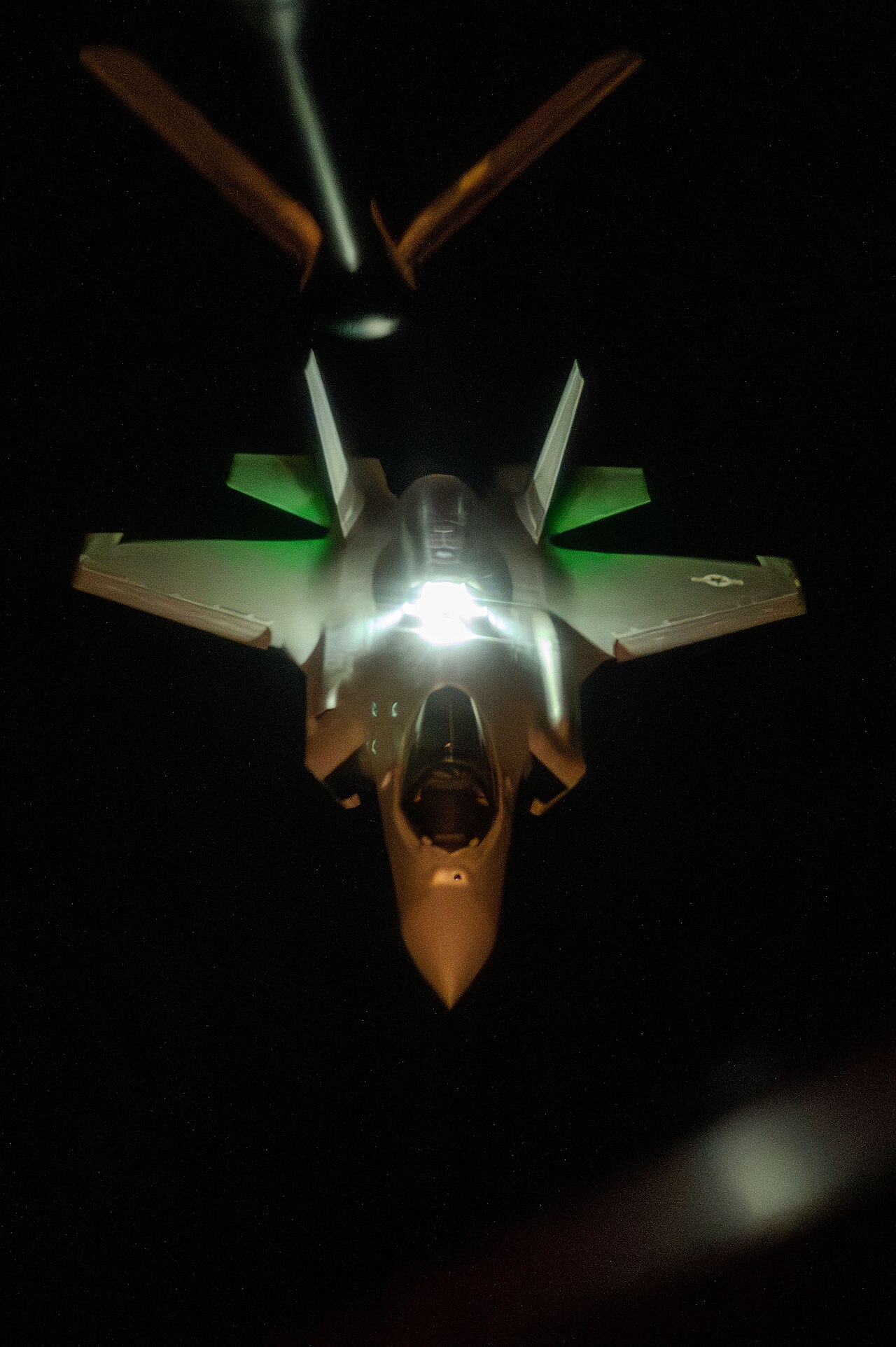
The service’s stated transition strategy centers less on the aircraft and more on the expertise of A-10 pilots themselves, suggesting the F-35A as the likely destination platform for Sandy-qualified A-10 pilots.
“The Air Force is leveraging the extensive experience of its A-10 pilots to ensure a successful transition to other aircraft,” the 355th Wing Public Affairs office said. “A-10 pilots bring a wealth of expertise in close air support and combat search and rescue experience, which is invaluable as the A-10 continues to divest and they transition to 5th generation assets like the F-35.”
The service also acknowledged that standards for validating successor-platform performance in the CSAR mission are a work in progress.
The Pentagon “is carefully reexamining future Close Air Support and Combat Search and Rescue requirements,” the 355th Wing Public Affairs office said, “including how the Air Force will validate the effectiveness of its multi-role fighter fleet in performing all aspects of the CAS mission.”
No specialized Sandy qualification program for any successor platform, such as the one that existed for the A-10 for many years, has been confirmed to exist or be under development.
Lt. Col. Joel Bier, a retired U.S. Air Force Weapons School instructor pilot and Sandy 1 instructor with more than 2,500 hours in the A-10, said the service’s transition strategy underestimates the complexity of the Sandy mission.
“No other pilots train to Close Air Support, Forward Air Control (Airborne), and Combat Search and Rescue with the ferocity of the A-10 community,” Bier said.
The challenge, Bier said, is not simply whether the F-35A, F-15E or F-16 airframes are capable of performing the Sandy mission, but whether the pilot is properly trained for it.
“A jack of all trades is master of none. Each of the fighter communities trains to a half-dozen or more equally complex missions, but CSAR is fundamentally different. It is friendly-centric and combines elements of air superiority and contingency planning at lower speeds and longer durations that fighter platforms do not routinely train to.”
A-10 versus F-35
In 2016, the Air Force conducted testing to evaluate potential Sandy replacements at the 422nd Test and Evaluation Squadron at Nellis Air Force Base, Nevada. Lt. Col. Joshua Wood, the squadron’s commander at the time and an F-35 pilot, was on record expressing skepticism about direct platform comparisons.
“When you try to have a comparative analysis of a single-mission platform like the A-10 against a platform like the F-35, which is fundamentally designed from the ground up to do something completely different,” Wood told Combat Aircraft magazine, as reported by War is Boring in 2016, “you run the risk of drawing unrealistic conclusions.”
Still, Wood described what happened when a former A-10 Sandy 1 instructor who had recently cross-trained into the F-35 stepped into a lackluster CSAR exercise.
“No kidding, he shows up and within five minutes on station he’s quarterbacked the whole thing,” Wood told the magazine. “They’ve rescued the survivor and everyone goes home.”
Wood attributed the result not to the F-35’s capabilities, but to the pilot’s CSAR background and Sandy training. “I