WASHINGTON ― The Space Rapid Capabilities Office (Space RCO), in partnership with the Space Force’s innovation arm SpaceWERX, has awarded three small companies contracts worth $3 million each to develop new radar warning receivers to equip future highly maneuverable satellites in geosynchronous Earth orbit (GEO).
The awards to Assurance Technology Corporation, Raptor Dynamix and Innovative Signal Analysis, Inc. are being funded via the Small Business Innovation Research (SBIR) Direct-to-Phase II program, according to a Space RCO press release today.
The radar warning receivers “will detect and characterize emissions from ground-based radars” tracking Space Force satellites in GEO, thus improving the service’s space domain awareness capabilities, the release explained.
“These critical tactical awareness sensors allow the USSF to discern whether maneuverable satellites are being observed, tracked, or targeted,” said Space RCO Director Kelly Hammett. “In the modern orbital environment, it is essential to know if your assets are being threatened. This kind of information should really be considered standard to support military satellite operations.”
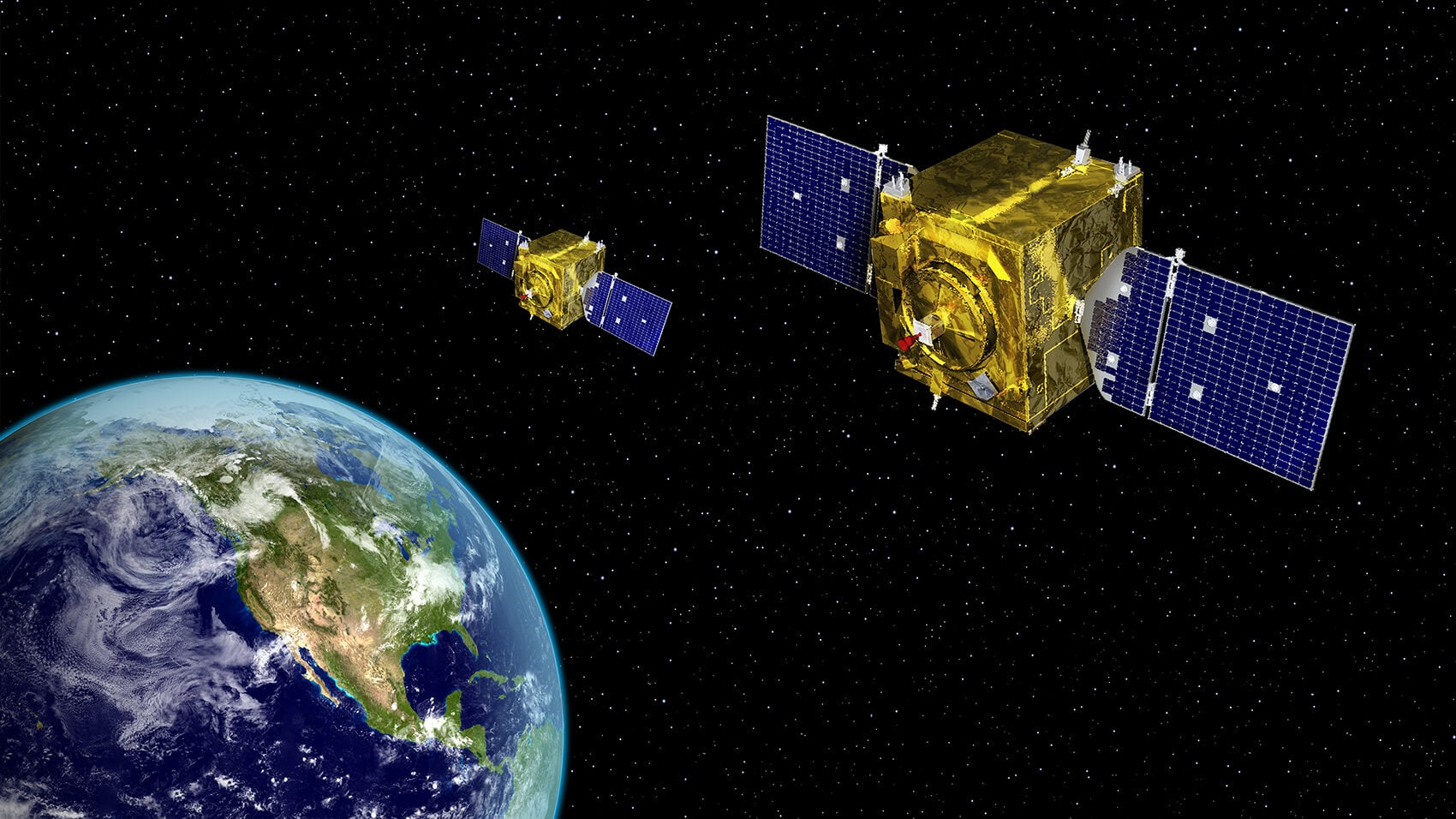
The Space Force’s generation of neighborhood watch satellites in GEO, being developed under the Andromeda program (formerly known as RG-XX), will be capable of on-orbit refueling as part of their overall design to be more maneuverable while maintaining a longer on-orbit shelf life than the service’s current Geosynchronous Space Situational Awareness Program (GSSAP) constellation.
Headquartered at Kirtland AFB in New Mexico, Space RCO is a semi-independent acquisition organization created by Congress in 2018 to take requirements directly from operators at US Space Command and find ways to quickly get capabilities, including cutting-edge commercial tech, into the field. Much of the office’s work is classified.
Space RCO first revealed in December 2023 that three early prototypes for on-board threat warning had been launched 2023, although details were scant due to the classified nature of the effort. In March 2025, Hammett said the prototypes had been a “quasi-operational success” at monitoring Chinese capabilities to pinpoint the whereabouts of US satellites. As of last October, the office had been planning on making only two awards by the end of 2025.
While small, the awards are part of a larger effort to promote what the Hammett calls real-time “own-ship awareness” for US national security satellites.
Space RCO “is now focused on lowering size, weight and power demands, improving cost-efficiency, and expanding the sensing modalities to ensure tactical SDA [space domain awareness] sensors can be integrated and proliferated across a broader range of smaller, more dynamic USSF satellites,” the announcement noted.
According to charts Hammett presented last September during the annual Advanced Maui Optical and Space Surveillance conference in Hawaii, the follow-on effort would include development of small on-board optical payloads for threat warning.