WASHINGTON — During a highly anticipated hearing in front of the House Armed Services Committee, Pentagon officials revealed a $25 billion price tag for two months of military operations against Iran — while noting they will be waiting on delivering a supplemental budget request in order to have a “full assessment” of the war.
“Most of that is munitions,” Jules “Jay” Hurst, who is performing the duties of the Pentagon comptroller, told members of the HASC today, as part of the first public hearing for Defense Secretary Pete Hegseth and Chairman of the Joint Chiefs of Staff, Gen. Dan Caine, since the conflict with Iran was launched.
“Part of that [is] obviously O&M [operations and maintenance] and equipment replacement,” Hurst added. “We will formulate a supplemental bill through the White House that will come to Congress, once we have a full assessment of the cost of the conflict.”
Hegseth later confirmed the number, saying it was “worth” it to stop Iran’s nuclear weapon ambitions.
That dollar total was met with some skepticism, both from members and outside analysts, in part because Hurst had ly said the first week alone cost something in the “ballpark” of a reported $11.3 billion figure.
Asked later about how the war cost could only total $25 billion given the $11.3 billion estimate for the first week of the war, Hurst replied that “the most intense phase of the conflict was obviously the beginning, that’s when most of the munitions were used.”
In one post on X, Kelly Grieco, a senior fellow at the Stimson Center, said, “This can’t be the full bill” while pointing to a recent Center for Strategic and International Studies report, noting that key munitions alone could be between $17 billion and $25 billion.
“Add confirmed losses (E-3, radars, KC-135s, F-15s) — not counting damaged —and you’re adding at least another $5 billion,” Grieco continued. “And that’s before operational costs, base damage, etc.”
Rep. Ro Khanna, D-Calif., asked whether the $25 billion estimate was inclusive of damage to bases, munitions expenditures and other equipment losses.
Hegseth replied, “That number right now reflects the total cost that we’re seeing,” but added that “If there’s adjustments to that, I would defer to the comptroller.”
In another exchange, Rep. George Whitesides, D-Calif., said it was “frankly pretty surprising” that a request for supplemental funding could total $200 billion, as was ly reported by the Washington Post and not disputed by Hegseth in March. (NOTUS reported earlier this month that the Pentagon has downsized the size of its potential request.)
However, Hurst said that the $200 billion estimate was “not accurate.”
“We don’t have an estimate for the cost of the supplemental yet,” Hurst replied.
The cost of Iran seems likely to be a discussion point on Thursday, when the Pentagon officials travel to the Senate side and where bipartisan skepticism may be forming about that figure.
Historic Defense Spending
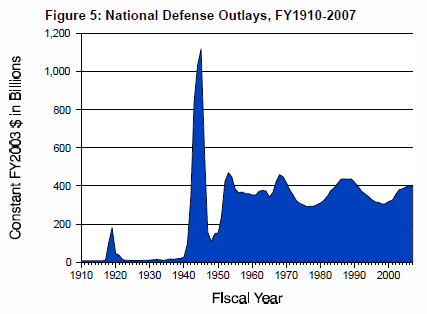
Today’s hearing came as the Trump administration takes to Capitol Hill to defend its plan to spend $1.5 trillion on the Pentagon in fiscal 2027. That total comprises $1.15 trillion in the base budget request and an additional $350 billion from a proposed forthcoming reconciliation bill.
By and large Republicans voiced support for the request and operations in Iran, while some key Democrats used the hearing to question the FY27 budgeting strategy and operations.
For example, Chairman Mike Rogers , R-Ala., said the request that includes $70.5 billion to buy missiles is a key to boosting munition production.
“Our global munition stockpiles are low, and we lack the capacity to rapidly restock magazine depth. We have very little industrial capacity to mine, refine or process critical minerals,” Rogers added.
However, the committee’s top ranking Democrat, Rep. Adam Smith from Washington, questioned the $1.5 trillion request, saying the increase may not be money well spent.
“We need to pay as much attention to how we’re spending the money as to how much we’re spending, and we never seem to do that,” Smith said.
Several Republican and Democratic lawmakers also used the hearing to press Hegseth on the recent firing of Army’s 41st Chief of Staff Gen. Randy George and Secretary of the Navy John Phelan.
Hegseth did not provide lawmakers with a direct answer on the rationale for relieving George or Phelan but repeatedly said it was time for new leadership and new direction in both cases.
And days after top defense lawmakers — including Sen. Mitch McConnell, who leads the Senate Appropriations defense subcommittee — criticized the Pentagon for failing to release $400 million in funds for Ukraine, Hegseth acknowledged that the funding has been released “as of yesterday.”
Hurst told reporters after the hearing that because the money was not delegated under the Ukraine Security Assistance Initiative, the Pentagon needed to conduct a legal review to figure out how to deploy the funding.
Updated on 4/29/26 at 4:47 pm to add more details from the hearing.