WASHINGTON — Recent Congressional moves on reconciliation have pushed the Pentagon’s $350 billion request indefinitely down the road, and raise the specter that a major part of the department’s funding plan — vital to ramping up munitions production and the Golden Dome missile shield — might not materialize.
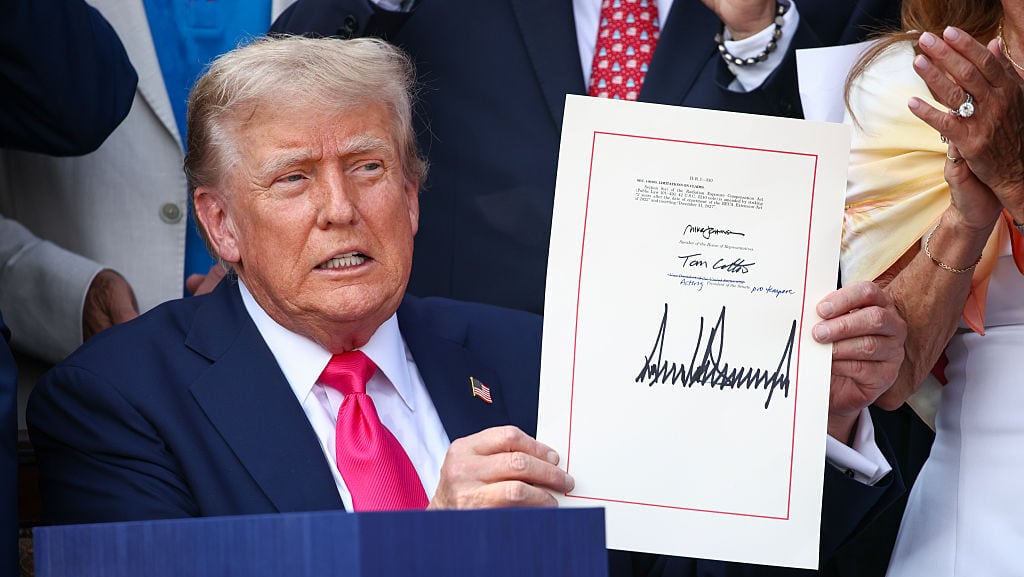
Before leaving Capitol Hill last Friday, the Senate and House passed a budget resolution that sets up a second reconciliation bill, with about $72 billion in funding for immigration enforcement and the White House ballroom.
As a result, additional funding for defense is being left on the table for a potential third round of reconciliation, and it’s unclear when Congress plans to get the ball rolling.
Senate Armed Services Committee Chairman Roger Wicker, R-Miss., told reporters last week that reconciliation funds for defense might not be passed by Congress until after midterm elections.
“I am quite hopeful that it will indeed be enacted sometime in November,” he said — news unlikely to be greeted with enthusiasm by either defense hawks or industry, who were hoping defense funds would be quickly dispersed through reconciliation, which can move faster than the base budget process.
However, Wicker’s comments come amidst a growing sense of unease around whether a defense-focused reconciliation bill will be able to survive Congress, where the narrow majority in the House makes things difficult.
Asked by Breaking Defense this week how he views reconciliation’s chances of passing, Rep. Don Bacon, R-Neb., chairman of the House Armed Services Committee’s cyber panel, said “I just don’t know” and conceded that “I am a little worried about it.”
Part of the challenge, Bacon said, is that although he supports the funding in reconciliation, he isn’t sure it will make it through Congress due to the “anti-defense” leanings of some House Freedom Caucus members.
“It would be better if we did this through the budget process, because you get more support,” he said. “If you say, ‘We don’t want Democrat support,’ It creates a long-term problem.”
Rep. Ken Calvert, R-Calif., who chairs the House Appropriations defense subcommittee, has also voiced frustrations with reconciliation spending, although he has not gone so far as to say he would vote against a third reconciliation bill.
“If these programs are as critical as the budget request suggests — and I believe they are —then they deserve all the full scrutiny and sustained attention that we on the appropriations process provides,” he said during a hearing last week with Air Force and Space Force leaders. “I would urge the department to work with us to bring these programs into the discretionary budget where they belong.”
Additionally, The Hill recently reported opposition to a third round of reconciliation amid Senate Republicans, citing two unnamed GOP senators who indicated that senior Republican appropriators have been leading the charge against a third bill.
The Office of Management and Budget has characterized its use of reconciliation as a pragmatic gambit necessary to grow spending for Trump administration priorities without having to cede funds for Democrat-backed initiatives.
When figuring out which defense accounts to fund through reconciliation — as opposed to the base budget — the Pentagon considered three criteria, Jules Hurst, who is performing the duties of the Pentagon’s comptroller, said during a briefing last month.
“If we use mandatory spending, number one, we have some more flexibility on when we obligate those funds. Number two, we did it for things that were kind of a one-time plus up,” he said. Finally, he added, the Pentagon opted to seek reconciliation funding in cases where “there’s technology that’s changing quickly, like for Golden Dome or for the DAWG [Defense Autonomous Warfare Group].”
If reconciliation falters, Hurst has said the Pentagon will seek other avenues to obtain the $350 billion.
“We wouldn’t ask for the money if we didn’t want it,” he said. “So, we’ll go back to the White House, and we’ll work with Congress to come up with a new strategy if the White House and Congress decide reconciliation is not the right vehicle.”
When asked how Congress could fund the $1.5 trillion defense budget if reconciliation fails, Wicker provided few specifics.
“It’s an exercise we’ll have to go through and it’s a matter of bringing the public along, having a national conversation about the important programs and expenditures that that [legislation] would include,” he said.
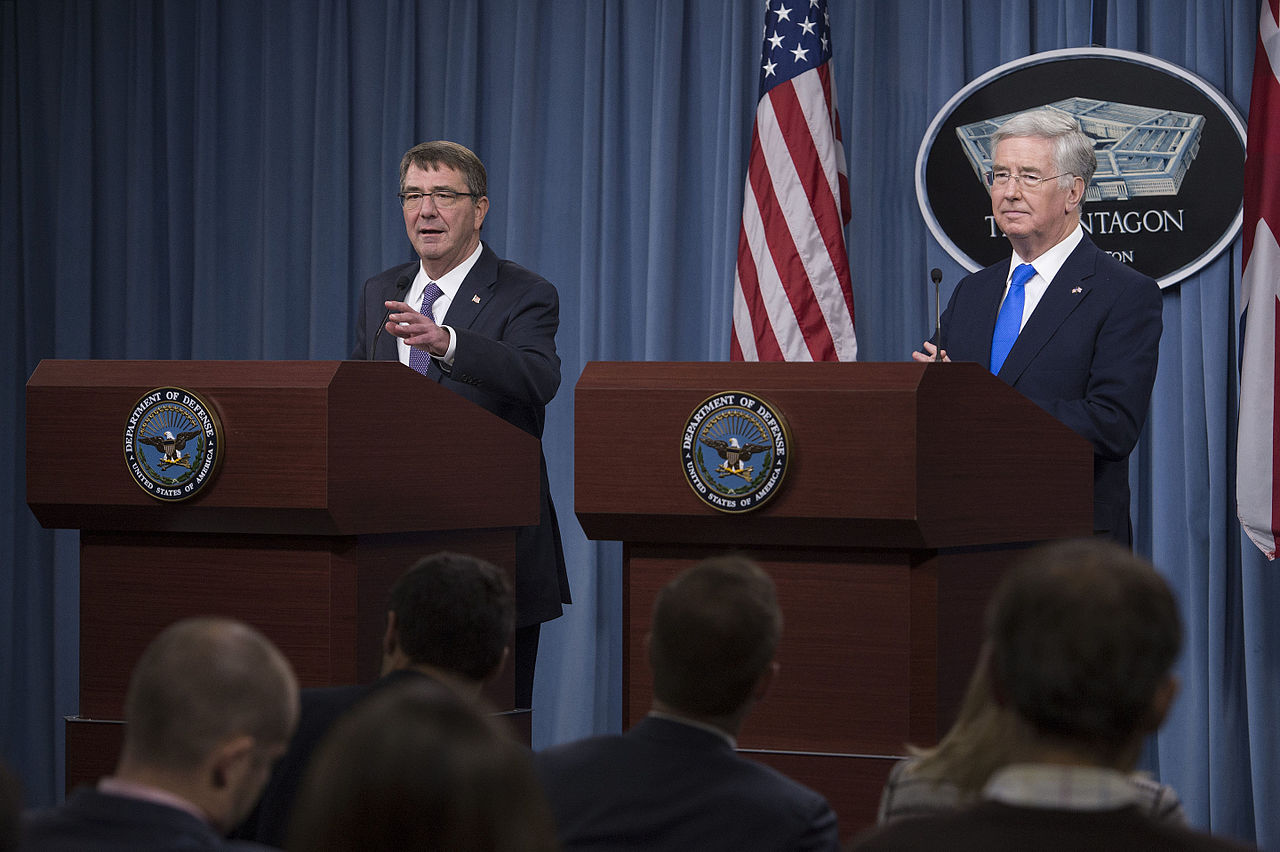
Skeptical lawmakers will have their chance to question Defense Secretary Pete Hegseth about the Pentagon’s fiscal 2027 budget strategy on Tuesday, when he and Chairman of the Joint Chiefs of Staff Gen. Dan Caine appear before House and Senate appropriators in a marathon series of hearings.
Here are the highlights of what could be left on the table if reconciliation funds don’t materialize:
Defense Industrial Base
Money to shore up the defense industrial base makes up about $113 billion, or roughly a third of the department’s reconciliation request, according to a Pentagon overview of FY27 mandatory spending.
The funding is largely divided into four buckets. The largest beneficiary is Pentagon investments in critical minerals, which stands to receive $48.7 billion, with various lines of effort that include “expand[ing] capabilities and capacities” for critical minerals and rare earth elements, as well as “strengthen[ing] mining, processing, metallization, and recycling capabilities.” It also includes funds to purchase critical minerals for the National Defense Stockpile, to help mitigate supply risks.
Almost $23.6 billion is slated to go toward purchases made under the Defense Production Act, which the department is using to fund contracts and loans for key industrial capabilities buried within the supply chain — such as castings and forgings, microelectronics, chemicals and battery components.
The Office of Strategic Capital’s loan program would receive $20 billion to provide “debt financing for strategic investments in companies and projects to build industrial base capacity and capabilities that are essential to national defense, address economic chokepoints that threaten key supply chains, and support development of critical technologies,” the Pentagon said in the overview document.
Finally, $16.3 billion would go toward the Industrial Base Analysis and Sustainment program, which is prioritizing investments to missile and solid rocket motor components deemed necessary to ramp up priority munitions identified by the Munitions Acceleration Council.
“These investments are purpose-built to reduce unit costs, expand and sustain surge capacity, and accelerate the qualification and fielding of integrated missile and SRM capabilities required to meet current and emerging operational demands,” the department’s overview states.
Next Generation Technology and Autonomy
Another huge beneficiary of reconciliation funding would be the Pentagon’s unmanned and developmental tech efforts, which are set to rake in $102.5 billion.
The department’s Drone Dominance initiative is set to capture the majority of that funding, with $53.6 billion slated to “to accelerate the mass procurement of small aerial drones, including one-way attack drones, ensuring readiness for the future of drone warfare.”
The Pentagon intends to use $16.9 billion of those funds to buy uncrewed systems, $14.4 billion for counter-UAS systems, and $13.5 billion to build up a logistics system capable of supporting uncrewed platforms in a contested environment.
Another huge chunk of funding, at $46 billion, would be devoted to building a government-owned enterprise AI infrastructure. Meanwhile a further $2.4 billion would be set aside to “accelerate disruptive capabilities” associated with AI, with detailed spending classified.
Munitions Production
The reconciliation request includes $47 billion to “accelerate the delivery and drive munition ind