In a significant development for integrated air defense, MBDA recently showcased a novel turret-mounted system combining a high-energy laser with a missile interceptor. This dual-capability platform directly addresses the escalating challenge of small, fast, and cost-effective unmanned aerial threats, which have become a defining feature of contemporary conflict zones and a growing concern for European security. The innovative pairing of the DEWS-L laser weapon with the DEFENDAIR guided missile offers a layered defense, providing "overlapping engagement envelopes" to counter a diverse spectrum of aerial incursions.
This strategic unveiling occurs amid a global scramble for resilient and economically viable counter-drone solutions, driven by the widespread proliferation of uncrewed systems, particularly evident in the ongoing conflict in Ukraine. Militaries worldwide are re-evaluating their defensive postures, recognizing that traditional air defense paradigms struggle with the sheer volume and low cost of modern drone attacks.
BERLIN — As Europe struggles with drone incursions and proliferation of uncrewed systems rise on the battlefields of Ukraine, MBDA today presented what it’s calling a novel solution at the Berlin Air Show: a turret mounted high-energy laser paired with a missile interceptor system.
The European missile house says that the hybrid platform, which could enter service with Germany before the end of the decade, has been designed to address the “growing challenge of small, fast, and low-cost unmanned aerial threats.” The pairing of the DEWS-L laser weapon and the company’s DEFENDAIR guided missile offers “overlapping engagement envelopes.”
The laser is specifically intended to neutralize close-range targets, including drone swarms, as depicted in an infographic presented by company officials during a press briefing.
The new combo comes as militaries, and therefore defense firms, the world over race to combat the threat of drones and missiles without breaking the bank on pricey interceptors. Israel, for instance, has reportedly operationally deployed its Iron Beam laser air defense system.
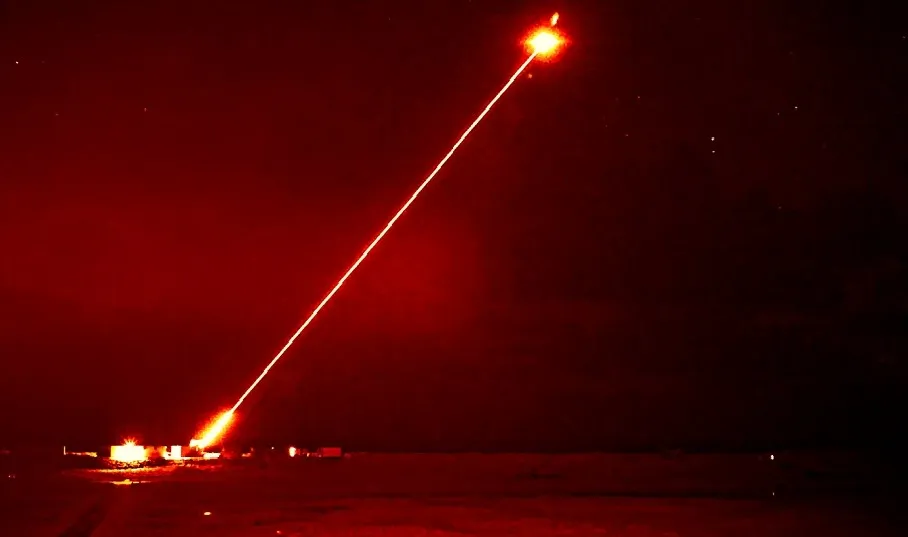
MBDA plays a leading role in other laser-based programs, including spurring development of the UK’s DragonFire system, which is estimated to cost less than £10 ($13) a strike. In 2024, the high-tech asset shot down airborne targets at a test range in northwest Scotland, a first for the UK.
MBDA’s rollout of the DEWS-L and DEFENDAIR system also arrives as the company is making a strong push to develop and sustain German and European deep precision strike capabilities with an expanding product portfolio that also includes one-way attack drones, -generation guided missiles, as well as hypersonic weapons.
Those efforts align with changes in customer behavior too. Thomas Gottschild, managing director at MBDA Germany, said that Berlin, for example, has somewhat shifted away from air defense toward prioritising precision strike capabilities. He also stressed, however, that demand has “exploded” for conventional munitions as the conflicts in Ukraine and the Middle East see so many stockpiles tested.
“[T]o replenish this demand, it will take quite a while. That is for us, as an industry, an additional challenge, but also an opportunity,” he noted.
Editorial Analysis
The integration of a high-energy laser and a guided missile interceptor within a single counter-drone system represents a sophisticated evolution in air defense strategy. This hybrid model mitigates the inherent limitations of standalone systems; lasers excel at neutralizing swarms and close-range threats with minimal cost per engagement, while kinetic interceptors provide range, all-weather capability, and lethality against more robust targets. Such a composite capability is paramount for military forces contending with the dual pressures of burgeoning drone proliferation and the prohibitive expense of using traditional interceptors against low-cost aerial threats. It directly influences how commanders can protect high-value assets and critical infrastructure against asymmetric drone attacks.
This development aligns with a broader global trend, accelerated by lessons learned from conflicts such as Ukraine, where uncrewed systems have dramatically altered battlefield dynamics. The demand for robust, yet economically sustainable, air defense solutions has intensified, pushing defense contractors to innovate beyond conventional munitions. The shift towards prioritizing capabilities that blend precision strike with effective air defense, while also acknowledging the acute need for rapid replenishment of conventional stockpiles, illustrates the complex demands now placed on national security and defense industrial bases. It forecasts a future where adaptable, multi-layered defense architectures will be critical to maintaining strategic advantage.