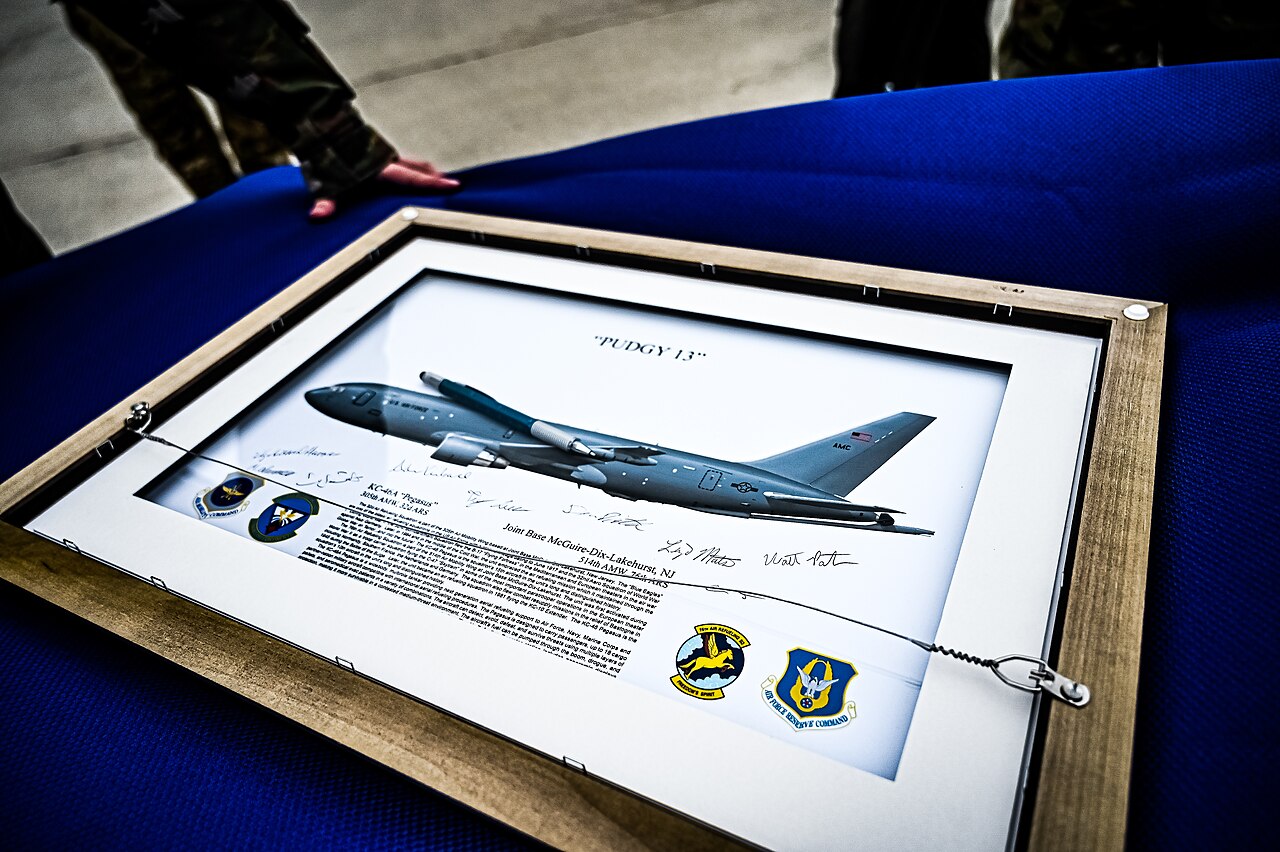
The Israeli Air Force (IAF) has received a major upgrade to its vital but aging air refueling capabilities, as the first American-made KC-46 tanker was delivered to Israel today.
For Jerusalem, this news could not come soon enough. But the Pentagon cannot rest on its laurels, and needs to consider new, smart ideas for how to enable Israel’s tanker force to grow in the coming years.
Israel’s current inventory of refueling tankers is reported to include no more than seven Boeing 707 “Re’em” aircraft. Originally commercial craft, Israel began acquiring and modifying the planes for refueling purposes in 1979. These aircraft are likely as old as the parents of some the Israeli pilots flying them.
Following the 2020 US approval to sell up to eight KC-46As to Israel, Israel signed an order in 2022 for four KC-46s, with an additional two tankers purchased in August 2025. That latter order cost approximately $500 million, “funded through U.S. aid,” referring to the annual allotment of Foreign Military Financing the United States provides Israel. Two KC-46s are expected to be delivered in 2026, with two more arriving in 2027.
No formal decision has been made yet on the 7th and 8th KC-46s that Israel could potentially order, and Israeli defense budgets and decisions related to US foreign military financing may play a role on when, if ever, Israel moves forward to purchase those aircraft.
Israeli aerial refueling capacity is important because while threats from Hezbollah and Hamas are on Israel’s doorstep, conflicts with Iran and the Yemeni-based Houthi terror group require aerial refueling to effectively prosecute. The Israeli Air Force has had to strike targets in Yemen 1,800 kilometers from Israel, and in Iran, the distance to targets ranged from at least 1,500 to as far as 2,300 kilometers in Eastern Iran.
During recent conflicts with Iran, the IAF conducted hundreds of aerial refueling missions during the 12-Day War, and approximately 2,000 in the first six weeks of the recent conflict. American tankers helped refuel Israeli planes during the conflict, but Israel needs to boost its domestic capabilities, as American assets may not always be available in an emergency situation.
Additionally, Israel is looking to expand its fleet of jets, having recently approved the acquisition of an additional F-35I squadron and an F-15IA squadron on May 2. The KC-46 will be capable of refueling Israel’s entire fleet of 4th and 5th generation fighters and will be interoperable with US and partner aircraft.
It is likely that six KC-46s will not be enough to meet Israel’s air refueling requirements once its existing fleet of refuelers is retired and if Israel is operating without US assistance. So now, in the wake of a serious air campaign and with the threat from Iran diminished, is the time to consider how to push Israel’s tanker fleet forward.
While the obvious solution is “buy more tankers,” there are other ways Israel and the United States can mitigate risks.
First, the two should expand cooperation to help Israel train additional maintenance personnel, crew chiefs, and pilots for the Israeli KC-46s that will be coming online, allowing Israel personnel to gain needed experience in operations.
Once Israelis receive this training, Washington and Jerusalem should use the US Air Force Military Personnel Exchange Program to place Israelis in US Air Force units to help them retain and hone their skills as they await the arrival of additional KC-46s. With only one tanker set to be delivered in the near future, allowing Israelis to train on American tankers would increase the number of trained pilots and crew in a slammer amount of time. That experience will also build valuable professional relationships and interoperability with their American counterparts.
Israeli military operations against Iran in recent conflicts depended on the ability to conduct air refueling. The bad news is that Israel’s own air refueling capabilities are aging and increasingly hard to maintain. The good news is that help is on the way.