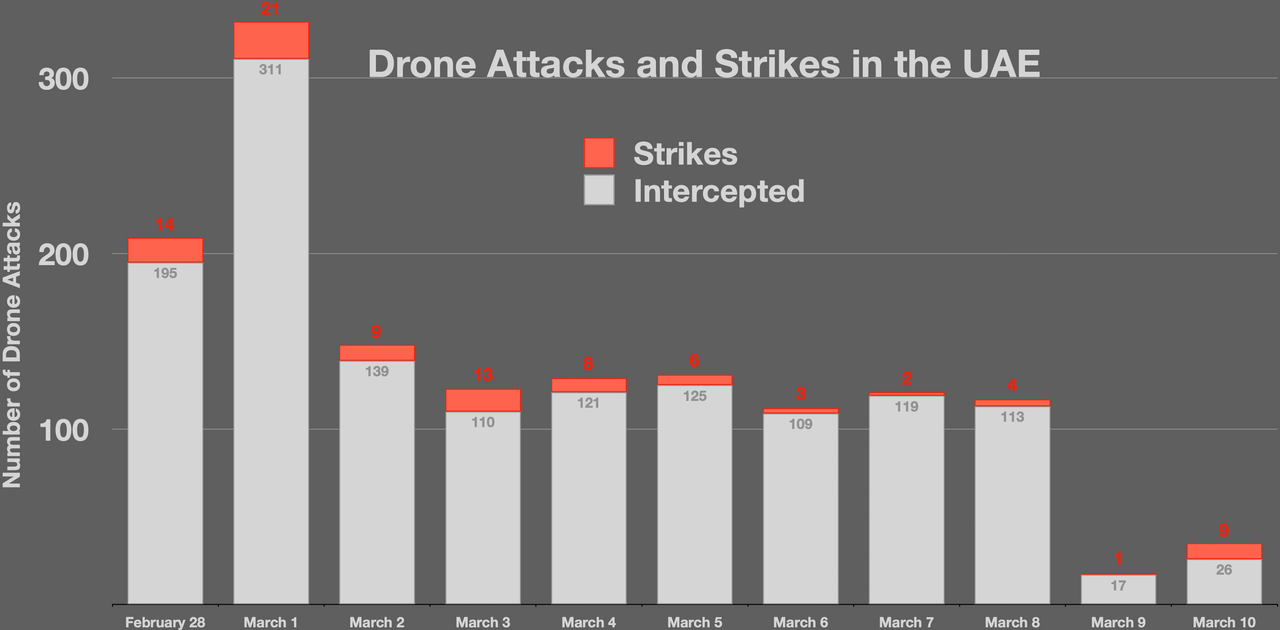
WASHINGTON — The Army formally launched today its low-cost interceptor (LCI) program to produce scalable, affordable interceptors in an effort to end the days of relying solely on multimillion-dollar systems to down drones costing a couple thousand dollars.
The initiative was first teased last month by Army Secretary Dan Driscoll, and senior service leaders said today that the Army is working on a “compressed” timeline for the program, aiming to complete the first live fire demonstrations for the LCIs this fall.
“We’re not going to do this physical process where we are whiteboarding deep in the Pentagon and coming up with some arbitrary requirement,” Driscoll said during a panel at the LCI Industry Day. “Instead, we’re going to say, ‘Hey, what can science do for us? What can talented builders do for us?'”
Driscoll added that the new LCIs are “not intended” to replace any existing, exquisite air defense systems, saying the current ones “are incredible” and are “described as a Ferrari of a product.” Still, he said, “we need some other things to supplement those products.”
Related: Driscoll reveals new plan to buy cheaper interceptors with Army-owned IP
The Army, through its XTech program, plans to release a call for white papers for LCI components on July 6, which will include: rocket motors; seekers; fire control and guidance tools; and a weapons system integrator responsible for designing the open systems architecture. Together, these parts will comprise the all-up round.
Shortly after the white papers’ response date, the service hopes to have selected companies to participate in a live fire demonstration at White Sands Missile Range in New Mexico, Brig. Gen. Guy Yelverton, capability portfolio executive of Defensive Fires, said during a media roundtable today.
“The xTech team offers them four weeks to provide back the responses, and then that starts the 120-day clock, so I can get into the first quarter of [fiscal year] 27 [with] fresh money,” Yelverton said. After the xTech team narrows down the prize pool and awards a nondisclosed number of companies, Yelverton said “dependent upon the maturity of the systems, we might be able to launch straight into production.”
He added that the maturity of the systems will also determine how quickly the service can deliver the interceptors, but would not commit to a definitive timeline.
Driscoll later said during a media roundtable today that since the service is looking for different companies to come together to provide the separate components of the interceptor, data sharing and ultimately intellectual property sharing will play an important role in developing the LCIs. Another reason for IP sharing, Driscoll said, is so the Army can eventually add the LCIs to the service’s marketplace interface, where the Army already sells drones and counter-drone capabilities to warfighters in the DoD and allied nations.
“The grand strategy of conflict going forward is compatibility, like the way that small nations like Finland are going to be able to partner with large nations like the United States. We are going to be able to parachute into a theater where a lot of our stuff doesn’t exist, and so our allies [will] have compatible equipment to us,” Driscoll said.
“Then in theory, in a perfect world, you want everyone buying from the same places. They don’t have to buy the same thing, but they want to buy that compatible stuff,” he added.
Regarding the price point of the LCIs, Driscoll said during the roundtable that he doesn’t intend to put a definitive dollar amount on the capabilities, however, Driscoll ly told reporters in May that ideally, the cost would be less than $250,000 for each interceptor. Further, a slide shown during another discussion at today’s event indicated that the Army wants the all-up rounds to cost less than $1 million.
“I think that in our brain, if you think about the cost of a jet engine-powered Shahed, like what are we willing to pay today? I mean, if it’s American life, we’re obviously going to use what we need to, but at scale, what can we absorb to deal with those? So I think that was a price point that came from that specific problem in our brains, but it’s not intended to be limited to that,” Driscoll said today of the $250,000 figure.
“If somebody came in with something that was 280,000 [or] 420,000 or 610,000 and it’s the right answer, we’re going to buy it. So this is where we’re getting out of our way.” he added.