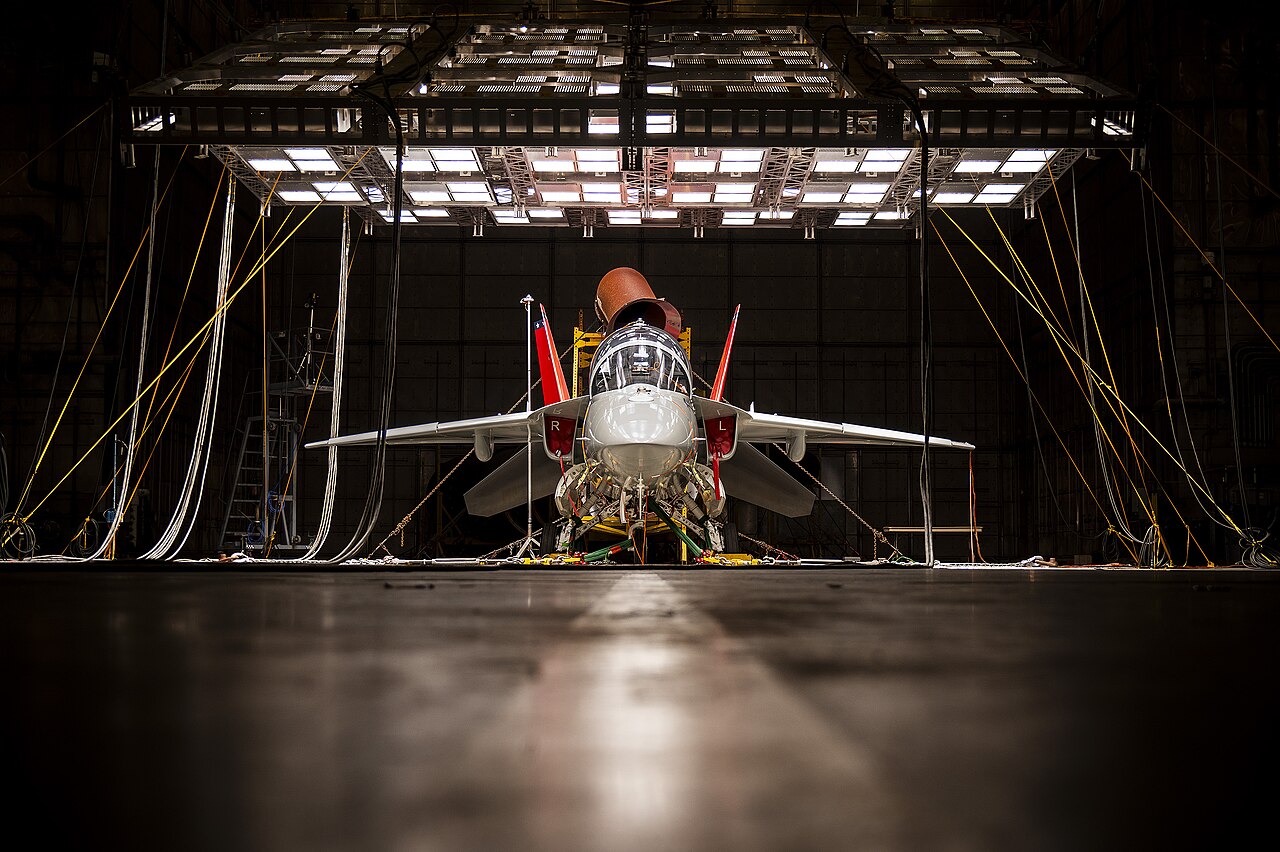
WASHINGTON — By 2028, the Air Force expects that the T-7 Red Hawk will be flying with new pilots, heralding a modern era of training.
But an internal Air Force presentation, dated August 2025 and viewed by Breaking Defense, says that for the first several years those aircraft will come with a “serious” airworthiness risk, stemming from what the document calls “non-compliance” on the part of contractor Boeing to obtain necessary information on the training jet.
It’s one of several, ly unreported issues Air Force officials have been willing to accept to begin operations for the Red Hawk, an investigation by Breaking Defense found.
This investigation, which included interviews with sources, current and former Air Force officials and analysts, as well as a review of internal documents, provides the most detailed picture yet of the T-7’s programmatic stumbles, tensions with plane-maker Boeing and the Air Force’s plan to right the ship.
Among this investigation’s findings:
The first 82 T-7 aircraft are projected to fly with a “serious” airworthiness risk.
Sources familiar with the program are concerned that attempts to get the T-7 to the fleet faster could increase risk for junior pilots.
The Air Force has assessed sustainment of the aircraft as “high risk.”
Internal Air Force documents say Boeing’s failure to provide certain data on the aircraft amounts to “non-compliance” on the part of the company.
The plane currently cannot fly in the rain, and the program has struggled with a ground-based simulator.
Air Force and Boeing officials are mulling a plan to change how the government buys the aircraft’s engines, at an “additional” taxpayer cost of up to $1.5 billion, which could come in exchange for technical data Boeing would provide on the company’s 747-8i jumbo jet.
Two sources who spoke with Breaking Defense said the Red Hawk shows promise, and believe officials are dedicated to safety. But they raised concern about the aircraft’s speed of development, and argued the government has failed to hold Boeing to the terms it signed up for, pointing to consequences like delays and millions of dollars of added costs that may have to be carried by taxpayers.
“I’m concerned about the government losing capability because of a lack of enforcement of a contract,” a source with direct knowledge of the T-7 program, who like others was granted anonymity for this story, told Breaking Defense.
This is part one of a three-part series looking at the T-7 Red Hawk. Part two and three will be published in the coming days.
Many of the problems ultimately trace back to the initial T-7 contract awarded to Boeing by the Air Force in 2018, a fixed-price agreement that has caused the company to lose billions of dollars and been marked by disputes between the two sides about what the contract requires Boeing to provide. With a pressing need for a new trainer, Air Force officials have sought workarounds and new initiatives to keep the program moving forward.
In an interview and in response to written questions, Air Force officials confirmed issues facing the T-7, but emphasized the Red Hawk will be safe and effective when delivered to pilots.
While the program has been marked by technical challenges and contractual disputes, officials believe even if the T-7 is a work in progress, mitigation measures largely under the aegis of a new “active management” strategy should sufficiently ameliorate concerns and resolve points of contention. And, they argue further, extending operations of the aging T-38 Talon, the legacy trainer the T-7 is designed to replace, poses its own unique challenges.
“The Air Force acknowledges the urgency of replacing the 60-year-old T-38 and is deliberately balancing the schedule risk of the T-7’s development with the significant operational risk of extending the T-38. The goal is to get the capability to the warfighter as quickly and safely as possible, and the program is confident in the safety of the new aircraft,” Air Force Brig. Gen. Matthew Leard, director of plans, programs, requirements and international affairs at Air Education and Training Command (AETC), told Breaking Defense.
In response to a detailed list of questions, Boeing told Breaking Defense, “While we are working to get this capability to the warfighter as quickly as possible, we will not forgo safety or quality. Safety is paramount to Boeing and the T‑7A program.
“Post contract award, the Boeing T‑7A Red Hawk program has safely accumulated over 344 flight test hours across more than 350 test flights,” the company added. “As we continue to collaborate with the U.S. Air Force, the T‑7 program’s active management approach allows us to provide a production‑ready configuration to the Air Force prior to low‑rate initial production, further reducing future risk and accelerating the path to delivering this critical capability.”
‘Going Fast’
The Air Force says it needs to move quickly on the T-7 for many reasons, such as more modern features that can better prepare pilots to fly -generation aircraft and an ejection system that can accommodate a wider range of body types, particularly for female aviators. But the program to this point has been dogged with delays.
Boeing won the $9.2 billion T-7 contract in 2018, and struggles have set back the trainer’s schedule by over two years. Formal production was approved in May, and prevailing plans call for the Air Force to declare initial operational capability (IOC) — consisting of 14 aircraft ready for pilot training — in fall 2027.
Air Force instructors are slated to begin what’s known as Type 1 training in production-representative planes this year, but the first new pilots are expected to fly in the aircraft beginning in spring 2028.
In the meantime, the Air Force will have to keep operating the T-38, whose obsolete airframe is already compressing the pilot training pipeline, according to Leard. (While the cause of a May 12 T-38 crash remains under investigation, the Air Force was forced to ground the fleet for a week.)
Yet even when new pilots start flying the T-7, there will still be more testing to do. The Red Hawk won’t have a fully expanded envelope — meaning the Air Force will not have completely evaluated the aircraft’s entire spectrum of operations. The jet under current plans will be designed to be safe to fly, but with limits pilots must obey.
It’s not unusual to field aircraft and other weapon systems with high concurrency, or an overlap between a weapon system’s development and production phases. What’s different for the T-7, sources said, is that it is going to be operated by pilots relatively early in training, without the instincts and experience of a seasoned aviator. And while there will be an instructor in the back seat, things happen very quickly up in the air.
The Air Force is “task saturating new pilots without a fully developed envelope,” the source with direct knowledge of the program said. “That scares me.”
A government source familiar with the T-7 program told Breaking Defense they believe officials are being mindful of safety, but due to delays, they noted the program will need to move quickly through remaining development, potentially raising unforeseen consequences.
“It’s the unknown, and they are going fast,” the person said, who was granted anonymity for this story. “When you go fast, things get screwed up.”
Regarding the 2028 timeline, “If all the stars and moons align, 2028 is realistic,” the person said. “I hope so, but I don’t think so. I think it’s going to be close, but not make that mark.”
Leard emphasized the aircraft will be safe when it is declared operational. “Where risk is concerned” regarding the timeline for the jet to enter service, “I would say we’ve shifted to accept more programmatic risk of concurrency to mitigate the operational risk of further delay,” he said.
Rodney Stevens, the Air Force’s program executive officer for training, ly told Breaking Defense the T-7 will ini