Military & Defense
451 articles · Coverage updated continuously

The Department of Defense is quietly advancing a pivotal aspect of its Acquisition Transformation Strategy, shifting focus to modularity and multi-sourcing as announced by Secretary Pete Hegseth last November. While new munitions deals and PAE restructuring have grabbed headlines, this under-the-radar initiative seeks to fundamentally reshape the defense industrial base. The strategy emphasizes Modular Open Systems Approaches (MOSA) and producibility, aiming to fortify supply chains and inject new competition.

Lockheed Martin has unexpectedly withdrawn from the U.S. Navy's critical Undergraduate Jet Training System (UJTS) competition, leaving just three primary contenders for the lucrative contract. The world's largest defense contractor, which had planned to bid its TF-50N in partnership with Korea Aerospace Industries, cited U.S. content requirements and program suitability issues as reasons for its decision, coming shortly after the Navy issued its final request for proposals. This significant shift reshapes the landscape for the Navy's next-generation trainer jet.

Navy Secretary John Phelan has been abruptly removed from his post by the Pentagon, effective immediately, with U.S. Navy Undersecretary Hung Cao stepping in as acting secretary. This high-profile dismissal marks the latest in a series of leadership changes within the defense establishment under Secretary Hegseth and President Trump. The move, announced shortly after Phelan attended a major naval symposium, comes without an immediate public explanation from the Pentagon, though administration officials cite a need for "new leadership."

Secretary of the Navy John Phelan has abruptly departed his post, effective immediately, marking the first high-ranking political appointee exit from the Pentagon under the second Trump administration. Undersecretary Hung Cao, a former naval officer, will step in as Acting Secretary following an unexpected announcement from Pentagon spokesperson Sean Parnell. This sudden leadership change arrives shortly after Phelan publicly defended controversial naval initiatives, including the 'Trump-class battleship' and 'Golden Fleet'.

Office of Management and Budget Director Russel Vought delivered a scathing critique of the shipbuilding industry, demanding greater accountability from contractors. His unexpected broadside concluded the Navy League's Sea-Air-Space 2026 conference, setting a confrontational tone for future defense procurement discussions. Breaking Defense editors Aaron Mehta and Diana Stancy weigh in on Vought's remarks and their key takeaways from the event.

The U.S. Air Force has controversially zeroed out funding for its Next-Generation Air Refueling System (NGAS) in the 2027 budget request, abruptly halting a key initiative for future aerial refueling capabilities. This significant budgetary shift diverts resources from developing new tanker platforms to instead allocate $13 million for 'Advanced Tanker Systems,' focusing solely on upgrading existing mission systems. The move underscores a strategic pivot towards incremental modernization over generational leaps, sparking immediate concern across defense circles.

Navy Secretary John Phelan has been abruptly removed from his post, effective immediately, with Undersecretary Hung Cao stepping in as acting secretary. This sudden departure follows Phelan's recent controversial remarks suggesting the outsourcing of U.S. warship production abroad, made just yesterday at a major naval conference. His exit comes at a critical juncture for the Navy, amidst an unprecedented blockade of Iranian ports and as the new defense budget is about to be unveiled, underscoring significant tensions within the Pentagon.
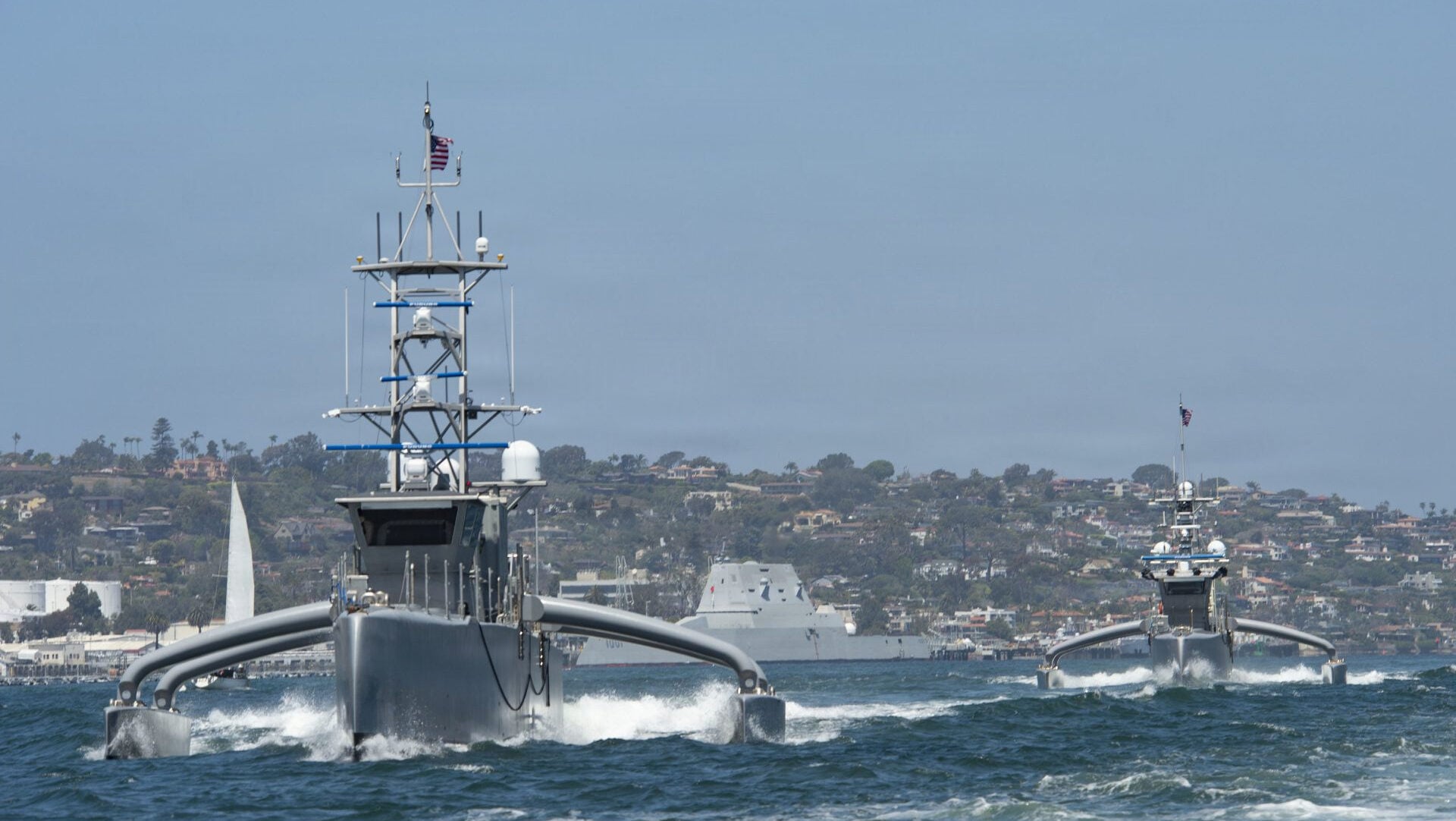
The U.S. Navy is pivoting towards a future fleet built on specialized unmanned systems, recognizing that diverse global theaters, from the Red Sea to the Pacific, demand unique technological solutions. This strategic shift, heavily influenced by lessons from current conflicts in Ukraine and against Iranian-backed forces, underscores a move away from the traditional, one-size-fits-all approach to naval warfare. Navy leaders are emphasizing the need for purpose-built drones, tailored to specific environmental, operational, and adversarial challenges across different regions.

The U.S. Army is embarking on an ambitious ground vehicle and command and control modernization, committing nearly $4 billion to its top priority, Next Generation Command and Control (NGC2). This sweeping plan, outlined in newly released budget documents, also includes the procurement of 108 XM30 vehicles by FY31 as a long-awaited Bradley replacement, with significant funding allocated for initial units in FY27. These initiatives represent the Army's most substantial modernization effort in over four decades, aiming to reshape its capabilities for modern warfare.

The Trump administration, through OMB Director Russ Vought, has issued a severe ultimatum to U.S. shipbuilders: resolve persistent production delays and cost overruns or face the prospect of the government sourcing vessels from foreign shipyards. Speaking at the Sea Air Space conference, Vought underscored the administration's frustration with extensive backlogs, escalating 'cost-to-complete' bills, and declining productivity despite significant federal investment. This bold threat marks a significant pivot from traditional domestic procurement policies, signaling a potential shift in national security acquisition strategy.

Ukraine has rapidly ascended to become Italy's fourth-largest arms export customer, with authorized licenses totaling €349 million, underscoring a significant deepening of their defense relationship. This surge in exports follows Italy's provision of approximately €2.8 billion in direct military aid to Kyiv since 2022 and comes as both nations actively pursue a critical 'Drone Deal' for joint UAV production.

President Donald Trump has nominated two seasoned defense industry executives, Erich Hernandez-Baquero from Raytheon/RTX and Roger Mason from V2X, for pivotal leadership roles overseeing US government space programs. Hernandez-Baquero is slated to become Assistant Secretary of the Air Force for Space Acquisition and Integration, while Mason is tapped as the next Director of the National Reconnaissance Office (NRO). These nominations, announced via White House postings, signify a direct pipeline of private sector experience into critical national security infrastructure.