Cybersecurity
539 articles · Coverage updated continuously

The defense cybersecurity landscape grapples with a fragmented market and a lack of clear industry leaders, despite escalating threats amplified by artificial intelligence. This dynamic challenges both private capital investment and the Pentagon's strategic efforts to secure critical national infrastructure and military networks.

A Canadian-American cybersecurity firm specializing in advanced identity protection recently finalized a significant capital infusion to accelerate its North American market penetration. Lastwall, known for its focus on thwarting sophisticated credential-based attacks and preparing for future quantum computing threats, aims to broaden its reach within critical defense and government sectors.

Britain's top signals intelligence official recently articulated a stark vision of the evolving global security landscape, characterizing artificial intelligence as an inevitable and transformative power. This assessment comes amidst escalating warnings regarding Russia's intensified 'hybrid' activities targeting Western critical infrastructure and democratic processes, pushing allied nations into a precarious space between conventional peace and conflict.
A sophisticated botnet known as Glassworm, notorious for targeting developers in software supply-chain attacks, has been effectively neutralized. This significant disruption follows a multi-party operation to dismantle its uniquely resilient command-and-control infrastructure, which leveraged unconventional decentralized technologies.
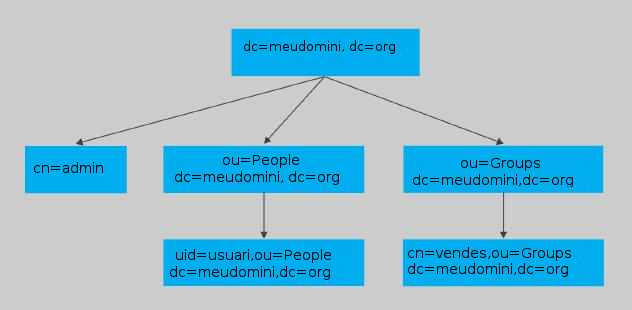
The persistent tension between robust Active Directory security and user experience represents a critical challenge for IT professionals. While strong password policies are foundational, overly restrictive rules often lead to workarounds that inadvertently undermine organizational defenses. However, contemporary strategies are demonstrating that organizations can significantly enhance their AD password posture without escalating helpdesk tickets or user frustration.
A new threat campaign is exploiting artificial intelligence chatbot interactions to steer users towards malicious download sites, as disclosed by Microsoft. This sophisticated operation moves beyond mere cryptojacking, establishing persistent remote access for potential follow-on attacks on targeted systems, particularly those with high-value GPUs.

Financial institutions and their customers across Europe and Latin America face heightened risk from dual campaigns involving the Grandoreiro banking trojan and the BTMOB Android RAT. Threat actors are deploying increasingly sophisticated tactics, including supply chain compromise and peer-to-peer communication, to infiltrate systems and pilfer sensitive financial data.

A top Israeli cyber defense official has reported a significant evolution in Iran's state-sponsored hacking activities, indicating increased internal coordination and tool-sharing among its various units. This strategic shift reflects Tehran's adaptation to ongoing geopolitical pressures, leveraging advanced technologies to bolster its cyberwarfare capabilities.

A global cybersecurity coalition has successfully dismantled the command-and-control infrastructure behind GlassWorm, a sophisticated malware campaign that has relentlessly targeted software developers. This significant disruption neutralizes a pervasive threat responsible for widespread supply chain compromises and credential theft across hundreds of software repositories.

Enterprises face a growing cybersecurity challenge as employees increasingly adopt unapproved artificial intelligence tools to boost productivity. This 'shadow AI' phenomenon creates significant blind spots, often exposing sensitive corporate data to unvetted third-party services. Addressing this gap requires a proactive strategy that balances innovation with robust security oversight.

A newly discovered malicious package circulating on the npm registry has been identified as an information stealer, specifically targeting user data associated with Anthropic's Claude artificial intelligence tool. This threat actor leveraged a deceptive utility to exfiltrate sensitive files, demonstrating an evolving attack vector against AI integration environments and a new frontier for data theft.

The paradigm of cybersecurity is undergoing a critical transformation as threat actors increasingly leverage stolen credentials to infiltrate networks, sidestepping conventional perimeter defenses entirely. This pervasive tactic allows malicious actors to operate as legitimate users, presenting an acute challenge for detection and response efforts across all sectors.