Cybersecurity
539 articles · Coverage updated continuously
The National Institute of Standards and Technology (NIST) has announced a significant overhaul of its National Vulnerability Database (NVD) enrichment process, a direct response to a staggering 263% increase in CVE submissions since 2020. Effective April 15, 2026, the NVD will now only prioritize the comprehensive enrichment of vulnerabilities meeting specific criteria, leaving a vast number of other CVEs with reduced metadata. This strategic shift aims to manage the overwhelming volume while focusing resources on the most critical threats facing federal systems and vital infrastructure.

Google is fortifying Android's privacy landscape with the upcoming Android 17, introducing granular controls for contact and location data while simultaneously revealing it blocked an astonishing 8.3 billion policy-violating ads and suspended nearly 25 million accounts in 2025. These comprehensive updates leverage advanced AI to enhance user data protection and combat digital fraud, marking a significant step in Google's ongoing commitment to a more secure ecosystem. Users will now experience a more transparent and controlled environment for sharing their personal information with third-party applications.

Cybersecurity firm Huntress is sounding the alarm on active exploitation of three Microsoft Defender zero-day vulnerabilities, including two critical flaws that remain unpatched. These vulnerabilities, codenamed BlueHammer, RedSun, and UnDefend, were publicly disclosed by a researcher following disputes over Microsoft's handling of the disclosure process, leading to immediate in-the-wild attacks. Threat actors are leveraging these flaws to achieve local privilege escalation and disrupt critical security updates on compromised systems.
A critical new Mirai variant, Nexcorium, is actively exploiting CVE-2024-3721 to hijack TBK DVR-4104 and DVR-4216 devices, building a formidable DDoS botnet through command injection. This operation is part of a broader trend where threat actors are leveraging known vulnerabilities in various IoT devices, including end-of-life TP-Link Wi-Fi routers, to deploy Mirai-like malware.

New data reveals that unmanaged non-human identities, such as service accounts and API keys, were responsible for a staggering 68% of cloud breaches in 2024, far surpassing traditional attack vectors like phishing. This alarming statistic underscores a critical vulnerability in modern cybersecurity, as the proliferation of AI agents and automated workflows is rapidly expanding the volume of these often-unmonitored, privileged credentials. These "ghost identities" represent a vast, accessible attack surface that security teams are struggling to track.
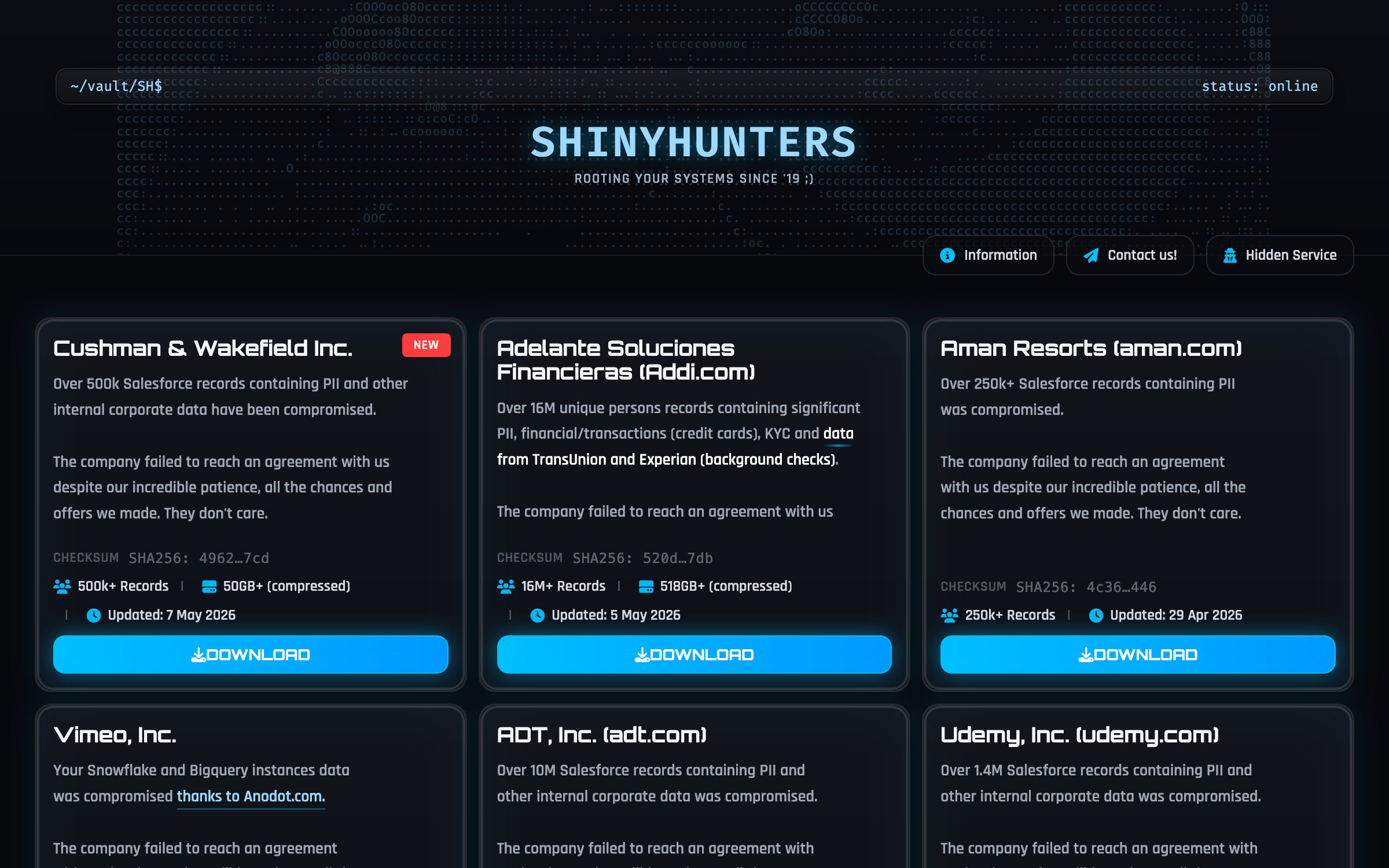
Vercel, a prominent web infrastructure provider, has publicly confirmed a significant security breach, attributing its origin to a compromised employee account at Context.ai, a third-party AI tool. This supply chain attack subsequently allowed unauthorized access to internal Vercel systems and exposed a limited subset of customer credentials, prompting immediate credential rotation for affected users. The sophisticated nature of the incursion, now claimed by the notorious ShinyHunters group who are demanding a $2 million ransom, underscores the evolving threat landscape faced by critical online services.

Cybersecurity researchers have flagged ZionSiphon, a new and politically motivated malware specifically designed to target Israeli water and desalination operational technology (OT) systems. Detected shortly after the recent Twelve-Day War between Iran and Israel, this sophisticated threat possesses sabotage capabilities for chlorine and pressure controls and demonstrates advanced multi-protocol ICS manipulation, with its Modbus attack path being the most developed.
A critical 'by design' vulnerability in Anthropic's Model Context Protocol (MCP) is threatening the integrity of the AI supply chain, potentially allowing remote code execution (RCE) on thousands of systems. This systemic flaw, affecting over 7,000 publicly accessible servers and software packages, exposes sensitive data like API keys and chat histories, yet Anthropic has declined to address the architectural weakness.

This week, web infrastructure giant Vercel revealed a data breach stemming from a compromised third-party AI tool, a stark reminder of the pervasive supply chain risks facing even sophisticated tech providers. This incident, alongside disruptions of major DDoS-for-hire services and the emergence of the PowMix botnet targeting Czech workers, collectively paints a picture of adversaries increasingly exploiting trusted pathways and legitimate tools to achieve their objectives. From AI-powered applications to browser extensions and even update channels, the consistent theme is a strategic bending of trust rather than outright system breakage.

A critical remote code execution vulnerability (CVE-2026-5760, CVSS 9.8) has been discovered in SGLang, a widely used high-performance framework for serving large language models. This severe flaw allows attackers to achieve arbitrary Python code execution on inference servers by manipulating specially crafted GGUF model files, presenting a significant supply chain risk for AI deployments. The exploit targets the '/v1/rerank' endpoint through Jinja2 server-side template injection, making any system loading a compromised model vulnerable.

U.S. critical infrastructure, particularly transportation systems, faces an escalating wave of cyberattacks from pro-Iran hackers, prompting urgent warnings from federal agencies. The Cybersecurity and Infrastructure Security Agency (CISA) and other federal entities are specifically highlighting Iran-linked exploitation of operational technology (OT) devices, a critical vector for disruption. This surge in malicious activity signals a significant and growing threat landscape for the nation's essential services.