Cybersecurity
540 articles · Coverage updated continuously

The Cybersecurity and Infrastructure Security Agency (CISA) has issued an urgent directive for federal agencies to patch a critical cross-site scripting (XSS) vulnerability (CVE-2025-48700) in Zimbra Collaboration Suite (ZCS) within three days, as over 10,000 instances are currently under active exploitation. This high-impact flaw, affecting ZCS versions 8.8.15 through 10.1, requires no user interaction and allows unauthenticated attackers to execute arbitrary JavaScript or access sensitive information when a maliciously crafted email is viewed. The widespread exploitation highlights a significant risk to the hundreds of government agencies and thousands of businesses globally that rely on Zimbra.

The world's largest live-fire cyber defense exercise, Locked Shields 2026, recently concluded, uniting 4,000 participants from 41 nations in a high-stakes simulation. Organized by the NATO CCDCOE, the event rigorously tested defenders' capabilities to protect critical infrastructure, including air defense and e-voting systems, and military networks against sophisticated, real-time cyberattacks.

Cybersecurity researchers have uncovered a sophisticated campaign involving 26 "FakeWallet" applications on the Apple App Store, meticulously designed to impersonate legitimate cryptocurrency wallets and steal user recovery phrases and private keys. This operation, active since at least fall 2025, leveraged advanced social engineering by redirecting users to fake browser pages to distribute trojanized versions of popular crypto wallet software. While many of these malicious apps have now been removed, the incident highlights a persistent and evolving threat landscape targeting digital assets.

The rapid integration of AI agents into enterprise systems is exposing a critical "AI Agent Authority Gap," revealing a fundamental delegation problem rather than just the emergence of new actors. These agents inherit their operational authority directly from existing human and machine identities, fundamentally altering the cybersecurity landscape. Consequently, the challenge isn't merely governing AI, but securing the identities that empower it, a concept traditionally overlooked by existing identity and access management (IAM) frameworks.

The Cybersecurity and Infrastructure Security Agency (CISA) has issued a critical update to its Emergency Directive 25-03, revealing that at least one US federal agency's Cisco firewall has been compromised by a sophisticated backdoor dubbed 'Firestarter'. This revelation underscores the persistent threat posed by a China-linked espionage campaign, 'ArcaneDoor,' which has been exploiting zero-day vulnerabilities in Cisco ASA and FTD platforms since May 2024. CISA now mandates a hard reset of all compromised devices by April 30, 2026, emphasizing that mere patching is insufficient to remove the deeply embedded malware.
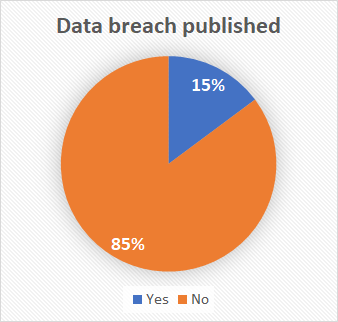
Nearly 800 email and password combinations belonging to Hungarian government officials are now circulating online, exposing critical security vulnerabilities across 12 of the country's 13 ministries. This significant breach jeopardizes sensitive information, including that of military personnel and key national security roles, underscoring systemic failures in digital hygiene and basic security protocols. The revelations surface just as Hungarians prepare to vote in crucial national elections this Sunday.

The SANS Internet Storm Center (ISC) continues its vital role in cybersecurity awareness with its daily "Stormcast" briefing, offering concise updates on the evolving threat landscape. This essential podcast format delivers critical threat intelligence, making complex security information accessible and actionable for IT professionals worldwide. Regular listeners can anticipate coverage of emerging vulnerabilities, active attacks, and significant industry trends, ensuring they remain informed about the latest cyber risks.

The SANS Internet Storm Center (ISC) continues its vital role in the cybersecurity landscape with the latest "Stormcast" daily briefing, offering critical threat intelligence and expert analysis. This resource provides professionals with timely updates on emerging vulnerabilities and attack vectors, essential for maintaining robust defensive postures. The daily summaries are directly informed by SANS ISC researchers, ensuring a high level of accuracy and practical applicability.

The cybersecurity community is grappling with an unprecedented deluge of new CVEs, with 2024 already surpassing 40,000 entries and approximately 110 emerging daily. This explosion, driven by a maturing security research landscape, bug bounty programs, and complex software supply chains, renders traditional vulnerability management strategies increasingly untenable. While CVSS scores offer a baseline for severity, they fall short in predicting the real-world exploitation likelihood crucial for effective triage.

Stay ahead of the evolving threat landscape with the SANS ISC Stormcast, delivering essential daily updates on emerging cybersecurity threats. This critical resource provides more than just headlines, offering expert analysis and insights directly from the SANS Internet Storm Center to equip professionals with actionable intelligence. Tune in daily to understand the latest vulnerabilities, attack vectors, and defensive strategies impacting global networks.

Threat actors are reportedly leveraging seemingly legitimate WAV audio files as a novel vector for malware delivery, effectively turning a common multimedia format into a clandestine container. Instead of complex steganography, attackers simply replace the sound data within these files with Base64 encoded malicious payloads, resulting in audio files that play only noise. This initial Base64 layer is then further protected by XOR encoding, necessitating advanced decryption techniques such as known-plaintext attacks to expose the underlying executable.
Attackers are now specifically targeting Telegram Desktop's `tdata` folder for credential harvesting, a significant evolution in threat actor tactics recently uncovered by a honeypot incident. This sophisticated approach moves beyond mere resource hijacking, indicating a strategic shift towards multi-layered exploitation. Stealing the `tdata` directory grants persistent access and enables full account takeover, facilitating deeper and more pervasive compromise, as detailed in this guest diary by an ISC intern.