Cybersecurity
540 articles · Coverage updated continuously
A major technology company has disclosed the identification of a zero-day exploit, assessed with high confidence to have been developed using an artificial intelligence model, marking a significant escalation in offensive cybersecurity capabilities. This groundbreaking event potentially represents the first known instance of AI being leveraged in the wild for both vulnerability discovery and exploit generation, specifically circumventing two-factor authentication systems on a popular web administration tool.

A recently disclosed critical vulnerability in cPanel and WebHost Manager is now under active, widespread exploitation by threat actors, leading to the deployment of sophisticated, cross-platform backdoors. This flaw, tracked as CVE-2026-41940, allows for authentication bypass and elevated control, presenting a significant risk to web hosting infrastructure globally. Intelligence reports confirm numerous automated attacks targeting this weakness across various systems since its public disclosure.

Identity management giant SailPoint has disclosed a security incident involving unauthorized access to its GitHub repositories, prompting concerns over potential software supply chain vulnerabilities. The compromise, which was quickly contained, originated from a weakness in a third-party application, highlighting persistent risks in extended enterprise ecosystems.
Automotive giant Skoda has publicly acknowledged a cybersecurity breach impacting its online shop customer data. The incident, linked to an exploited software vulnerability, may have exposed personal identifying information (PII) for an unquantified number of users.

A sophisticated Android banking malware, TrickMo, has evolved to integrate The Open Network (TON) blockchain for its command-and-control infrastructure. This strategic shift significantly enhances the malware's evasion capabilities, making detection and takedown efforts considerably more challenging for security teams and law enforcement agencies alike.
The evolving landscape of cyber threats, characterized by sophisticated AI-driven social engineering and legitimate platform exploitation, is rendering traditional prevention-centric security models increasingly insufficient. Defense strategists and IT professionals are now urged to integrate robust recovery and business continuity planning as a foundational component of modern cyber resilience. This shift acknowledges that even the most fortified perimeters can be breached, necessitating a proactive focus on rapid operational restoration.
Google's threat intelligence group has identified what it believes to be the inaugural instance of a zero-day exploit entirely generated by an artificial intelligence model. This groundbreaking development targeted a widely adopted open-source web administration utility, underscoring a significant escalation in the sophistication of adversarial cyber capabilities.

Despite common intuition, merely resetting user passwords often fails to dislodge sophisticated adversaries from compromised Active Directory environments. This critical gap in incident response allows attackers to maintain a persistent foothold, exploiting fundamental architectural nuances within both on-premises and hybrid identity infrastructure.
A new wave of sophisticated cyberattacks is exploiting critical vulnerabilities in widely used network infrastructure, challenging the security posture of organizations globally. Threat actors are actively leveraging zero-day flaws in Ivanti Endpoint Manager Mobile and Palo Alto Networks PAN-OS firewalls, gaining unauthorized access with root privileges. Simultaneously, novel malware strains like the P2P-enabled QLNX Linux RAT and the credential-stealing PCPJack are emerging, indicating a rapidly evolving threat landscape.
A sophisticated, multi-year phishing operation has compromised critical sectors worldwide, reportedly ensnaring hundreds of organizations and thousands of user credentials. Dubbed 'Operation HookedWing,' this persistent threat has demonstrated significant adaptability, continuously evolving its tactics and infrastructure to evade detection.
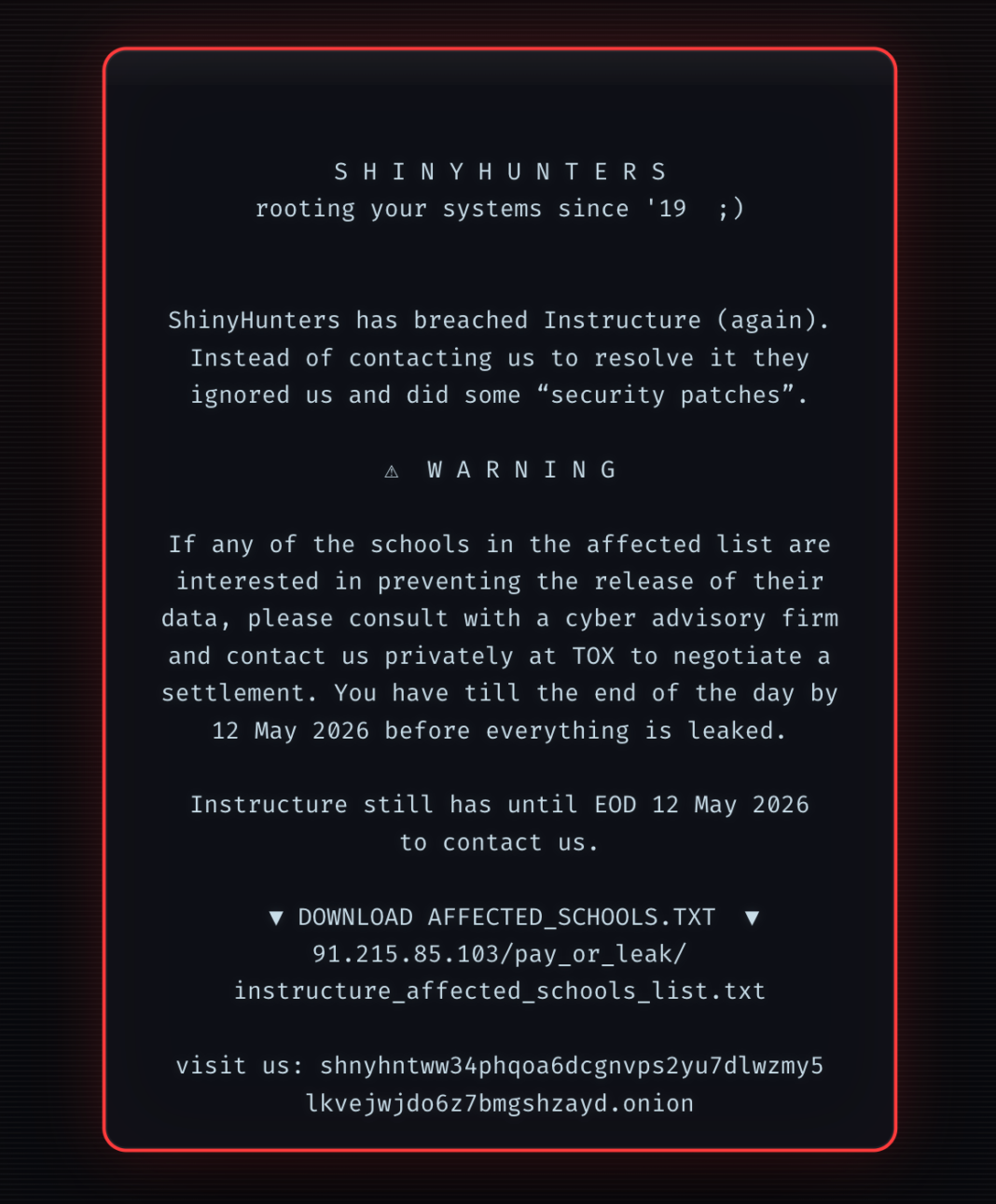
A widespread cyber incident recently disrupted a critical online learning platform, impacting academic operations for numerous educational institutions worldwide just as final exams approached. The Canvas system, a core tool for managing grades and course materials, has largely been restored following an outage that caused significant turmoil for students and faculty.

A key security analysis tool, the Checkmarx Jenkins AST plugin, was recently found to have been compromised through a malicious version published on its marketplace. This incident is tied to a wider, persistent supply chain attack that has targeted the company's development infrastructure since late March.