AI & Technology
69 articles · Coverage updated continuously
Threat actors are increasingly exploiting the trust in popular AI distribution platforms like Hugging Face and ClawHub to spread malware, according to a new report from Acronis. These attacks leverage social engineering and indirect prompt injection to trick users into downloading malicious files from seemingly legitimate repositories. The discovery highlights a growing and concerning trend of poisoning trusted digital supply chains within the burgeoning AI ecosystem.

In an unprecedented display of AI's burgeoning capability in cybersecurity, Anthropic's Claude Mythos Preview model has identified an astonishing 271 zero-day vulnerabilities in the Firefox browser. This monumental discovery, leading to fixes in Firefox 150, underscores a dramatic shift in the landscape of software security and proactive vulnerability detection.
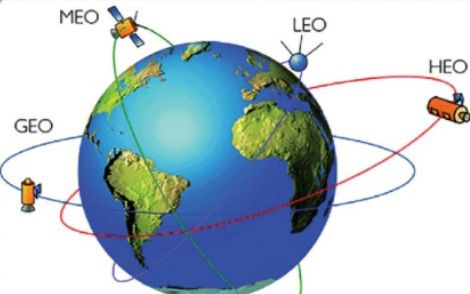
Software-defined satellite architectures are now an operational reality, fundamentally shifting how the U.S. and allies ensure continued dominance in an increasingly contested space domain. This strategic pivot moves beyond hardware-centric orbital assets to prioritize agility, resilience, and rapid iteration against evolving threats.

U.S. Special Operations Command (SOCOM) is rapidly integrating artificial intelligence and autonomy across all operations, its commander, Adm. Frank “Mitch” Bradley, told lawmakers. These advanced technologies are deemed critical for battlefield sensing, continuous adversary surveillance, and projecting force, offering a distinct advantage in modern asymmetric warfare.

The rapid proliferation of generative AI and agentic tools across enterprises is creating a critical challenge: 'Shadow AI.' This uncontrolled adoption, often bypassing traditional IT oversight, exposes organizations to significant security, ethical, and compliance vulnerabilities. Addressing this requires a strategic shift beyond simply blocking or allowing, towards integrated governance frameworks.

The White House has issued a stark warning that China is engaging in "industrial-scale" AI distillation campaigns against U.S. frontier models, prompting a prominent AI policy group to call for an immediate halt to advanced AI chip exports. Americans for Responsible Innovation argues that such a ban is essential to prevent Beijing from replicating American AI capabilities and mitigate escalating national security risks. This development escalates concerns over technology transfer and the race for AI dominance.

The Pentagon has officially integrated Google Cloud's advanced Gemini 3.1 Pro model into its GenAI.mil platform, making Google's most sophisticated AI available to over 1.3 million active defense users. This addition marks a significant expansion of the enterprise-wide generative-AI capabilities, which are already demonstrating profound efficiency gains across various defense operations within Impact Level 5 environments. The integration follows a successful preview period and positions GenAI.mil as a multi-model platform aiming to incorporate offerings from other leading AI developers like OpenAI and xAI.

The White House has issued a stark warning, accusing China of orchestrating "deliberate, industrial-scale campaigns" to steal advanced U.S. frontier AI systems through sophisticated 'distillation' methods. This aggressive strategy involves overwhelming proprietary AI models with requests to train functionally comparable knockoff versions, allowing foreign entities to illicitly acquire valuable intellectual property and bypass extensive development costs.


Microsoft has now provided enterprise IT administrators with the ability to uninstall its AI-powered Copilot assistant from organizational devices, a significant development following its broad availability after the April 2026 Patch Tuesday updates. This new 'RemoveMicrosoftCopilotApp' policy setting, accessible via Group Policy and Policy CSP, allows for non-disruptive removal of Copilot under specific conditions, addressing a long-standing request from enterprise IT departments. The policy applies to certain Windows 11 25H2 SKUs and devices where Copilot was not user-installed or recently launched.
The Trump administration has vowed a significant crackdown on Chinese entities accused of industrial-scale theft and exploitation of American artificial intelligence models, a move that underscores escalating tensions in the global AI race. This directive, outlined in a recent memo by the president's chief science and technology adviser, targets foreign entities, primarily based in China, for illicitly extracting capabilities from leading U.S. AI systems. The announcement comes as China rapidly narrows the AI gap with the United States, prompting a bipartisan legislative push to sanction foreign actors involved in such intellectual property theft.

India's ruling Bharatiya Janata Party (BJP) is reportedly employing generative AI to craft and disseminate anti-Muslim and anti-Bangladeshi content, with AI-generated imagery featuring in approximately one in six hateful social media posts ahead of state elections. This digital strategy, exemplified by a recent video portraying Assam's chief minister shooting an image of an opposition leader, not only intensifies internal divisions but also risks destabilizing border regions and straining relations with Bangladesh.